Req 5a — Social vs. Solitary Insects
A praying mantis, tiger beetle, or many kinds of wasps live mostly on their own. An ant colony or honey bee hive works in a completely different way. That difference is the heart of this requirement.
A solitary insect spends most of its life without cooperating in a colony. It may find food, build a nest, lay eggs, and protect itself alone. The adult usually does not share labor with a large group or raise young as part of a community.
A social insect lives as part of an organized group. Different members may do different jobs. In many colonies there is a queen focused on reproduction, while workers handle foraging, brood care, nest building, and defense. The colony functions almost like one large living system.
The biggest traits that set social insects apart are:
Signs of social insect life
What to mention to your counselor
- Living in colonies: Many individuals share one nest or hive.
- Division of labor: Different members do different jobs.
- Cooperative care of young: Adults help raise brood together.
- Communication: Social insects use touch, chemicals, sound, or dance-like behavior to share information.
- Group defense: A colony can protect food, brood, and nest space as a team.
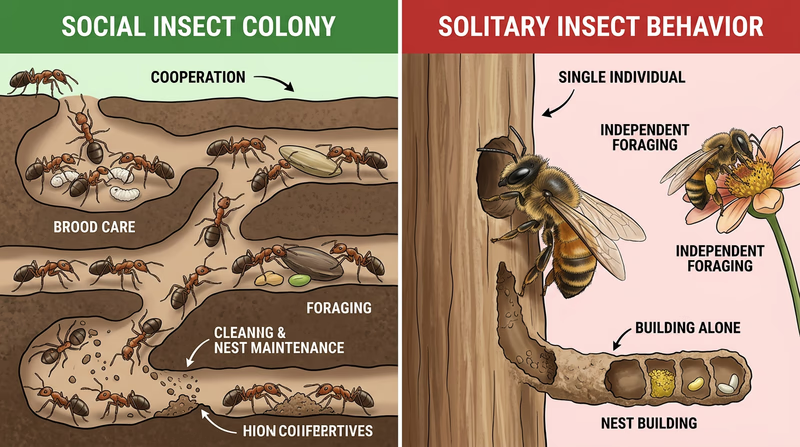
Ants and honey bees are classic social insects. Many termites are social too. By contrast, many butterflies, dragonflies, and beetles are solitary. Even if they gather in the same area, that does not automatically make them social. True social behavior means ongoing cooperation, not just being nearby at the same time.
Social Insects (website) Explains the major traits of social insects and gives examples you can compare with solitary species. What Are Social Insects? (website) Breaks down colony behavior, caste roles, and the key features that define insect social life.This idea prepares you for Req 5b. Once you understand what social insects are, you can choose whether you want to study that teamwork in an ant colony or a bee hive.