Req 5b1 — Inside an Ant Colony
- Observe an ant colony in a formicarium (ant farm). Find the queen and worker ants. Explain to your counselor the different chambers found within an ant colony.
An ant formicarium lets you see something most people miss: the inside life of a colony. Instead of watching ants only as tiny dots on the ground, you can study how they divide space, care for young, and move food through the nest.
Start by finding the queen. She is often larger than the workers, with a thicker thorax or abdomen depending on the species. In some colonies she stays deeper in the nest, especially near brood. The workers are the ones you will usually see moving the most. They forage, carry food, clean chambers, and care for larvae and pupae.
Different chambers serve different purposes. Not every ant species builds the same layout, and not every formicarium will show every chamber clearly, but you can often explain several functional areas:
- Brood chambers where eggs, larvae, and pupae are kept
- Food storage areas where food is gathered or processed
- Resting or queen areas where the queen spends much of her time
- Tunnels and travel routes that connect the chambers and allow ants to move efficiently
- Waste areas where some species place dead ants or debris away from brood
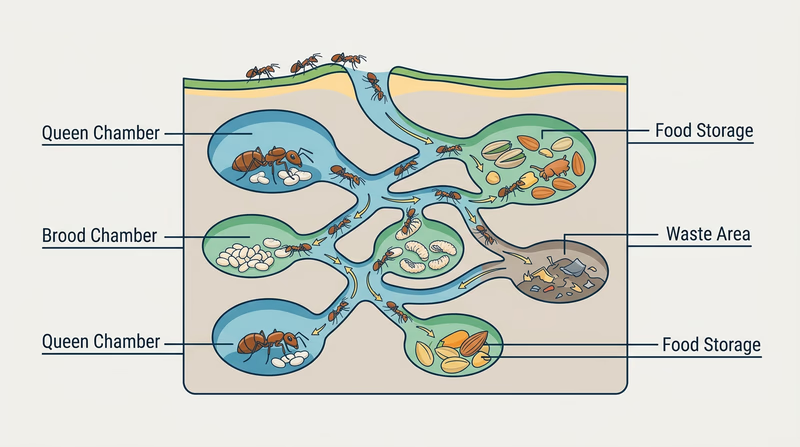
The goal is not just to point and name. Watch how ants use the space. Are workers clustering around brood? Are they carrying food toward one part of the colony? Are there chambers used more often than others?
This option pairs nicely with Req 5a because it gives you direct evidence of what social behavior looks like. The colony is not just a crowd. It is an organized system.