Req 5b2 — Reading a Bee Hive
- Study a hive of bees. Remove the combs and find the queen. Estimate the amount of brood and count the number of queen cells. Explain how to determine the amount of honey in the hive. (If you are allergic to bee stings, pick option 1 above.)
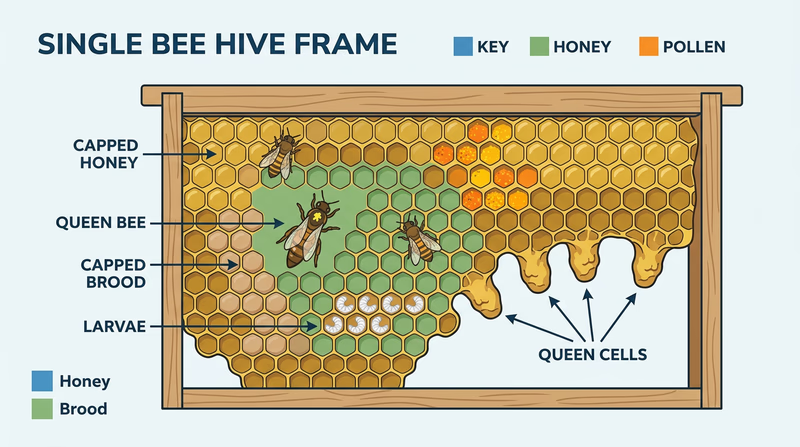
Opening a hive is one of the most impressive hands-on experiences in this badge, but it only works well when done with trained supervision. A bee hive is not random. Each frame gives clues about the colony’s health, growth, and food supply.
The first task is finding the queen. She is usually longer than the workers, with an abdomen that extends farther back. She may be surrounded by attendants, but she often keeps moving, so be patient. Many beekeepers inspect frames in a careful pattern so they do not miss her.
Next, estimate the amount of brood, which means eggs, larvae, and capped pupal cells. Brood shows whether the colony is actively growing. A frame with a solid, even brood pattern usually suggests a strong, productive queen. Sparse or patchy brood can mean something else is going on.
Queen cells are special cells raised for developing new queens. They are larger and shaped differently from ordinary worker cells. Counting them helps you understand whether the colony may be preparing to swarm or replace a queen.
To judge the amount of honey, beekeepers look at how much of the comb is filled and capped. Capped honey is stored food that has been processed and sealed with wax. One frame may be nearly full, partly full, or mostly empty, so estimating honey is partly a matter of comparing how much comb area is filled across the hive.
What to notice on each frame
A simple inspection checklist
- Queen present or not: Did you see her directly?
- Brood pattern: Dense, scattered, large, or limited?
- Queen cells: Present, absent, or concentrated on certain frames?
- Stored honey: How much comb surface is capped with honey?
- Worker behavior: Calm, defensive, clustered, or highly active?
This option connects well with Req 7a, where you will learn more about bees and people. Hive study shows that bee colonies are not just interesting biology. They are also deeply connected to agriculture and food systems.