Req 7 — Bees, Crops, and Pest Control
This requirement looks at two big connections between insects and human life. First, bees and people depend on each other in important ways. Second, farmers and gardeners need ways to protect crops without relying only on insecticides.
Requirement 7a
A symbiotic relationship is a close connection between living things. In this case, bees benefit from flowering plants and human-managed landscapes, while people benefit from pollination. Honey bees gather nectar and pollen for food. As they do that, they pollinate crops and wild plants that humans depend on.
This relationship matters because many crops produce better yields or better-quality fruit when pollinators are active. Almonds, apples, blueberries, melons, pumpkins, and many other foods are linked to insect pollination. That does not mean every bite of food comes directly from bees, but it does mean bees support a large share of the variety in our diets.
Colony collapse disorder (CCD) is a condition in which most worker bees in a colony suddenly disappear, leaving behind the queen, food stores, and immature bees. Scientists do not point to one single cause. Instead, CCD and other colony losses appear to involve several stressors acting together.
Possible causes include:
- parasites such as Varroa mites
- diseases spread within or between colonies
- pesticide exposure
- poor nutrition from limited floral variety
- stress from transport or management practices
- habitat loss and environmental change
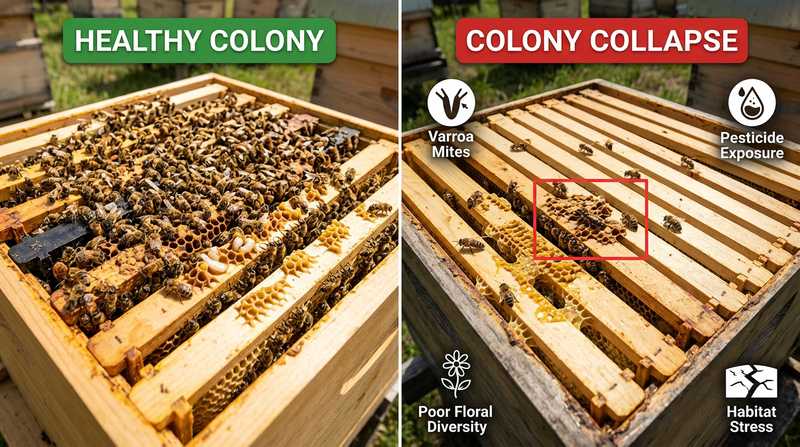
When bee colonies struggle, pollination can drop. That can reduce crop yields, raise costs for farmers, and shrink the supply of certain foods. Even when managed honey bees are brought in to help, weaker bee populations mean more pressure on the food system.
Requirement 7b
Insecticides are only one tool, and sometimes not the best first choice. Farmers often use integrated pest management, or IPM, which combines several methods to reduce damage while limiting harm to helpful insects and the environment.
Three strong alternatives to insecticides are:
Biological control
This means using living organisms to control pests. Lady beetles eating aphids is one example. Parasitoid wasps and beneficial nematodes are others.
- Advantage: Can target pests while reducing chemical use.
- Disadvantage: May work more slowly and can be affected by weather or timing.
Physical or mechanical control
This includes row covers, traps, hand removal, barriers, or tilling at key times. In a garden, even knocking pests into a bucket of soapy water counts as mechanical control.
- Advantage: Immediate, visible, and often low in chemical risk.
- Disadvantage: Can take a lot of labor and may be harder on large farms.
Cultural control
This means changing how crops are grown so pests have a harder time succeeding. Crop rotation, planting resistant varieties, adjusting planting times, and improving soil health all fit here.
- Advantage: Prevents problems before they start and can work across whole seasons.
- Disadvantage: Requires planning and may not solve a severe outbreak quickly.
Req 7 is really about balance. People need healthy crops, but they also need healthy pollinator populations and functioning ecosystems. The best pest-control plans protect food production without treating every insect as the enemy.