Req 8 — Migration and Conservation
This requirement asks you to look at insect survival on a bigger scale. One part focuses on migration, where insects travel huge distances through connected habitats. The other focuses on threatened or endangered species and what people can do to help them.
Requirement 8a
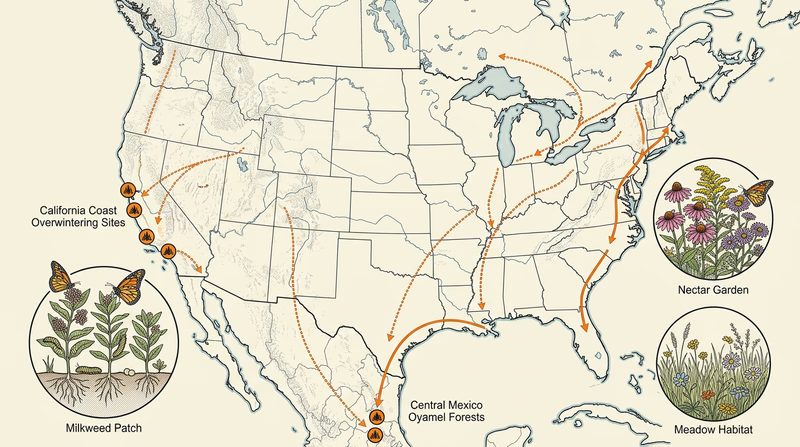
The monarch butterfly is the best-known example because its migration is astonishing. Monarchs east of the Rocky Mountains generally travel south toward central Mexico for the winter, while many western monarchs move toward the California coast. In spring, later generations travel north again. No single monarch usually completes the whole round trip. Instead, the migration is spread across several generations.
That route only works if connected habitats exist along the way. Monarchs need milkweed for caterpillars and nectar plants for adults. Remove too many of those stopover resources, and the journey gets harder.
Major challenges include habitat loss, pesticide use, extreme weather, drought, and climate shifts that affect timing and plant availability. A migrating insect may survive one stretch of the trip only to fail later if it cannot find food or shelter.
Scouts can help in practical ways. Planting native milkweed and nectar flowers, reducing unnecessary pesticide use, joining community science projects, and protecting natural areas all make a difference. Even a small pollinator garden can become part of a much larger migration network.
Ways Scouts can help migrating insects
Small actions matter when many people do them
- Plant native host plants: Support caterpillars as well as adults.
- Add nectar sources: Fuel insects during migration.
- Protect habitat patches: Even roadside edges and school gardens can help.
- Share observations: Citizen science records help researchers track changes.
Requirement 8b
For this part, choose one species and learn its story well. It might be a butterfly, beetle, bee, or another insect whose numbers have dropped badly. The exact species matters less than your ability to explain the pressures it faces and what conservation actions help.
Common threats include habitat destruction, pesticide exposure, invasive species, light pollution, disease, and climate change. Some insects depend on one host plant or one habitat type, so even a small change can hit them hard. Others need very specific soil, moisture, or fire conditions.
A strong discussion with your counselor will include:
- what the species is and where it lives
- why it is threatened or endangered
- what people are doing to protect it
- what ordinary people, including Scouts, can do to help
Req 8 turns insect study into stewardship. Once you understand migration and threatened species, you are not just observing insects anymore. You are asking how to keep their populations strong enough for the future.