Req 8b — Visit an Inventing Exhibit
A great museum visit can make inventing feel real. You get to see the object, the time period, the problem it solved, and the story behind the people who built it. Good exhibits do more than display old things behind glass. They show how ideas changed lives.
What to look for at the exhibit
Do not try to remember every fact in the room. Focus on the invention story.
Ask yourself:
- What problem was the inventor trying to solve?
- What made this invention new or important?
- How did the invention affect daily life, work, health, travel, or communication?
- What details in the exhibit show how the design changed over time?
- What part of the invention story would be most interesting to your troop or patrol?
Notes to gather during your visit
These details will help you build a stronger presentation
- Name of the inventor or invention
- Time period
- The problem it solved
- Important design features
- A challenge, failure, or revision in its history
- Why the invention still matters today
Make the presentation about ideas, not just facts
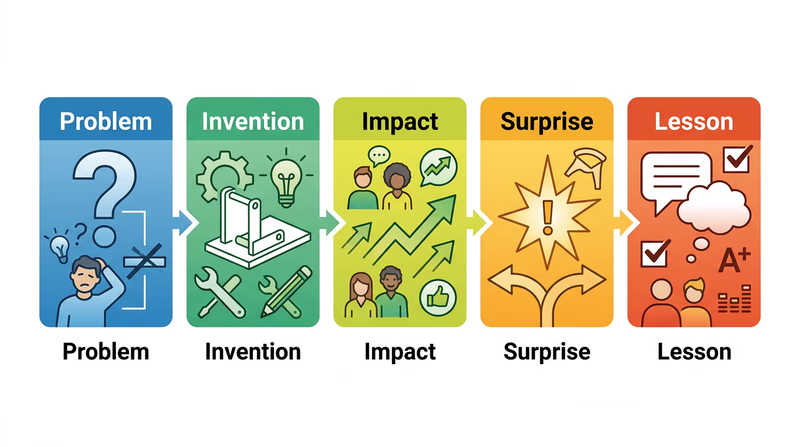
Your presentation should not feel like a long list of dates. Build it around a story:
- What problem existed?
- What was invented?
- Why did it matter?
- What surprised you most?
- What can your audience learn from it about inventing?
That structure will keep your talk clear and interesting.
Ways to make your presentation stronger
- compare an early version of the invention with a modern version
- include one surprising fact or moment of failure
- explain how the invention connects to a problem people still have today
- ask your troop or patrol a question such as, “What would you improve about this invention now?”
That last step turns your audience from listeners into inventors.
This option connects back to Req 1, where you looked at how inventions help humankind. A museum visit gives you concrete examples of that impact.
Smithsonian Lemelson Center for the Study of Invention and Innovation Exhibits and resources focused on the history of inventors, inventions, and the people affected by them.Next, you will look ahead to the future by thinking about the skills, preparation, and careers connected to inventing.