Journalism Merit Badge — Complete Digital Resource Guide
https://merit-badge.university/merit-badges/journalism/guide/
Introduction & Overview
A breaking story can begin almost anywhere: a city council vote, a storm rolling through town, a championship game, or a Scout event where something unexpected happens. Journalism is the work of noticing what matters, checking the facts, and helping other people understand what happened and why it matters.
The Journalism merit badge teaches you how news is gathered, shaped, and shared across print, online, audio, video, and photography. It also asks you to think about something bigger than writing style: how a free press protects the public by asking questions, verifying claims, and telling the truth as accurately and fairly as possible.
Then and Now
Then — Broadsheets, Printers, and Penny Papers
Early American journalism moved slowly by modern standards. Printers published broadsheets, pamphlets, and newspapers that carried speeches, political arguments, shipping news, and reports from faraway places. Editors often had strong opinions, and many papers openly supported one political side or another.
Even so, the press became one of the main ways ordinary people learned what leaders were doing. By the 1800s, cheaper printing and rising literacy helped create the “penny press” — newspapers sold for a penny that reached a much larger audience. Reporters covered crime, politics, business, and daily life, and journalism started becoming a profession instead of just a sideline for printers and politicians.
- Main tools: Printing presses, telegraph wires, notebooks, and deadlines tied to delivery wagons and train schedules
- Big challenge: Getting verified information quickly enough to print before the next edition
Now — Digital Publishing and 24/7 News
Today, a journalist might write a text story, record audio for a podcast, shoot video on a phone, post verified updates online, and answer questions on social media — all in the same day. News moves fast, but the core job has not changed: gather facts, confirm them, give context, and explain them clearly.
Modern journalism also includes many specialties. Local reporters cover school boards and public safety. Investigative teams dig through records for months. Photojournalists tell stories with images. Data journalists use spreadsheets and charts to reveal patterns. Audience editors think about how stories reach readers on phones and social platforms.
- Main tools: Laptops, smartphones, editing software, public records databases, live video, and analytics dashboards
- Big challenge: Working quickly without spreading rumors, half-truths, or manipulated content
Get Ready!
You do not need to sound like a famous anchor or write like a seasoned columnist to begin this badge. You just need curiosity, careful observation, and the willingness to ask one more question when something does not quite add up.
Kinds of Journalism
Local News Reporting
Local journalism focuses on the meetings, decisions, events, and people that shape everyday life in a community. That might mean covering a school board vote, interviewing the fire chief after a storm, or writing about a new park project. Local reporters often know their communities well, which helps them notice what is changing and what questions still need answers.
Investigative Journalism
Investigative reporters do not just describe events. They follow documents, interviews, data, and public records to uncover patterns, waste, corruption, or hidden problems. This kind of work can take weeks or months, and it depends on patience, accuracy, and fairness.
Broadcast Journalism
Broadcast journalists work in radio, television, streaming, and podcasts. They think about sound, timing, pacing, and visuals as much as word choice. A story for radio must make sense through sound alone. A story for television or video must pair facts with useful images.
Photojournalism
Photojournalism tells the story with images. A strong photo can capture emotion, action, setting, and detail in a single moment. Good photojournalists still follow the same ethical rules as writers and broadcasters: do not mislead, do not stage reality, and make sure captions are accurate.
Opinion and Review Writing
Not every piece of journalism is straight news. Editorials, columns, criticism, and reviews can include judgment and opinion. The important part is honesty: readers should be able to tell when they are reading verified reporting and when they are reading analysis or commentary.
Now that you know how journalism developed and the many forms it takes today, you are ready to start with the rights and responsibilities that shape every good story.
Req 1 — Press Freedom & Media Ethics
A free press means journalists can gather information, ask hard questions, and publish news without the government deciding which true stories may be told. That freedom matters because communities make better decisions when people can learn what leaders, businesses, and institutions are doing.
Freedom of the Press and the First Amendment
The First Amendment says that Congress may not make laws abridging freedom of speech or of the press. In plain language, that means the government cannot punish people just because officials dislike their opinions or reporting. Journalists can investigate, criticize, and publish even when the story is uncomfortable for powerful people.
That protection is not a license to say anything at all. Journalists still have to obey laws about defamation, respect some privacy rights, and report honestly. The First Amendment protects responsible reporting, not careless falsehoods.
How Press Freedom Helps the Public
Why this protection matters in everyday life- Watchdog role: Reporters can question officials, review public records, and alert the public when something is wrong.
- Public debate: People can hear multiple viewpoints instead of only the official version.
- Accountability: Leaders know their decisions may be examined in public.
- Community knowledge: Residents learn about safety issues, school decisions, elections, and events that affect them.
Fact vs. Opinion
One of the most important journalism skills is spotting the difference between a verifiable fact and a personal judgment.
A fact is something you can check with evidence. A vote count, the date of a meeting, the amount in a budget, or a direct quote from a recorded interview can all be verified.
An opinion is what someone thinks, believes, prefers, or concludes. Opinions may be thoughtful and informed, but they are still judgments rather than directly provable statements.
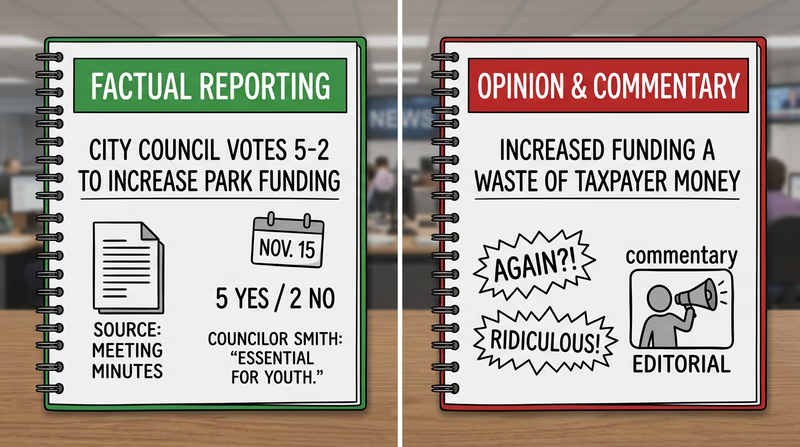
Here is a quick test: if you ask, “How would I prove this?” and can point to documents, recordings, data, or direct observation, you are probably dealing with a fact. If the answer depends on taste, interpretation, or personal belief, it is probably opinion.
Key Legal Terms
Defamation
Defamation is a false statement presented as fact that harms a person’s reputation. It is the broad category that includes both libel and slander.
Libel
Libel is written or published defamation. A false statement in a newspaper article, web post, caption, or script can be libel if it damages someone’s reputation.
Slander
Slander is spoken defamation. A false statement said on a broadcast, podcast, or public speech can count as slander.
Fair Comment and Criticism
Fair comment and criticism protects honest opinions about matters the public can judge for themselves, especially reviews and commentary. A movie reviewer may say a film was confusing. A sports columnist may argue that a coach made a poor decision. Those are opinions, not false claims of fact.
Public Figure
A public figure is someone who has unusual influence or visibility, such as an elected official, celebrity, or well-known community leader. Public figures usually face a higher legal standard in defamation cases because open discussion about public people is important in a democracy.
Privacy
Privacy refers to a person’s right to keep some parts of life from public exposure. Just because you learn something about someone does not always mean you should publish it. Good journalists ask whether information is newsworthy, accurate, and fair to share.
Malice
In journalism law, actual malice does not mean simple meanness. It means publishing something while knowing it is false or while recklessly ignoring whether it is true. That standard is especially important in cases involving public figures.
Ethics: Legal Does Not Always Mean Right
Some choices may be legal but still unethical. A journalist could quote someone accurately while leaving out important context. A headline could exaggerate to attract clicks. A photo could be cropped in a way that changes how readers interpret the scene.
Journalism ethics asks bigger questions:
- Is this accurate?
- Is it fair?
- Have I checked enough sources?
- Am I separating reporting from opinion?
- Could this cause unnecessary harm?
- Am I giving readers enough context to understand the truth?
A strong journalist cares about trust. If readers cannot trust you, they will stop listening — even when your next story is correct.
In Req 3, you will choose a storytelling challenge of your own. Everything on that page depends on what you learned here first: verify facts, label opinion honestly, and treat people fairly.
🎬 Video: Freedom of the Press: Crash Course Government and Politics #26 — CrashCourse — https://www.youtube.com/watch?v=Vtpd0EbaFoQ
Before you choose a reporting path, make sure you can explain why truth, fairness, and freedom all belong together in journalism.
Req 2 — Choose Your Newsroom
This requirement covers two different newsroom paths. You will choose exactly one:
- Option A: Newspaper, magazine, and online journalism
- Option B: Radio and television journalism
Your Options
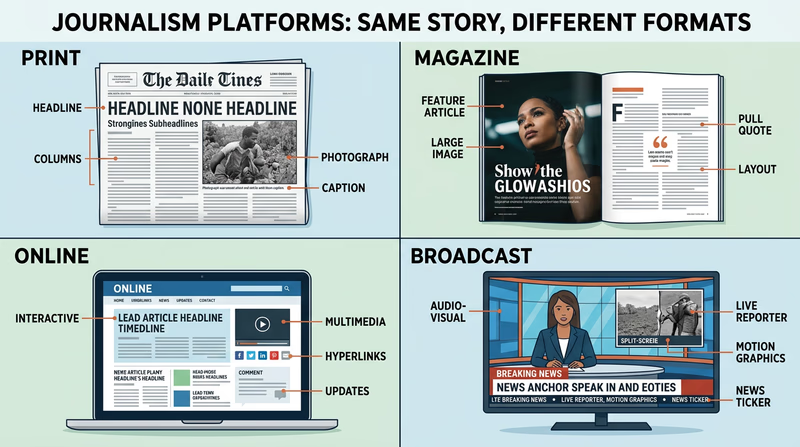
Req 2a — Print, Magazine & Online Reporting: Compare how different written and digital outlets cover the same event, then visit a newspaper, magazine, or online news operation. You will practice noticing story length, tone, fairness, and how a publication is organized behind the scenes.
Req 2b — Broadcast Newsroom Skills: Compare local, national, radio, and online broadcast-style coverage, then visit a radio or television station. You will pay attention to timing, sound, visuals, and the fast coordination needed to get a broadcast on the air.
How to Choose
Choosing Between Option A and Option B
Think about which kind of reporting sounds more exciting to you- How you like to tell stories: Choose Option A if you enjoy reading, writing, and comparing how articles are structured. Choose Option B if you are interested in voice, sound, timing, or video.
- What you will analyze: Option A focuses on article length, fairness, and how print or digital outlets handle the same event. Option B focuses on rundowns, story order, airtime, and how sound and visuals change the story.
- What you will see on your visit: Option A may show you editors, publishers, and web teams. Option B may show you producers, anchors, control rooms, and studio equipment.
- What you will gain: Option A strengthens close reading and article-writing instincts. Option B builds awareness of pacing, audio, visuals, and teamwork under deadline.
| Option | Best for Scouts who like… | Main challenge | Big skill you gain |
|---|---|---|---|
| A | Reading, writing, websites, magazines | Comparing fairness and depth across written coverage | Understanding how editors shape stories |
| B | Audio, video, live news, fast pacing | Tracking timing and presentation choices | Understanding how broadcast teams package stories |
You do not need to pick the path you think is easiest. Pick the one that will teach you the most about the kind of journalism you might actually want to try again.
Now head into the first option page to see how print, magazine, and online reporting work.
Req 2a — Print, Magazine & Online Reporting
This option asks you to do two connected things:
- Compare how several written and online news sources cover the same event.
- Visit a newspaper, magazine, or internet news site to see how the business and editorial sides work together.
Option A is a great choice if you want to see how one story changes depending on audience, format, deadlines, and available space. A local paper may emphasize community impact. A national paper may emphasize politics or scale. A magazine may add more background. An online outlet may update the story throughout the day.
What You Will Practice
Close reading
You will compare how each source handles the same event. That means noticing what each story leads with, which facts appear early, which quotes are included, and whether the article feels balanced.
Story judgment
Editors make choices constantly. Which detail belongs in the headline? Which quote is most revealing? What should be shortened? When you compare coverage, you are really studying editorial judgment.
Newsroom structure
A publication is not only reporters. It also includes editors, audience teams, business staff, advertising or sponsorship teams, production staff, and leadership. Your visit helps you see how all those parts connect.
In Req 1, you learned to separate fact from opinion. That skill matters even more here, because you are looking at how real outlets present the same facts in different ways.
The next two pages walk you through each part of Option A.
Req 2a1 — Comparing Coverage
This is real media analysis. You are not just collecting four articles. You are asking how four different kinds of outlets make choices about the same event.
What to Compare
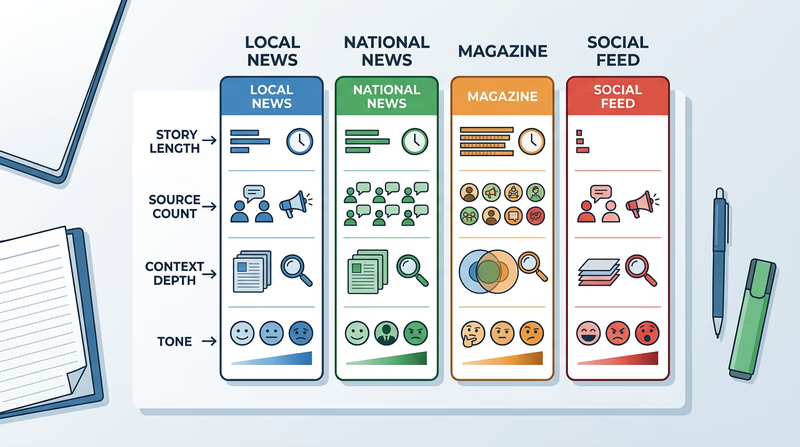
Start with one event that got broad coverage on the same day. Then compare these four sources:
- a local news source or newspaper
- a national news source or newspaper
- a news magazine, either printed or online
- a social media news feed, with parent or guardian permission
The goal is not to decide which source you personally like best. The goal is to notice how each source handles the same basic facts.
Story length
Measure length in a way that makes sense for the platform. Count words for written stories. Estimate screen space for online pieces. For social media, note whether the post is brief, threaded, mostly visual, or links outward to fuller reporting.
Fairness
A fair story does not have to give every viewpoint equal space, but it should represent major sides honestly. Ask:
- Are key people or groups quoted or described fairly?
- Does the story explain the strongest evidence on each side?
- Does the headline match what the article actually says?
- Does the story leave out context that would change the reader’s understanding?
Accuracy
Accuracy starts with names, dates, numbers, and quotes, but it goes farther. A story can contain technically correct facts and still mislead if it leaves out important background.
Questions to Ask Each Source
Use these to guide your comparison notes- What is the main angle? What does the story seem to care about most?
- What evidence appears first? A quote, data, eyewitness detail, or official statement?
- How much context is included? Does the story explain what happened before this event?
- Who gets quoted? Officials, witnesses, experts, everyday people, or nobody?
- How does the platform shape the story? Is it short because of space, speed, or audience expectations?
Why the Sources May Differ
A local outlet may spend more time on local names, practical impact, and community reaction. A national outlet may widen the lens and connect the event to politics, economics, or national trends. A magazine may slow down and explain causes or consequences. A social media feed may prioritize speed, emotion, or shareability — sometimes at the cost of context.
That does not automatically make one source right and the others wrong. It means journalism changes with format, audience, and deadline pressure.
When you report back to your counselor, be ready to say not only which stories were longer or shorter, but also why they felt different. That explanation is the heart of this requirement.
The next page shifts from reading stories to seeing how a publication works from the inside.
Req 2a2 — Touring a News Operation
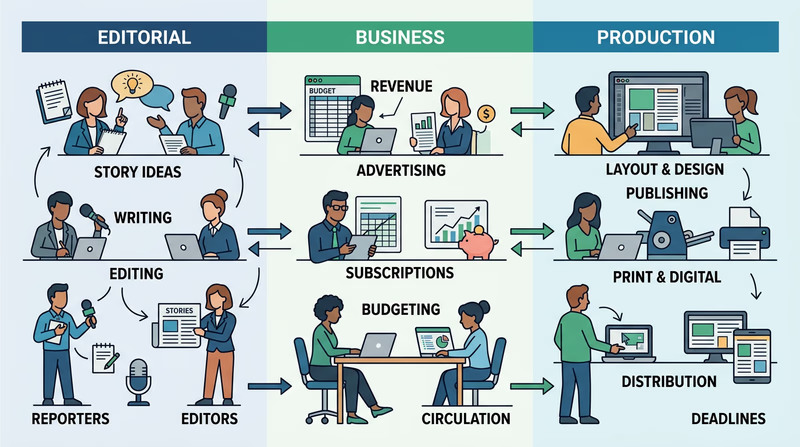
This requirement helps you see that journalism is both a public service and an organization that has to operate every day. Reporters gather information, but editors shape coverage, business teams keep the operation running, and production staff make sure the final product reaches readers.
What to Notice on the Tour
Editorial
This is the news side. Reporters, editors, photographers, copy editors, and digital producers work here. Their job is to decide what to cover, verify facts, improve stories, and publish them clearly.
Business
Business staff handle budgets, subscriptions, advertising, sponsorships, staffing, and long-term planning. They think about how to keep the organization financially healthy.
Printing or Production
For a print publication, this includes layout, design, deadlines, and the physical process of printing and delivery. For an online publication, it may include website publishing systems, newsletters, audience analytics, and social distribution.
Why Management Relationships Matter
One of the most important things to ask is how the business side and the editorial side work together without letting money control the truth. News organizations need revenue, but good journalism also needs independence. If advertisers or executives could kill stories just because they were inconvenient, public trust would disappear.
Ask your executive questions like these:
- How do you support reporters without telling them what conclusion to reach?
- What happens when a story involves an advertiser or important community partner?
- What makes readers trust a publication?
- How do you decide what success looks like besides clicks or page views?
If your tour is virtual, treat it like a professional interview. Show up on time, test your device, prepare questions, and ask permission before recording or taking screenshots.
In Req 5, you will explore journalism careers. This visit is a good chance to notice jobs beyond reporter, including editor, producer, photographer, designer, audience manager, and publisher.
Now that you have explored written and digital journalism, you can compare that world with broadcast news on the next branch.
Req 2b — Broadcast Newsroom Skills
This option focuses on the parts of journalism that people hear and watch. Broadcast news still depends on strong reporting, but it adds timing, delivery, visuals, and production teamwork.
What Makes Broadcast Different
A newspaper story can be reread. A radio or TV report usually unfolds once in real time. That changes how journalists write. Sentences must be shorter. Facts must arrive in a clear order. Names and numbers must be easy to hear and understand.
Radio depends on sound: the anchor’s voice, recorded interviews, ambient noise, and pacing. Television adds visuals, graphics, and on-screen movement. Both formats must decide how much time each story gets, which item leads the newscast, and how to keep the audience informed without rushing past important context.
Skills You Use in Broadcast Journalism
What this option helps you notice- Timing: Stories are measured in seconds and minutes, not just word count.
- Writing for the ear: Sentences must sound natural when spoken aloud.
- Visual judgment: TV stories need useful footage, graphics, or live shots.
- Team coordination: Producers, anchors, camera crews, editors, and engineers all have to stay in sync.
The next two pages walk you through comparing broadcasts and visiting a station.
Req 2b1 — Comparing Broadcast Coverage
Broadcast coverage is like a timed puzzle. Each outlet has only so many minutes, so editors and producers constantly decide which stories deserve the most time and what format will communicate them best.
Build Your Comparison Log
For each source, list:
- the stories included
- the order they appeared
- the time each story received
- the elements used, such as anchor intro, reporter package, interview clip, live shot, graphic, or commentary
- how fair and accurate the coverage seemed
A local station may lead with weather, traffic, school closures, or a nearby crime story because those directly affect viewers’ lives. A national network may lead with a presidential speech, international conflict, or a major court case. Radio may rely more on concise scripts and audio clips. Online broadcast coverage may expand with video clips, sidebars, or updates that never fit on air.
Elements Used in Broadcast Stories
Broadcast outlets mix storytelling pieces together. Here are some common elements:
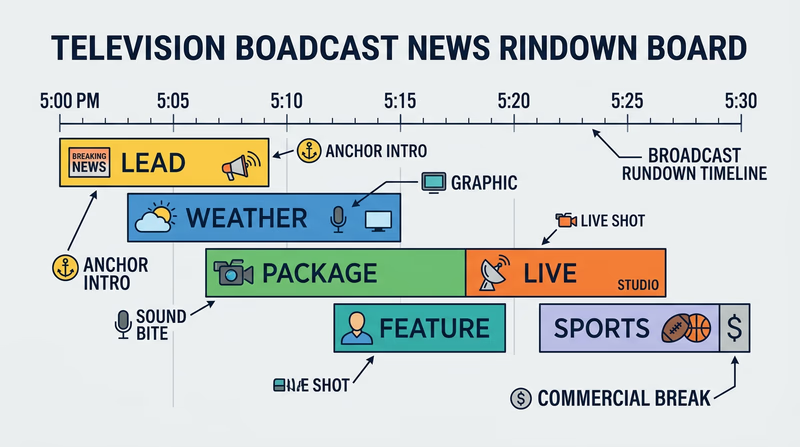
- Anchor intro: A short setup read in the studio
- Reporter package: A pre-recorded story with narration, sound, and visuals
- Sound bite: A short quote from an interview subject
- Live shot: A reporter speaking live from the scene
- Graphic: Text or visuals on screen that explain numbers, locations, or timelines
- Feature segment: A lighter or more human-centered story, often placed later in the newscast
When you compare outlets, do not only ask what they covered. Ask how they covered it.
This requirement also connects back to Req 1. Fairness and accuracy matter just as much on air as they do on a printed page.
🎬 Video: How to choose your news - Damon Brown — TED-Ed — https://www.youtube.com/watch?v=q-Y-z6HmRgI
The next page takes you inside a station so you can see how all those pieces come together before airtime.
Req 2b2 — Visiting a Station
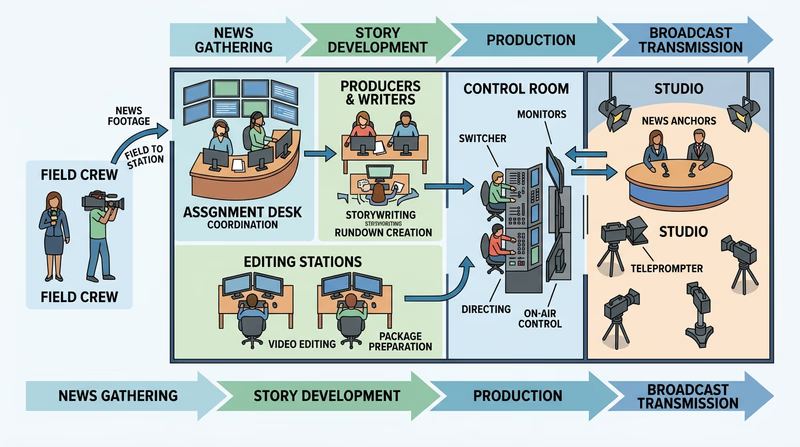
A station tour shows how many moving parts stand behind a two-minute report. News staff may include anchors, reporters, producers, assignment editors, camera operators, audio engineers, editors, and control-room staff. Each person handles one piece of the puzzle, but the final result has to feel smooth and accurate to the audience.
Departments to Watch For
Assignment Desk
This team tracks what is happening, decides what crews should cover, and keeps the newsroom aware of breaking developments.
Producers and Writers
They build the rundown, choose story order, and shape scripts so the broadcast fits the available time.
Studio and Control Room
This is where technical timing happens. Staff manage cameras, audio, graphics, and live transitions.
Field Crews
Reporters and camera operators gather interviews, video, and sound in the community. They often work on tight deadlines and changing information.
What Makes a Good Station?
A good station is more than polished anchors and good lighting. It serves the audience with timely, useful, accurate coverage. Ask how the station handles corrections, breaking news, weather emergencies, and community trust.
Possible questions include:
- How do you decide which stories deserve the most airtime?
- What happens when breaking news changes the entire rundown?
- How do management and journalists work together without hurting editorial fairness?
- What skills do you look for when hiring entry-level staff?
If possible, watching a reporter work in the field is especially valuable. You may see how journalists gather quotes, check details, and adapt when plans change.
By now, you have seen two major journalism paths from the inside. Next, you will choose your own storytelling challenge and produce work of your own.
Req 3 — Choose a Storytelling Challenge
This requirement has two parts before you make your choice:
- understand the difference between a hard news story and a feature story
- explain the five W’s and H: who, what, when, where, why, and how
Hard News vs. Feature Stories
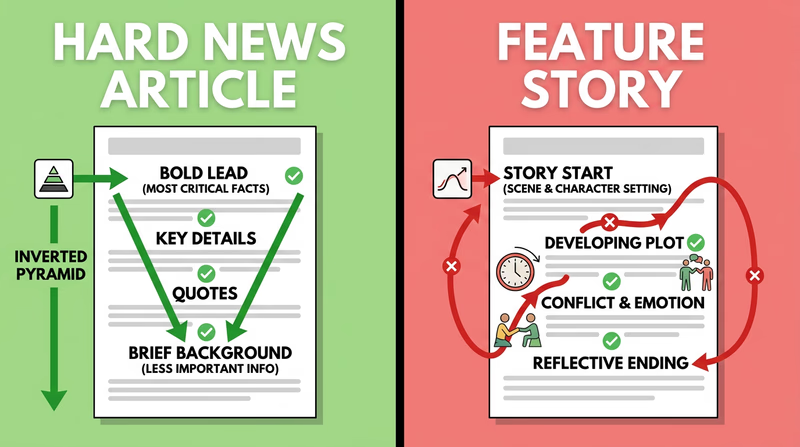
A hard news story tells readers what happened and why it matters right now. It usually covers something timely: an election result, accident, weather emergency, meeting decision, or major announcement. Hard news tends to get to the point fast.
A feature story still reports facts, but it slows down and explores people, scenes, emotions, or background in more depth. A feature might profile a volunteer, explain a tradition, or show how an event affected people over time.
Think of it this way: hard news answers, “What happened today?” A feature answers, “What does this mean, and what is it like?”
The Five W’s and H
These questions help you gather enough information for a trustworthy story:
- Who was involved?
- What happened?
- When did it happen?
- Where did it happen?
- Why did it happen or matter?
- How did it happen?
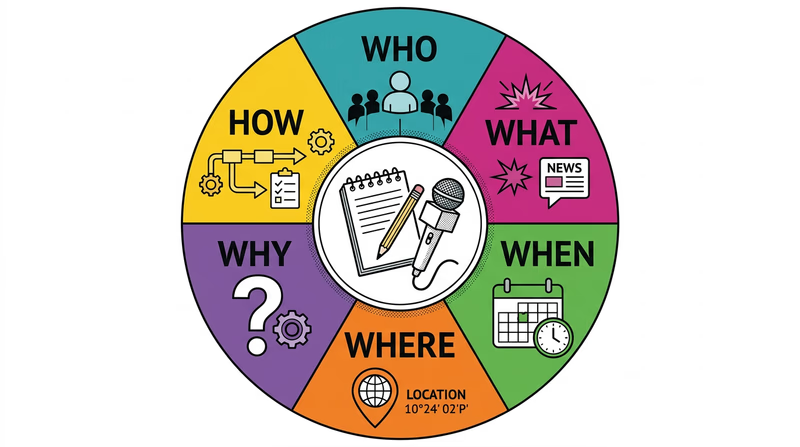
If you cannot answer several of these clearly, your reporting probably needs more work.
Your Four Choices
Req 3a — Write the Story: Write either a hard news or feature article about a current or unusual event.
Req 3b — Interview an Influential Person: Interview someone important in your community and report what you learned.
Req 3c — Profile a Journalist: Read a journalist’s autobiography and write about that person’s life and contributions.
Req 3d — Cover a Scouting Event: Attend a Scouting event, write a 200-word article, and submit it for consideration.
Choosing Your Storytelling Challenge
Pick the option that best fits your interests and access- Want to cover something happening now? Choose 3a.
- Enjoy asking questions face to face? Choose 3b.
- Like reading about interesting careers and history? Choose 3c.
- Already have a troop, district, or council event coming up? Choose 3d.
- What you will gain: 3a builds reporting structure, 3b strengthens interviewing, 3c teaches research and biography writing, and 3d adds real submission experience.
🎬 Video: Hard News vs. Soft News: News Types Explained — K20 Center — https://www.youtube.com/watch?v=-7lVkYt4jjw
Next, start with the first choice: writing a news or feature story from a current or unusual event.
Req 3a — Write the Story
This option turns you into the reporter. Your first job is to choose an event that gives you enough real material to work with. A school performance, local tournament, community cleanup, town decision, or unusual local happening can all work well.
Step 1: Choose Your Angle
The same event can produce very different stories. A hard news angle might focus on the decision, result, or announcement. A feature angle might focus on a person, behind-the-scenes work, or the atmosphere of the event.
For example, a school robotics competition could become:
- a hard news story about who won and why the event mattered
- a feature story about one team’s months of preparation and problem-solving
Step 2: Match the Platform
If you write for print or online, your structure and quotes carry most of the story. If you choose audio or video, think about sound, pacing, visuals, and what the audience can hear or see.
Hard news usually includes
- a direct lead that gives the most important information fast
- key facts high in the story
- quotes that confirm, explain, or react
- short background near the end
Feature writing often includes
- a scene, moment, or strong image to open
- more description and pacing
- a central theme or character
- a satisfying ending that reflects the meaning of the event
Reporting Plan for Option 3a
What to gather before you write- Basic facts: names, dates, times, locations, results
- Quotes: at least two useful comments from people involved
- Observation: what did the place sound, look, or feel like?
- Context: why should the audience care about this event?
- Platform choice: print, online, audio, or video
In Req 4, you will cover a public event in a more structured way. This option gives you good practice before that requirement.
When your draft is done, read it aloud. If the story feels confusing, missing, or slow, revise the order until the most important ideas are clearer.
Now move to the next option page if you want a path built around interviewing an influential person.
Req 3b — Interview an Influential Person
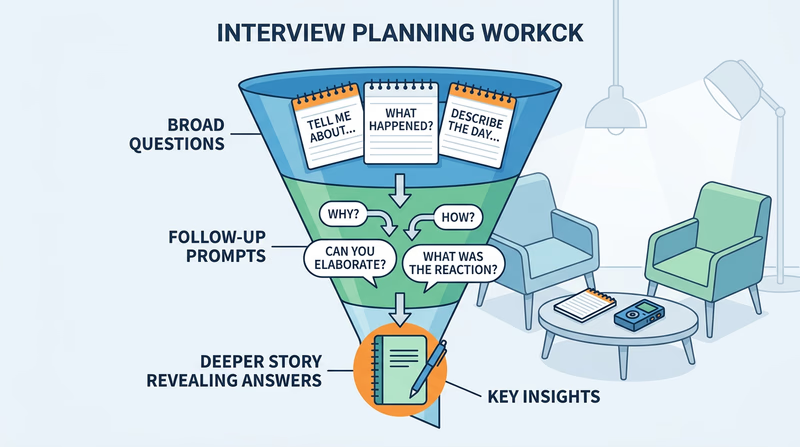
A strong interview is more than a list of questions. It is a conversation designed to uncover details, stories, and insight that people would not learn from a short biography.
Choosing the Right Person
Look for someone whose experiences connect to your community in a real way. This could be a mayor, teacher, coach, business owner, artist, veteran, nonprofit leader, doctor, engineer, firefighter, or another person with meaningful influence or experience.
The best interview subjects are not only impressive. They are also willing to share stories, explain decisions, and reflect on what they have learned.
How to Prepare
Do background research first. You do not want to waste your interview asking things you could have learned from a website or introduction.
Then write open-ended questions such as:
- What experience most shaped the path you took?
- What challenge tested your leadership the most?
- What misunderstanding do people often have about your work?
- What advice would you give a young person who wants to help the community?
During the Interview
Listen carefully instead of rushing to the next question. If the person says something surprising, pause and explore it. That is often where the best material appears.
Take notes even if you have permission to record. Notes help you mark important moments, emotions, and exact wording you may want to quote later.
Turning It Into a Report
After the interview, look for the most revealing theme. What did you really learn about this person? Maybe it was persistence, service, creativity, courage, or leadership under pressure. Build your written or oral report around that idea instead of simply repeating answers in order.
This option pairs well with Req 5, where you will research journalism careers. Interviewing helps you learn how professionals explain their work and decisions.
Next, if you prefer reading and writing about a journalist’s life, move to the biography-based option.
Req 3c — Profile a Journalist
This option lets you learn journalism by studying someone who practiced it at a high level. An autobiography can show not only what a journalist accomplished, but also how they made decisions, handled pressure, and thought about truth, fairness, and risk.
What to Look for While You Read
Do not only collect dates and achievements. Pay attention to turning points.
- What drew this person into journalism?
- What obstacles did they face?
- How did they build trust with sources or audiences?
- What kind of stories became their specialty?
- How did they influence journalism itself?
A journalist’s contribution might come from investigative work, war reporting, sports writing, photojournalism, broadcast innovation, magazine writing, or ethical leadership.
Build More Than a Summary
Your article should answer two big questions:
- What did this person’s life teach you about journalism?
- Why does this person’s work matter to the field?
That means your article should not read like a book report. It should connect the person’s experiences to the larger craft of journalism.
What to Include in Your Article
Turn your reading into a strong profile- A clear introduction: Who is the journalist and why did you choose them?
- Important life events: The moments that shaped their career
- Key contributions: Investigations, books, reporting style, or public impact
- What you learned: One or two lessons about journalism from their story
- A conclusion: Why this journalist still matters
This option connects nicely to Req 1. As you read, notice where ethical decisions, fairness, privacy, or courage shaped the journalist’s work.
Next, the final option in this group asks you to cover a real Scouting event and submit your work for consideration.
Req 3d — Cover a Scouting Event
This option is the closest thing in the badge to a real assignment from an editor. You have a specific audience, a short word count, and a requirement to send your work out when you are done.
Pick the Right Structure
The inverted pyramid puts the most important facts first. This is best for hard news.
The chronological style tells the story in the order events happened. This often works well for a feature or event recap.
Because you only have 200 words, every sentence has to earn its place. Focus on one clear angle: what happened, why it mattered, and one or two details that help the reader picture it.
What to Gather at the Event
- the exact name of the event
- the date and location
- how many people attended, if available
- one or two quotes
- a few vivid details that show the mood or action
- why the event mattered to Scouts or the community
Submitting your story matters because journalism is meant to be read, heard, or seen by other people. Even if the publication does not use your article, you will have completed the full reporting cycle from assignment to submission.
Next, you will attend a public event and choose another way to cover it — in writing, broadcast style, or photos.
Req 4 — Choose Your Event Coverage Format
This requirement covers three ways to tell the story of a public event:
- Req 4a: write two articles using two different structures
- Req 4b: write broadcast-style stories and a critical review
- Req 4c: tell the event story through photographs, captions, and a synopsis
Your Three Choices
Req 4a — Two Written Styles: Practice structure by writing one article in inverted pyramid style and one in chronological style about the same event.
Req 4b — Broadcast Scripts and Reviews: Write for radio, television, or podcast style by creating a news story, feature story, and critical review.
Req 4c — Photojournalism Storytelling: Use photographs, captions, and a synopsis to build a visual story about the event.
How to Choose
| Option | Best for Scouts who like… | Main task | What you gain |
|---|---|---|---|
| 4a | Writing and revising structure | Two written versions of the same event | A strong feel for story organization |
| 4b | Speaking, audio, video, or reviews | Three broadcast-style pieces | Practice writing for the ear and judging an event |
| 4c | Cameras and visual storytelling | A photo series with captions | Practice capturing moments that explain an event |
Questions to Ask Before You Pick
Use these to match the option to the event- Will there be strong visuals? If yes, 4c may be a smart choice.
- Will there be clear beginning-to-end action? That can make 4a or 4b easier.
- Do you want to practice written structure or spoken scripts? Pick 4a for structure, 4b for audio/video style.
- What will you gain? 4a sharpens organization, 4b strengthens pacing and critique, and 4c builds observation through images.
Next, start with the writing option and learn how to shape one event into two different article structures.
Req 4a — Two Written Styles
This option is all about structure. You are using the same event, facts, and observations twice — but arranging them in two very different ways.
Inverted Pyramid Style
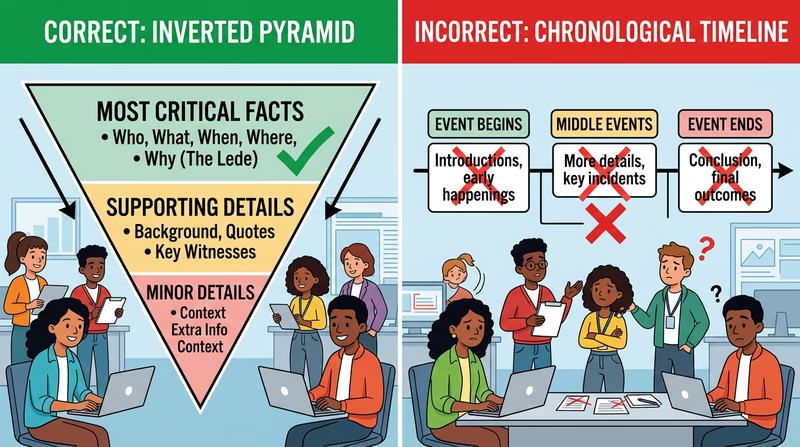
Inverted pyramid style starts with the most important information first. The lead answers the biggest questions immediately. After that, the story adds supporting details, quotes, and background in descending order of importance.
This style works best when readers may only skim the first few paragraphs. It is common in breaking news and straight reporting.
Chronological Style
Chronological style tells the event in time order. It helps readers follow how something unfolded from beginning to end. This style often works well when the sequence itself is interesting, such as a ceremony, race, rescue, speech, or contest.
What Changes Between the Two Versions?
The facts should stay accurate in both stories, but the reading experience changes.
- In the inverted pyramid version, the result or central news comes first.
- In the chronological version, the reader experiences the event as it happened.
Before You Draft Both Articles
Gather material that works in either structure- Lead fact: What is the single most important thing readers should know?
- Timeline: What happened first, next, and last?
- Strong quote: Which quote adds voice or meaning?
- Key detail: What moment helps readers picture the event?
This option connects directly to Req 3d, where you practiced matching story style to audience and purpose.
🎬 Video: Inverted Pyramid Tutorial — SampsonTube — https://www.youtube.com/watch?v=FZvgbUoDkYU
Next, if you want to cover the event in broadcast style instead of written article form, move to Option 4b.
Req 4b — Broadcast Scripts and Reviews
This option asks you to cover one event in three broadcast-friendly ways. That means you are not only reporting facts. You are also shaping tone and purpose for three different kinds of scripts.
The Three Pieces
News story
This version tells the audience the most important facts quickly. It should sound clear when read aloud and move efficiently from lead to supporting detail.
Feature story
This version spends more time on scene, character, emotion, or atmosphere. It still needs facts, but it can breathe more than the straight news version.
Critical review
A review includes judgment. Maybe you are reviewing a play, concert, speech, exhibit, or public performance. The key is honesty supported by evidence. Explain why something worked or did not work.
Writing for the Ear
Broadcast writing should sound natural aloud. Use shorter sentences than you might use in print. Avoid crowded numbers and long quotes. If a sentence is hard to say, it will probably be hard to hear.
Broadcast Writing Checklist
Use this before you present or share your scripts- Read it aloud: Does it sound smooth and conversational?
- Trim extra detail: Keep only the facts the audience can absorb quickly.
- Use transitions: Help listeners follow from one idea to the next.
- Support opinions in the review: Give examples instead of vague praise or criticism.
This option builds on what you practiced in Req 2b, where you compared how broadcast outlets use timing, voice, and visuals.
Next, if you want to tell the story with images instead of scripts, move to the photojournalism option.
Req 4c — Photojournalism Storytelling
Photojournalism is reporting with a camera. Your job is not to collect random pictures. Your job is to choose images that explain what happened, who was there, and why the event mattered.
News Photos vs. Feature Photos
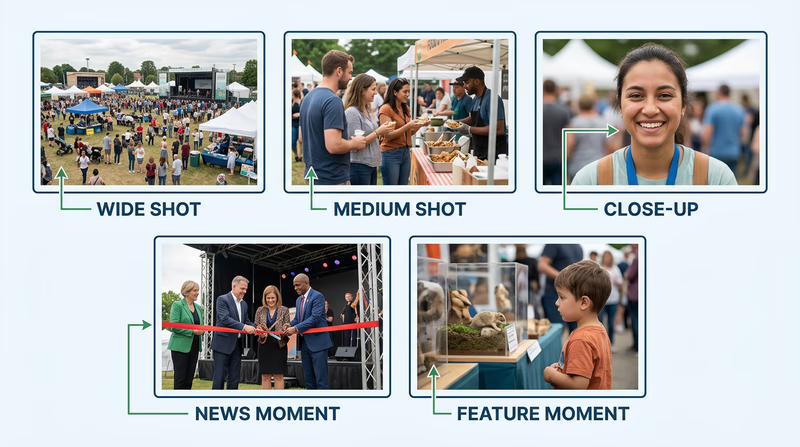
A news photo shows a key moment or important action. It helps answer, “What happened?”
A feature photo often captures emotion, detail, reaction, or atmosphere. It helps answer, “What did it feel like to be there?”
A strong event presentation usually needs both. The news photo gives the audience the essential event. The feature photo helps them care.
Build a Complete Visual Story
Try to include a mix of shots:
- a wide shot showing the whole setting
- a medium shot showing action or interaction
- a close-up showing detail or emotion
- at least one clear news moment
- at least one feature-style moment
Captions Matter
A caption does real journalism work. It identifies people, explains what is happening, and places the image in context. Good captions are specific. They do not just say, “People at the event.”
What Makes a Strong Caption
Use these ingredients for each photo- Who is in the image?
- What is happening?
- Where and when did it happen?
- Why does this moment matter?
Your brief synopsis should connect the whole set of images. Think of it as the short written bridge that helps viewers understand the event before they start reading the captions.
🎬 Video: 7 Photojournalism Tips by Reuters Photographer Damir Sagolj — Context — https://www.youtube.com/watch?v=zsO9IObsaRA
Next, the final requirement asks you to look ahead at journalism careers and decide whether one of them interests you.
Req 5 — Journalism Careers
Journalism skills reach far beyond one job title. People who gather facts, verify claims, interview sources, tell stories clearly, and communicate to the public work in many different settings.
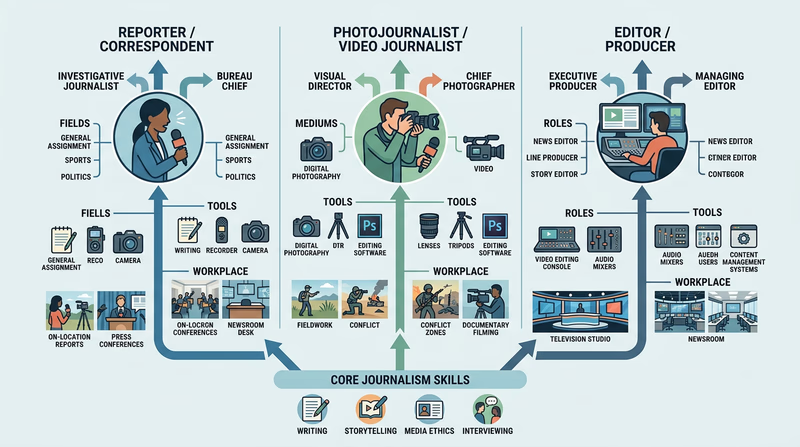
Three Career Paths to Consider
Reporter or Correspondent
Reporters gather information, interview sources, attend events, and produce stories for newspapers, websites, stations, or magazines. Some cover a general beat, while others specialize in politics, sports, business, science, or investigations.
Photojournalist or Video Journalist
These journalists tell stories with images, video, and sound. They often work in fast-moving conditions and need both technical skills and strong news judgment.
Editor or Producer
Editors and producers shape coverage behind the scenes. They assign stories, improve drafts or scripts, check quality, and help decide what audiences most need to know.
Other related roles include fact-checker, audience engagement editor, data journalist, documentary producer, public media host, and communications specialist.
How to Research One Career Well
Pick one career and build a clear profile of it. Try to answer each part of the requirement with evidence from reliable sources:
- Training and education: Is a college degree common? What subjects help most? Are internships important?
- Certification requirements: Many journalism jobs do not require a license, but technical or specialized fields may value certain training.
- Experience: What entry-level work helps you get started?
- Expenses: Think about college, equipment, software, transportation, or unpaid internship time.
- Employment outlook: Is the field growing, shrinking, or changing shape?
- Starting salary and advancement: What does a beginner earn, and what higher roles can come later?
Questions for Your Career Research
Use these to organize your notes before meeting your counselor- What does a typical day look like?
- Which skills matter most?
- What is challenging about the job?
- What is exciting or meaningful about it?
- Would I enjoy the pace, pressure, and type of work?
🎬 Video: Career Pathways Week Three—Journalism — Cawley Career Education Center — https://www.youtube.com/watch?v=SM3q_4bVERI
By the end of this requirement, you should be able to tell your counselor not only what a journalism-related job involves, but also whether it matches your own interests and strengths.
Extended Learning
A. Congratulations
You have completed a badge that asks you to do more than write. You studied rights, ethics, platform differences, interviews, event coverage, and careers. That combination matters because journalism is not just a school assignment — it is one of the ways communities understand themselves.
If this badge made you notice headlines differently, question unsupported claims faster, or pay closer attention to how stories are framed, it already changed how you move through the world. That is a strong result.
B. Deep Dive — How Newsrooms Verify Information
Verification is one of the clearest differences between journalism and rumor. A newsroom should not publish a claim just because it is interesting, emotional, or already spreading online. Instead, journalists ask what evidence supports the claim, who can confirm it, and what is still uncertain.
Professional verification often includes checking public records, comparing multiple eyewitness accounts, confirming identities, reviewing timestamps, studying original documents, and contacting the people or institutions involved. Reporters also ask whether a photo, video, or quote has been taken out of context. A clip that looks dramatic on social media may tell the wrong story if it is old or cropped.
Verification also includes honest language. Good journalists do not pretend certainty when facts are still developing. They may write that officials said something, that witnesses reported something, or that records showed something. Those distinctions help audiences understand what is confirmed and what still needs more reporting.
If you want to practice this skill, take a trending claim from social media and try to verify it without reposting it. Track the original source, look for independent confirmation, and decide whether the evidence really supports the claim. That exercise builds the habits journalism depends on.
C. Deep Dive — The Power of Local Journalism
National headlines get more attention, but local journalism often affects daily life more directly. Local reporters cover school budgets, road closures, storm recovery, public safety, zoning debates, water quality, park plans, and city spending. Those topics may not look dramatic on a national feed, but they can shape how a community lives.
When local journalism is strong, people know what meetings are happening, which promises leaders made, how tax money is being used, and what changes may affect neighborhoods. When local journalism weakens, communities can lose an important source of accountability. Rumors travel faster. Fewer decisions get public scrutiny. Citizens have a harder time learning what is really happening close to home.
One of the best ways to keep practicing journalism after this badge is to pay attention to local stories others ignore. A small issue handled carefully can be more useful than a huge topic covered vaguely. If you want to build your skills, start close to home.
D. Deep Dive — Journalism in the Age of AI and Algorithms
Modern audiences rarely receive news in one neat package. Stories arrive through search results, alerts, recommendation systems, social feeds, newsletters, podcasts, and video platforms. That means algorithms often shape what people see first.
This creates new opportunities and new problems. Useful reporting can reach readers quickly, but false or low-quality content can also spread fast if it triggers strong emotion. AI tools can summarize, translate, transcribe, and organize reporting work, but they can also generate fake images, fake audio, and fake text that looks persuasive at a glance.
That makes human judgment even more important. Journalists still need to verify sources, explain uncertainty, and provide context that a machine summary may miss. Readers also need stronger media literacy. Asking, “Who created this? How do they know? What evidence is shown? What might be missing?” matters more than ever.
If journalism interests you long term, learning about technology will help. But remember that technology does not replace the central mission. Journalism still depends on curiosity, verification, fairness, and service to the public.
E. Real-World Experiences
Visit a public meeting
Attend a school board, city council, or planning commission meeting and take notes like a reporter. Watch who speaks, which questions get asked, and what decisions affect the community.
Volunteer with a troop or council publication
If your troop, district, or council has a newsletter, website, or social channel, offer to help cover events, write short stories, or take photos.
Shadow a campus or local newsroom
A school newspaper, yearbook staff, radio station, or local newsroom can show you how story meetings, deadlines, and editing really work.
Start a small reporting project
Pick one local issue and follow it for a month. Read updates, attend a related event, and interview at least one person involved.