Req 1 — Press Freedom & Media Ethics
A free press means journalists can gather information, ask hard questions, and publish news without the government deciding which true stories may be told. That freedom matters because communities make better decisions when people can learn what leaders, businesses, and institutions are doing.
Freedom of the Press and the First Amendment
The First Amendment says that Congress may not make laws abridging freedom of speech or of the press. In plain language, that means the government cannot punish people just because officials dislike their opinions or reporting. Journalists can investigate, criticize, and publish even when the story is uncomfortable for powerful people.
That protection is not a license to say anything at all. Journalists still have to obey laws about defamation, respect some privacy rights, and report honestly. The First Amendment protects responsible reporting, not careless falsehoods.
How Press Freedom Helps the Public
Why this protection matters in everyday life
- Watchdog role: Reporters can question officials, review public records, and alert the public when something is wrong.
- Public debate: People can hear multiple viewpoints instead of only the official version.
- Accountability: Leaders know their decisions may be examined in public.
- Community knowledge: Residents learn about safety issues, school decisions, elections, and events that affect them.
Fact vs. Opinion
One of the most important journalism skills is spotting the difference between a verifiable fact and a personal judgment.
A fact is something you can check with evidence. A vote count, the date of a meeting, the amount in a budget, or a direct quote from a recorded interview can all be verified.
An opinion is what someone thinks, believes, prefers, or concludes. Opinions may be thoughtful and informed, but they are still judgments rather than directly provable statements.
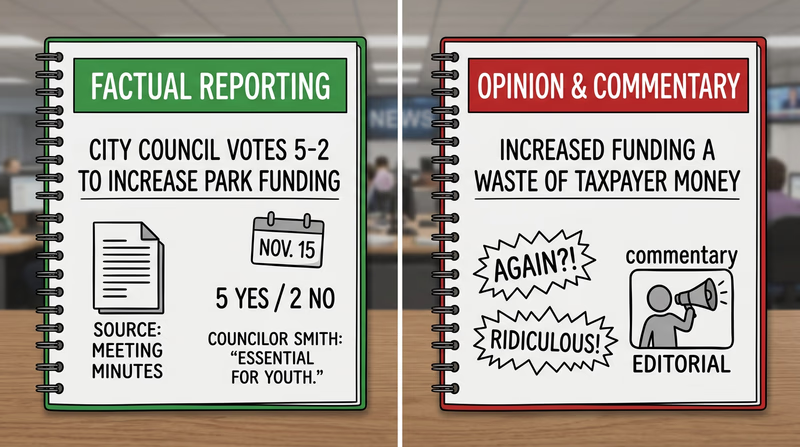
Here is a quick test: if you ask, “How would I prove this?” and can point to documents, recordings, data, or direct observation, you are probably dealing with a fact. If the answer depends on taste, interpretation, or personal belief, it is probably opinion.
Key Legal Terms
Defamation
Defamation is a false statement presented as fact that harms a person’s reputation. It is the broad category that includes both libel and slander.
Libel
Libel is written or published defamation. A false statement in a newspaper article, web post, caption, or script can be libel if it damages someone’s reputation.
Slander
Slander is spoken defamation. A false statement said on a broadcast, podcast, or public speech can count as slander.
Fair Comment and Criticism
Fair comment and criticism protects honest opinions about matters the public can judge for themselves, especially reviews and commentary. A movie reviewer may say a film was confusing. A sports columnist may argue that a coach made a poor decision. Those are opinions, not false claims of fact.
Public Figure
A public figure is someone who has unusual influence or visibility, such as an elected official, celebrity, or well-known community leader. Public figures usually face a higher legal standard in defamation cases because open discussion about public people is important in a democracy.
Privacy
Privacy refers to a person’s right to keep some parts of life from public exposure. Just because you learn something about someone does not always mean you should publish it. Good journalists ask whether information is newsworthy, accurate, and fair to share.
Malice
In journalism law, actual malice does not mean simple meanness. It means publishing something while knowing it is false or while recklessly ignoring whether it is true. That standard is especially important in cases involving public figures.
Ethics: Legal Does Not Always Mean Right
Some choices may be legal but still unethical. A journalist could quote someone accurately while leaving out important context. A headline could exaggerate to attract clicks. A photo could be cropped in a way that changes how readers interpret the scene.
Journalism ethics asks bigger questions:
- Is this accurate?
- Is it fair?
- Have I checked enough sources?
- Am I separating reporting from opinion?
- Could this cause unnecessary harm?
- Am I giving readers enough context to understand the truth?
A strong journalist cares about trust. If readers cannot trust you, they will stop listening — even when your next story is correct.
In Req 3, you will choose a storytelling challenge of your own. Everything on that page depends on what you learned here first: verify facts, label opinion honestly, and treat people fairly.
Before you choose a reporting path, make sure you can explain why truth, fairness, and freedom all belong together in journalism.