Req 2a1 — Comparing Coverage
This is real media analysis. You are not just collecting four articles. You are asking how four different kinds of outlets make choices about the same event.
What to Compare
Start with one event that got broad coverage on the same day. Then compare these four sources:
- a local news source or newspaper
- a national news source or newspaper
- a news magazine, either printed or online
- a social media news feed, with parent or guardian permission
The goal is not to decide which source you personally like best. The goal is to notice how each source handles the same basic facts.
Story length
Measure length in a way that makes sense for the platform. Count words for written stories. Estimate screen space for online pieces. For social media, note whether the post is brief, threaded, mostly visual, or links outward to fuller reporting.
Fairness
A fair story does not have to give every viewpoint equal space, but it should represent major sides honestly. Ask:
- Are key people or groups quoted or described fairly?
- Does the story explain the strongest evidence on each side?
- Does the headline match what the article actually says?
- Does the story leave out context that would change the reader’s understanding?
Accuracy
Accuracy starts with names, dates, numbers, and quotes, but it goes farther. A story can contain technically correct facts and still mislead if it leaves out important background.
Questions to Ask Each Source
Use these to guide your comparison notes
- What is the main angle? What does the story seem to care about most?
- What evidence appears first? A quote, data, eyewitness detail, or official statement?
- How much context is included? Does the story explain what happened before this event?
- Who gets quoted? Officials, witnesses, experts, everyday people, or nobody?
- How does the platform shape the story? Is it short because of space, speed, or audience expectations?
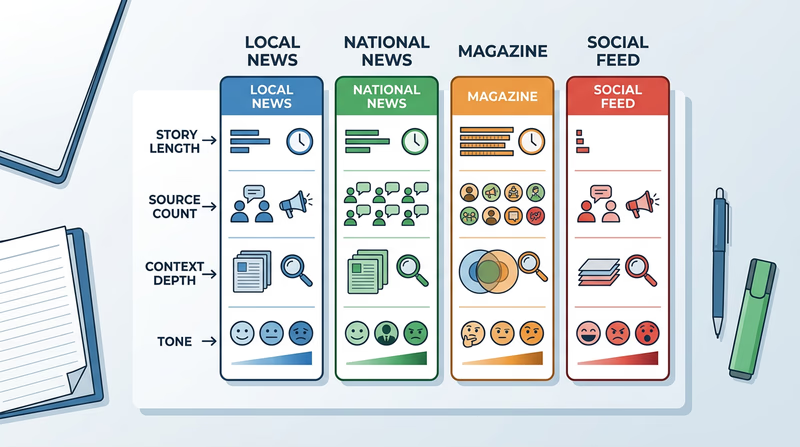
Why the Sources May Differ
A local outlet may spend more time on local names, practical impact, and community reaction. A national outlet may widen the lens and connect the event to politics, economics, or national trends. A magazine may slow down and explain causes or consequences. A social media feed may prioritize speed, emotion, or shareability — sometimes at the cost of context.
That does not automatically make one source right and the others wrong. It means journalism changes with format, audience, and deadline pressure.
When you report back to your counselor, be ready to say not only which stories were longer or shorter, but also why they felt different. That explanation is the heart of this requirement.
The next page shifts from reading stories to seeing how a publication works from the inside.