Req 3 — Life Jackets & Rescue Equipment
This requirement covers the gear that keeps a kayaking problem from becoming an emergency. You will focus on two big ideas:
- Your life jacket has to fit the way kayakers actually paddle
- Safety equipment only helps if you know what it is for and can reach it fast
Requirement 3a
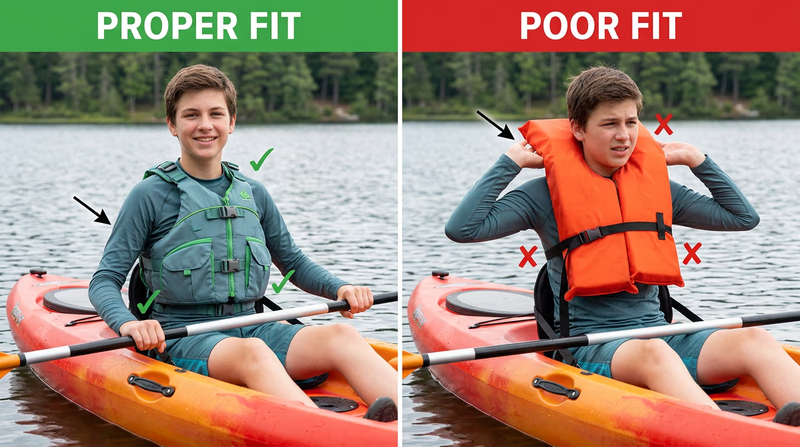
A life jacket for kayaking should let you paddle freely, stay secure in the water, and remain comfortable long enough that you will actually wear it. That usually means a paddling-specific design with large arm openings, a cut that works with a seated position, and enough adjustment points to create a snug fit.
Kayaking life jackets are different from cheap, bulky “just in case” jackets stored under a bench seat. A kayaker needs a jacket that stays on the body during swimming, reentry, and rescue work. If it rides up around your ears or shifts when you lift your arms, it does not fit correctly.
How to Check Fit
Start by choosing the correct size range based on body measurements and manufacturer guidance. Fasten all buckles and tighten the straps. Then move in it. Sit down. Rotate your torso as if paddling. Raise your arms. Have a partner tug upward at the shoulders. A good fit feels snug but not restrictive.
Life Jacket Fit Test
What to check before launching
- Snug around the torso: Tight enough that it does not slide up easily.
- Arm movement: You can rotate and stroke without rubbing badly.
- No major gaps: Straps are adjusted, not hanging loose.
- Seated comfort: The jacket does not bunch up badly against the seat.
- Water-ready fit: It stays put when someone lifts gently at the shoulders.
Why It Must Always Be Worn
A life jacket cannot help if it is strapped to the deck or sitting in a hatch. Capsizes are sudden. Cold shock, impact, current, and surprise can take away your chance to put one on later. Wearing it from launch to landing is the only reliable choice.
U.S. Coast Guard Boating Safety — Life Jackets See how to choose, fit, and inspect life jackets for safe boating activities.Requirement 3b
Good safety gear gives you options. It buys time, improves communication, and helps solve problems before they grow. Each piece of equipment has a specific job.
A signal device, often a whistle, helps you get attention fast without depending on your voice. An extra paddle matters if the main paddle breaks, floats away, or is lost during a rescue. A sponge and bilge pump help remove water from the boat after a capsize or assisted rescue.
Flotation bags help some kayaks keep from filling completely with water, which makes recovery easier. A throw bag is a rescue tool that lets one paddler throw a floating rope to another person in the right setting and with proper training. Not every piece of gear belongs on every calm-water outing, but you should know what each item is for and why it matters.
What Each Piece of Gear Solves
Match the item to the problem
- Whistle or signal device: Calling attention in wind, distance, or low visibility.
- Extra paddle: Main paddle lost, damaged, or separated from the paddler.
- Sponge: Removing leftover water after rescue or splashing.
- Bilge pump: Clearing larger amounts of water from inside the boat.
- Flotation bags: Reducing how much water a boat holds after a capsize.
- Throw bag: Reaching a swimmer from a safer position when conditions and training support its use.
Now that you know the gear that keeps you safe, the next step is understanding the kayak itself — what each part does, why boats are shaped differently, and how to take care of them.