Req 4 — Kayak Parts, Design & Care
This requirement is about understanding the kayak as a tool, not just a place to sit. You will learn:
- The major parts of a kayak
- Why different kayak designs feel and behave differently
- How proper care keeps a boat safe and usable
Requirement 4a
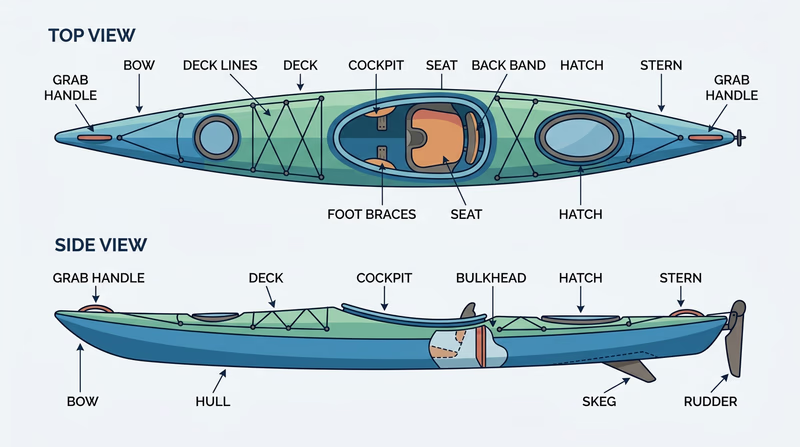
A kayak becomes easier to control once you know what you are looking at. The bow is the front, and the stern is the rear. The hull is the bottom of the boat, while the deck is the top surface. If the kayak has a cockpit, that is the opening where the paddler sits.
Inside the boat, you may see a seat, back band, foot braces, and thigh braces. These are the contact points that help you control the kayak with more than just your paddle. Some boats also have grab handles, deck lines, bungees, bulkheads, hatches, skeg, or rudder systems depending on the type of kayak.
The point is not to memorize fancy words for no reason. The point is to be able to talk clearly during instruction, rescue practice, and gear setup. If an instructor says, “Grab the bow handle,” you should know exactly where to look.
Major Kayak Parts to Know
Common terms a Scout should recognize and point out
- Bow / stern: Front and back of the kayak.
- Hull / deck: Bottom and top surfaces of the boat.
- Cockpit or seat area: Where the paddler sits.
- Seat and back support: Where posture and comfort start.
- Foot braces: Help with power transfer and control.
- Grab handles / deck lines: Useful for carrying and rescue handling.
- Hatches / bulkheads: Storage and sealed flotation compartments on some boats.
- Skeg or rudder: Features on some kayaks that help tracking or steering.
Requirement 4b
Kayak design is always a tradeoff. A boat that turns quickly may not track straight as well. A boat that feels very stable at rest may be slower or less responsive. That is why different styles of kayaking use different boats.
A recreational kayak is usually shorter and wider. That makes it feel stable and approachable for beginners on calm water. A whitewater kayak is usually short with significant rocker, meaning the ends curve upward more. That shape helps the boat turn quickly and ride over moving features. A sea or touring kayak is usually longer and narrower so it tracks straighter and travels efficiently over distance.
Four Design Ideas to Compare
- Length: Longer boats tend to go straighter and cover distance better.
- Width: Wider boats tend to feel more stable at first.
- Stability: Some boats feel reassuring right away; others feel lively but handle rougher water well once edged properly.
- Rocker: More rocker helps turning and maneuvering; less rocker often helps straight tracking.
| Kayak Type | Length Tendency | Width Tendency | Rocker | What It Feels Best At |
|---|---|---|---|---|
| Recreational | Short to medium | Wider | Low to moderate | Calm water, easy learning, relaxed outings |
| Whitewater | Short | Medium | High | Quick turns, maneuvering in current, rapid response |
| Sea/Touring | Long | Narrower | Low to moderate | Distance, efficiency, open-water travel |
Requirement 4c
A kayak lasts much longer when it is cleaned, checked, and stored correctly. Dirt, sun, dragging, and poor support can all shorten the life of the boat. Plastic boats are tough, but they can still warp or crack. Composite boats can be lighter and faster, but they can be damaged by impact.
After paddling, rinse off sand, mud, salt, and plant material. Check the hull for deep scratches, cracks, worn hardware, and missing drain plugs or hatch covers. Dry the boat before long storage when possible. If the kayak has straps, lines, seats, or foot braces, inspect those too.
Storage matters because hull shape matters. Support the kayak according to the manufacturer’s guidance or in a way that spreads weight evenly. Keep it out of harsh sun when possible. Long periods of heat and bad support can deform the hull.
Basic Kayak Care Routine
What to do after a trip
- Rinse the boat: Especially after saltwater, muddy, or weedy paddling.
- Inspect the hull: Look for cracks, deep gouges, or worn spots.
- Check outfitting: Seat, braces, lines, handles, and hatches should all work.
- Dry it out: Reduce mildew, odor, and trapped moisture.
- Store with support: Avoid leaving the boat sagging on hard points for months.
You now know the boat itself. Next, you will focus on the tool that makes the kayak move: the paddle, your grip, and the techniques that turn effort into control.