Req 8 — Maneuvering with Control
This final skills requirement brings everything together. You are no longer just naming strokes. You are using them to make the kayak do exactly what you intend:
- Hold a straight line
- Pivot sharply
- Move sideways
- Stop quickly
- Turn while moving
- Reverse effectively
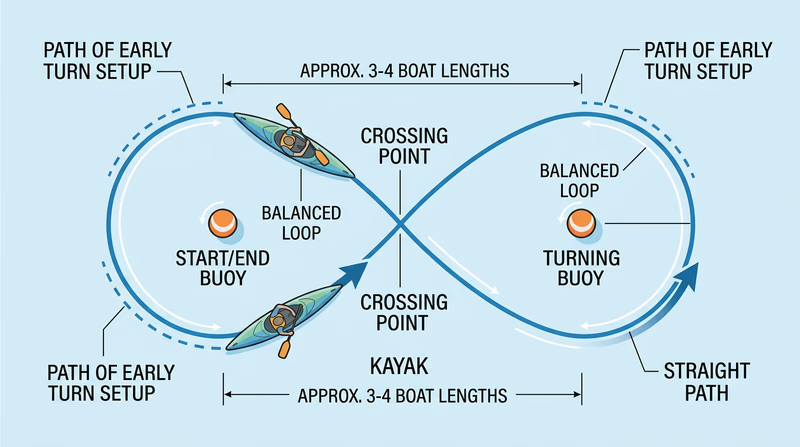
- Link maneuvers in a figure 8 course
Requirement 8a
Paddling straight sounds easy until the kayak starts drifting off course with every stronger stroke. Holding a line means using balanced forward strokes, steady posture, and awareness of how wind, trim, and body position affect tracking.
Requirement 8b
This maneuver shows that you can turn the kayak efficiently without needing lots of forward space. Strong sweeps, edging when taught appropriately, and clean body position all help the kayak rotate in place.
Requirement 8c
Sideways motion is mostly about draw stroke control. The kayak should slide, not accidentally turn or surge ahead. This is a useful skill for docking, grouping up, or making small corrections in tight spaces.
Requirement 8d
A quick, controlled stop shows good judgment as much as good technique. You need to recognize momentum, use reverse strokes efficiently, and stay balanced as the boat slows.
Requirement 8e
Turning while still moving ahead is a more realistic paddling skill than turning from a dead stop. It shows you can blend strokes instead of treating each maneuver as a separate event.
Requirement 8f
Paddling backward tests awareness and control. The boat may want to wander. Smooth reverse strokes and quick correction help you keep it moving where you want.
Requirement 8g
The figure 8 is where separate skills become actual boat handling. You need direction changes, rhythm, and foresight. If you wait too long to set up the turn, the course gets messy. If you read the line early, the kayak flows through it.
What Counselors Are Looking For
This requirement is not about looking flashy. It is about looking in control. A counselor usually wants to see that you understand what stroke solves which problem and that you can stay balanced while using it.
Boat Control Habits
What helps every maneuver in this requirement
- Look where you want to go. Your body often follows your eyes.
- Sit tall and centered. Trim and balance affect every stroke.
- Set up early. Start turns before you are already past the marker.
- Use smooth corrections. Overcorrecting creates more work.
- Finish the maneuver under control. A sloppy finish usually means the stroke sequence needs work.
You have now covered the full kayaking badge progression: safety, swim readiness, gear, boat design, paddle use, rescues, strokes, and boat control. The next page looks beyond the badge at ways to keep growing as a paddler.