Kayaking Merit Badge Requirements
Learn kayak safety, paddling techniques, strokes, rescues, and navigation. Master equipment care and complete water trips to earn this merit badge.
Requirements
- Do the following:
- Explain to your counselor the hazards you are most likely to encounter while participating in kayaking activities, including weather and water-related hazards, and what you should do to anticipate, help prevent, mitigate, and respond to these hazards.
- Review prevention, symptoms, and first-aid treatment for the following injuries or illnesses that can occur while kayaking: blisters, cold-water shock and hypothermia, heat-related illnesses, dehydration, sunburn, sprains, and strains.
- Review the Scouting America Safety Afloat policy. Explain to your counselor how this applies to kayaking.
- Before doing requirements 3 through 8, successfully complete the Scouting America swimmer test. Note: See the Swimming merit badge pamphlet for details about the Scouting America swimmer test.
- Do the following:
- Review the characteristics of life jackets most appropriate for kayaking and understand why one must always be worn while paddling. Then demonstrate how to select and fit a life jacket for kayaking.
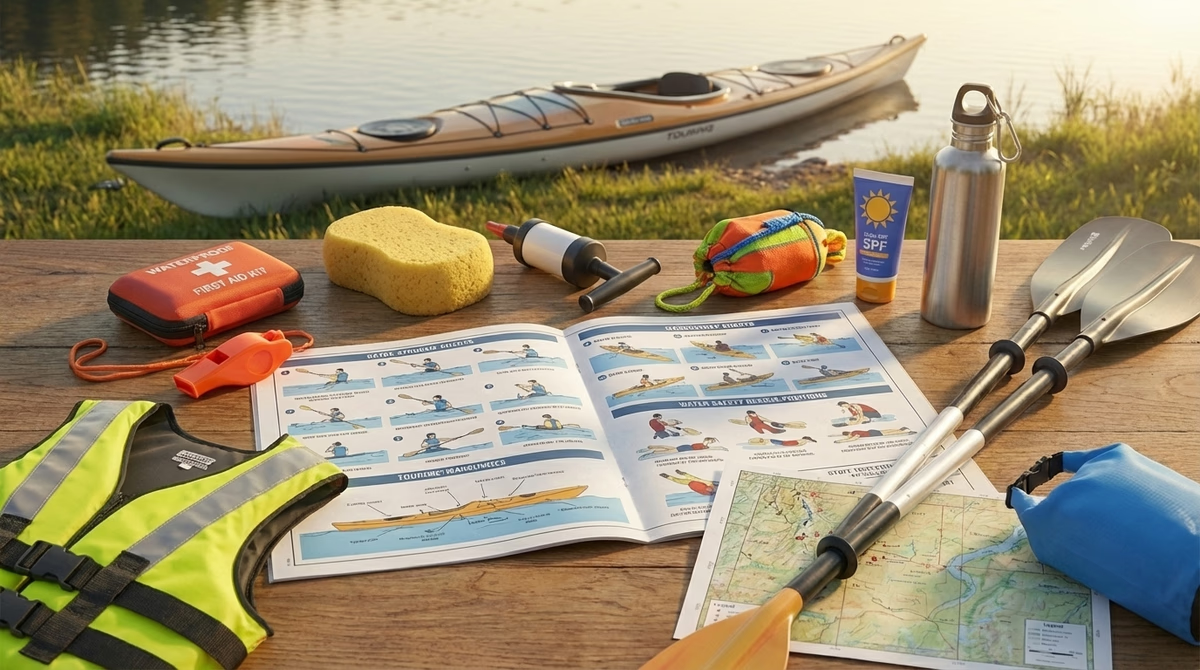
- Review the importance of safety equipment such as a signal device, extra paddle, sponge, bilge pump, flotation bags, and throw bag.
- Do the following:
- Name and point out the major parts of a kayak.
- Review the differences in the design between recreational, whitewater, and sea or touring kayaks. Include how length, width, stability, and rocker are involved in the design of each type.
- Explain the care, maintenance, and storage of a kayak.
- Discuss the following:
- Correct methods for the use of a kayak paddle
- Parts of a paddle
- The care and maintenance of a paddle
- Using a properly equipped kayak with an open cockpit, a sit-on-top, or an inflatable kayak, do the following:
- Safely capsize and perform a wet exit.
- Reenter the kayak with assistance from a buddy boat.
- Demonstrate a kayak-over-kayak rescue.
- Demonstrate the HELP position.
- Capsize the kayak, swim it and the paddle to shore, and empty water from the kayak with assistance if needed.
- As a solo paddler, use a properly equipped kayak to demonstrate the following:
- Forward stroke
- Backstroke
- Forward sweep
- Reverse sweep
- Draw stroke
- Stern draw
- As a solo paddler, use a properly equipped kayak to demonstrate the following:
- Paddle a straight line for 15 to 20 boat lengths using appropriate strokes while maintaining trim and balance of the kayak.
- Spin or pivot from a stationary position 180 degrees (half circle) to the right and left within two boat lengths.
- Move abeam to the right 10 feet and to the left 10 feet.
- Stop the boat in one boat length.
- While maintaining forward motion, turn the kayak 90 degrees to the right and left.
- Move the kayak backward three to four boat lengths using appropriate and effective reverse strokes.
- Paddle the kayak in a buoyed figure 8 course around markers three to four boat lengths apart.