Extended Learning
A. Congratulations
You have finished a badge that asks you to see the world differently. Most people walk through a park, school entry, or public plaza without thinking much about why it feels easy, confusing, shady, hot, welcoming, or uncomfortable. Now you know how to ask those questions. That skill will stay useful long after the badge is done, whether you become a designer or just become someone who notices how places shape daily life.
B. Deep Dive: Designing for Stormwater
One of the biggest changes in modern landscape architecture is the way designers think about rain. For many years, the goal was to get stormwater off a site as fast as possible with pipes, curbs, and storm drains. That still matters, but many projects now try to slow water down, spread it out, soak some of it into the ground, and clean it before it reaches streams or lakes.
That is where features like rain gardens, bioswales, tree trenches, permeable pavement, and planted detention areas come in. A rain garden is not just a flower bed that gets wet. It is shaped to collect runoff, hold it briefly, and let it soak into prepared soil. A bioswale is a planted channel that guides and filters water as it moves. Permeable pavement allows some water to pass through instead of running straight off the surface.
These ideas matter because hard surfaces such as parking lots and roofs increase runoff. More runoff means more erosion, more flooding, and more pollution carried into waterways. Good design can reduce those problems while still making a place attractive.
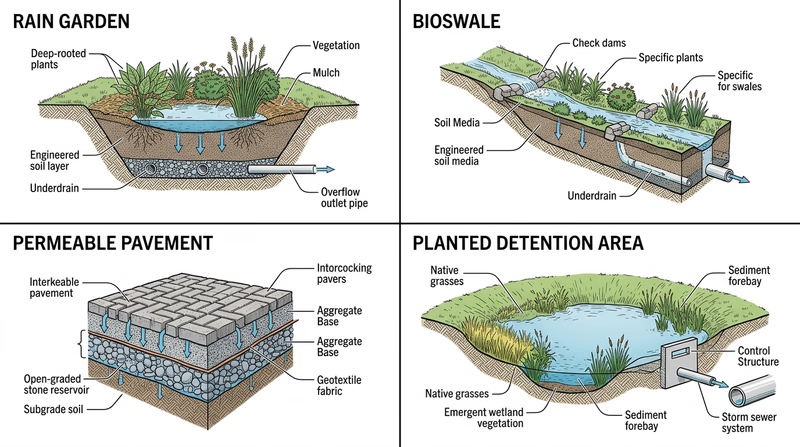
If you enjoyed the drainage part of Req 4, this is a great area to keep exploring. Many schools, parks, and civic sites now use visible green infrastructure so visitors can actually see how stormwater is being managed.
C. Deep Dive: Designing for People of Different Ages and Abilities
Landscape architecture is not only about land and plants. It is also about who gets to use a place comfortably. A site that works for an athletic teenager may not work well for a grandparent using a walker, a parent pushing a stroller, or a child who needs a calm sensory environment.
That is why accessibility is such a central part of the profession. Designers think about slopes, curb ramps, paving texture, route width, resting areas, seating height, shade, handrails, and how easy it is to understand where to go. They also think about visibility and comfort. Can someone sit in shade while waiting for a ride? Is there a safe route from a parking area to the front door? Can users move through the site without crossing dangerous traffic patterns?
Inclusive design goes beyond minimum rules. It asks how a place can be welcoming to many kinds of users from the very beginning instead of adding awkward fixes later. Some of the best landscapes feel simple and natural to use because the hard thinking happened during design.
The next time you visit a park or school, look for clues. Are there routes without steps? Is there seating with backs and arms for people who need support? Are paths wide enough for two people to move side by side? Those details tell you a lot about whether the place was designed with a broad range of users in mind.
D. Deep Dive: The Long Life of a Landscape
Buildings can seem finished on opening day, but landscapes are never truly frozen in time. Trees grow. Shrubs fill in. Roots expand. Drainage patterns shift. Maintenance crews prune, mow, replace plants, repair paving, and react to storms or drought. A landscape architect has to think ahead to all of that.
That long timeline is one of the most interesting parts of the field. A young tree may look almost too small on the day it is planted, yet five or ten years later it may be exactly the right scale. A shrub bed that looks tidy at first may become a maintenance problem if the species was placed too close together. A path that works well in dry weather may reveal a serious drainage issue after repeated storms.
This means design decisions should be judged over time, not just in a photograph. Good designers ask what a site will look like in one year, five years, and twenty years. They also ask who will care for it. A project with plants that need constant pruning or irrigation may struggle if the owner lacks money or staff.
If you like long-term thinking, this is one of the most rewarding parts of landscape architecture. You are not only designing a place for today. You are designing how it will grow, change, and be used in the future.
E. Real-World Experiences
Visit a Botanical Garden or Arboretum
These places are excellent for studying plant labels, mature tree forms, texture differences, and how collections are organized in space. Bring a notebook and record how plants are grouped and how paths guide visitors.
Walk a Downtown Plaza or Civic Space
Look at where people enter, where they stop, where they sit, and which areas stay busy or empty. Ask yourself whether shade, seating, and circulation seem to support real use.
Compare Two School or Library Entrances
Choose two public sites and compare them. Which one feels easier to understand? Which one handles arrival and waiting better? Which one is safer near traffic?
Explore a Green Infrastructure Project
Many communities now have rain gardens, creek restorations, permeable parking lots, or planted stormwater areas. These sites are a great way to see engineering and landscape architecture working together.
Interview a Professional
A short interview with a landscape architect, planner, arborist, nursery manager, or parks professional can teach you how classroom knowledge connects to real work, clients, budgets, and construction.