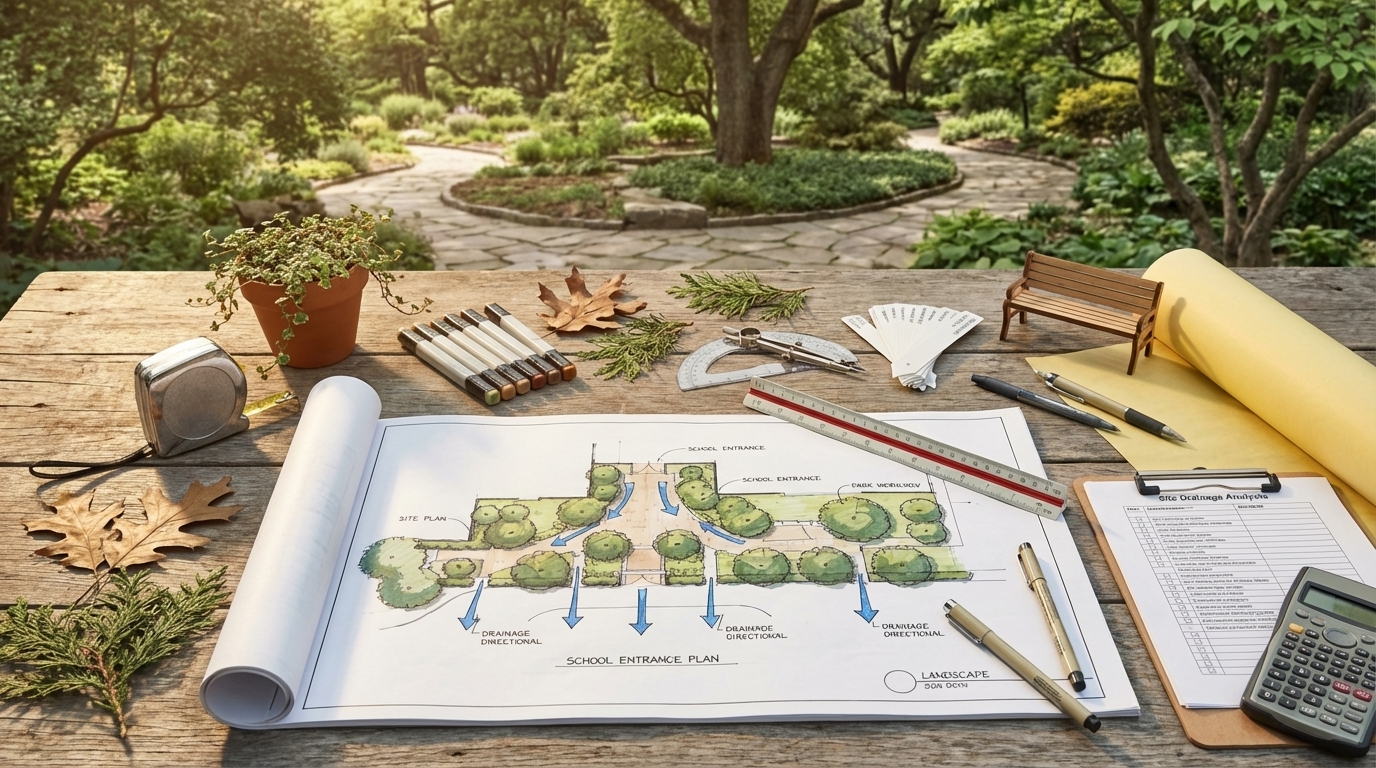
Landscape Architecture Merit Badge — Complete Digital Resource Guide
https://merit-badge.university/merit-badges/landscape-architecture/guide/
Introduction & Overview
Landscape architecture shapes the outdoor places people use every day: school entrances, playgrounds, parks, memorials, trails, courtyards, and town squares. It mixes art, science, plants, drainage, accessibility, and human behavior into one job. When you start noticing why one outdoor space feels welcoming while another feels confusing or uncomfortable, you are already thinking like a landscape architect.
Then and Now
Then
People have been designing outdoor spaces for thousands of years. Ancient Persian gardens used water channels and shade to create cool places in hot climates. Roman villas used courtyards and walkways to organize movement. In Europe and Asia, palace grounds, temple gardens, and public promenades showed how land could be shaped for beauty, ceremony, and daily life.
As cities grew in the 1800s, landscape architecture became its own profession. Designers such as Frederick Law Olmsted helped create major public parks, parkways, and campuses. These projects were not just decoration. They gave crowded cities trees, open space, cleaner air, and places for people to gather.
Now
Today, landscape architects still design beautiful places, but the job is even broader. They help manage stormwater, reduce heat, protect habitats, improve accessibility, and make public spaces safer and easier to use. A modern project might include native plants, shaded seating, bike access, rain gardens, and space for community events all in one plan.
That is what makes this badge so interesting. It is not only about how a place looks. It is about how a place works for real people in real weather over many years.
Get Ready!
You do not need to be a great artist to do this badge well. You need curious eyes, a measuring tape, a willingness to look closely, and the habit of asking good questions: Where do people enter? Where do they pause? Where does water go? What makes this place feel useful, safe, and inviting?
Kinds of Landscape Architecture
Landscape architecture covers many kinds of outdoor places. As you work through this guide, you will start seeing how different goals lead to different design choices.
Parks and Recreation Spaces
These are places built for play, rest, and gathering: neighborhood parks, campgrounds, plazas, trails, athletic complexes, and waterfronts. Designers think about shade, durable paths, seating, views, and how people of different ages will move through the space.
Campus and Civic Sites
Schools, libraries, places of worship, museums, and government buildings all need outdoor areas that help people arrive, orient themselves, and feel welcome. A good entrance sequence should be easy to understand from the street or parking lot all the way to the front door.
Residential Landscapes
Homes and apartment communities need outdoor spaces too. Landscape architects may design patios, planting beds, gathering areas, drainage improvements, play areas, screening for privacy, and connections between front, side, and back yards.
Environmental and Restoration Projects
Some projects focus on streams, wetlands, slopes, shorelines, or damaged land that needs repair. In those places, the design may help slow erosion, improve habitat, filter runoff, or restore native plant communities.
What Landscape Architects Pay Attention To
These questions will help you see a site with trained eyes- Arrival: Where do people come from, and is the entrance easy to recognize?
- Movement: Do the sidewalks and paths lead people naturally where they need to go?
- Comfort: Is there shade, seating, shelter, and room to wait without blocking others?
- Planting: Do trees, shrubs, and ground covers add beauty, guide movement, and fit the climate?
- Water: After rain, where does runoff flow, and where might it collect?
- Safety: Are lighting, visibility, crossings, and edges handled in a way that helps people feel secure?
Landscape architecture is really about solving outdoor problems with living materials and good planning. The first step is learning how to visit a finished project and read what the designer was trying to do.
Req 1 — Reading a Designed Place
A finished site can look simple at first glance: a walkway, some trees, a bench, maybe a lawn or a plaza. But every one of those choices may have been made for a reason. This requirement trains you to slow down, compare the built place to the design plan, and notice how people, plants, structures, and water all fit together.
What Counts as a Landscape Project?
Good choices include parks, civic plazas, school courtyards, memorial grounds, trailheads, community gardens, waterfront spaces, hospital gardens, or the grounds around a library, museum, or public building. The key is that the project was intentionally designed, not just planted randomly over time.
If you are not sure whether a landscape architect worked on a site, check the organization’s website, ask a city parks department, or contact a local design firm. Many firms post project photos and site plans online.
Before You Go
If a plan is available, bring it with you. A printed copy is best because you can circle features, add arrows, and write notes as you walk. If you cannot get the original plan, bring a notebook and sketch a simple base map while you are there.
Here are the main things to prepare before the visit:
Site Visit Prep
Bring these tools so you can observe carefully- Site plan or map: Use it to compare the design idea with what was actually built.
- Notebook and pencil: Pencil works better outdoors than ink if the weather is damp.
- Phone or camera: Take photos of arrival points, paths, seating, plantings, and drainage patterns.
- Comfortable shoes: You will likely walk the whole site more than once.
- Questions for the designer or site manager: Ask what problems the project was meant to solve.
How to Read the Site
Start at the main point of arrival. Pretend you are a first-time visitor. Can you tell where to go? Is the entrance obvious? Does the path lead you naturally forward, or do you have to guess?
Then walk the site in a loop. Stop often. Look back in the direction you came from. A good landscape often reveals itself in sequence. One view leads to the next. Paths connect spaces with purpose instead of wandering for no reason.
Pay attention to these questions:
1. What is the first impression?
Your first view tells you a lot. A broad walk with trees and lights may feel formal and welcoming. A narrow cracked sidewalk with no sign of an entrance may feel confusing. Landscape architects often think carefully about how people arrive because arrival sets the tone for the whole place.
2. How is the site organized?
Many good projects break large areas into smaller outdoor rooms. One space may be active and noisy, while another is quiet and shaded. A plaza, play area, lawn, seating terrace, or garden edge may each serve a different purpose.
3. Where do people move, stop, and gather?
Watch how people actually use the space. Do they follow the intended paths? Do they cut across grass because the sidewalks are awkward? Are benches placed where people want to sit, or are they empty because they face the wrong direction or sit in full sun?
4. What are the plants doing besides looking nice?
Trees can shade pavement, frame views, block wind, and mark edges. Shrubs can guide movement, soften building corners, or create privacy. Ground covers can protect soil, reduce mud, and tie spaces together visually.
5. How does the site handle rain?
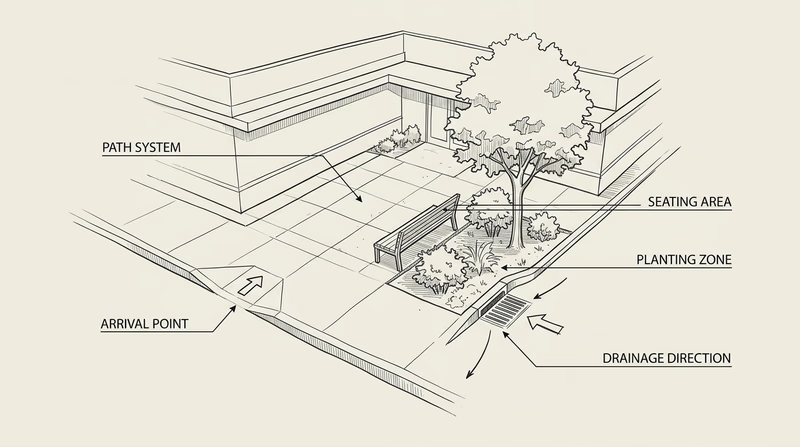
Look for slopes, drains, ditches, swales, curb cuts, rain gardens, or low spots. Water is one of the biggest forces shaping outdoor design. If the project handles water badly, people notice fast.
Compare the Plan to Reality
If you have a design plan, use it as a detective tool. Try to match labels, paths, planting zones, and structures to what you see on the ground.
Sometimes the built project matches the plan closely. Sometimes it changes because of budget, weather, soil conditions, plant availability, or maintenance needs. Noticing those changes is part of the lesson. The plan shows intent. The finished site shows how that intent survived real-world limits.
Questions to Ask During or After the Visit
If you can talk to a landscape architect, site manager, or knowledgeable staff member, ask questions that help you understand the design goals.
- What problems did this project need to solve?
- Who was the site designed for?
- Which features were most important to include?
- Were any parts of the original plan changed during construction?
- Which plants were chosen for climate, drainage, durability, or appearance?
- What has worked especially well since the project opened?
These questions will help you in Req 2, where you discuss how the site functions.
What to Bring Back to Your Counselor
Your counselor does not need perfect architectural drawings. They need evidence that you truly studied a designed place. Bring your marked-up plan or sketch, photos, and notes about the main spaces, paths, seating areas, plantings, and drainage patterns. Be ready to explain not just what is there, but why it may have been designed that way.
Your site visit gives you the raw material for the next requirement. Now you will look at the same place with more specific design questions in mind.
Req 2 — What Makes a Site Work
This requirement asks you to look at one completed project from four different angles. You are studying how the site is organized, how built features fit the plan, how the place supports people, and how plant choices affect both beauty and performance.
- 2a focuses on how the space is laid out and how people move through it.
- 2b looks at structures and activity areas such as seating, eating, and parking.
- 2c asks whether the site feels comfortable, sheltered, and secure.
- 2d turns your attention to trees, shrubs, and ground covers as working parts of the design.
Requirement 2a
A strong landscape usually feels easy to understand. You can tell where it begins, where it leads, and what each area is for. That does not happen by accident. Designers use edges, paving, plantings, grade changes, and structures to organize outdoor space.
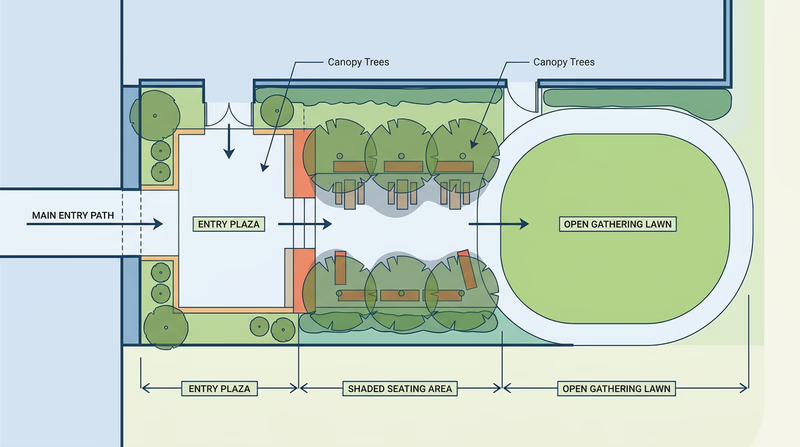
Separate spaces means the site has distinct outdoor “rooms.” A school courtyard might have a wide gathering zone near the doors, a quieter seating area under trees, and a path connecting both. A park may separate active play from quiet rest. If every activity happens in one big undefined area, the site may feel messy or uncomfortable.
A defined point of entry means people can recognize the main way in. Look for signs, widened walks, planting beds that frame the approach, lights, a gate, or a view line that draws the eye to the entrance.
A clear path system means the routes make sense. Paths should connect where people actually need to go. If users keep making shortcuts across grass, that is a clue the circulation system may not match real behavior.
Sun and shade variety matters because people use outdoor places in different weather and at different times of day. Full sun can be great in winter but miserable in summer. Shade from trees or structures often makes a site more usable for longer periods.
🎬 Video: Defining Spaces and Adding Privacy Outdoors | Design Tips | HGTV (video) — https://youtu.be/uVVCpugREjY?si=UjWU7ZHOL0LUOErs
How to Evaluate Site Organization
Use these prompts when discussing 2a with your counselor- Spaces: Can you point to at least two or three areas with different purposes?
- Entry: Would a first-time visitor know where to enter without help?
- Paths: Do sidewalks and walks connect arrival, destination, and gathering areas naturally?
- Sun and shade: Are there choices for users depending on the weather and time of day?
Requirement 2b
Outdoor structures and activity areas should feel like they belong to the same project. A bench, pavilion, bike rack, parking lot, trash enclosure, or picnic area can either strengthen the design or fight against it.
Look at materials, location, scale, and use. A shaded bench near a walking path may invite rest at just the right moment. A picnic area near a noisy parking lot may feel less successful. Parking should help people arrive, but it should not dominate the whole site. Good design often softens parking with trees, planting islands, and safe walks to the entrance.
Pay attention to whether structures support the site’s purpose. If the project is meant to be calm and welcoming, heavy concrete barriers and poorly placed signs might feel harsh. If the site serves families or older adults, seating and drop-off areas become even more important.
🎬 Video: Ripple Park | Landscape Architecture Capstone (video) — https://youtu.be/lEXvdRFBC8s?si=bSb-EyaJNFCsz99C
Requirement 2c
This may be the most human-centered part of the badge. A beautiful place can still fail if people do not feel comfortable or safe using it.
Comfort includes shade, seating height, room to gather, smooth walking surfaces, protection from glare, and enough space so people do not feel crowded.
Shelter may come from tree canopies, covered entries, canopies, pergolas, walls that block wind, or places to pause out of rain.
Security is partly about actual safety and partly about how a place feels. Good visibility, lighting, clear sightlines, and well-marked paths help people feel more at ease. Hidden corners, blocked views, or confusing routes can make a site feel less secure even if nothing dangerous is happening.
Spaces that Heal and Comfort (website) Shows how outdoor spaces can be designed to reduce stress, support recovery, and make users feel more comfortable and welcome. Link: Spaces that Heal and Comfort (website) — https://eptdesign.com/spaces-that-heal-and-comfort/Requirement 2d
Plants do much more than decorate. In landscape architecture, they are design tools with jobs to do.
Trees can create shade, cool pavement, frame key views, and make a site feel established. Shrubs can define edges, soften hard corners, separate spaces, and guide people away from areas they should not cross. Ground covers can hold soil, reduce erosion, fill awkward spaces, and reduce muddy bare ground where turf grass would struggle.
Think about appeal and function together. A flowering tree may make an entry more memorable, but it might also signal the arrival point. A dense evergreen hedge may add privacy, but if it blocks visibility too much it can hurt the sense of security. The best plant choices solve several problems at once.
🎬 Video: Landscaping with Trees and Shrubs: Types and Planting (video) — https://youtu.be/aBVcBep4Gv8?si=qvfbVWL4ZB2Qb4DJ
| Plant type | Appeal | Function |
|---|---|---|
| Trees | Seasonal color, height, strong visual identity | Shade, cooling, structure, screening |
| Shrubs | Texture, flowering, layered planting | Space definition, buffering, directing movement |
| Ground covers | Visual unity, low-growing color or texture | Soil protection, erosion control, reduced maintenance |
Pulling It All Together
When you discuss this requirement with your counselor, do not treat the four parts as separate checkboxes. They influence one another. A tree may provide shade for comfort, define a space, soften the edge of a parking lot, and improve the site’s appearance all at once. A walkway may guide movement, improve security, and connect seating to the main entrance. Good landscape architecture works because many pieces support each other.
This is also a good time to bring back observations from Req 1. Use your site visit notes, photos, and plan to explain what the design did well and what you might improve.
You have now studied a finished project like a design critic. Next, you will focus on the living materials that make landscapes work over time.
Req 3 — Choosing Trees, Shrubs, and Ground Covers
This requirement moves you from studying finished places to choosing the living materials that help create them. Landscape architects do not just ask, “What plant looks nice?” They ask, “What will this plant do here over the next 10 or 20 years?” Size, shape, texture, climate fit, and maintenance all matter.
Start Local
The requirement tells you to choose plants that will grow in your area, and that is one of the most important ideas in the whole badge. A plant that thrives in one state may struggle badly in another because of soil, rainfall, winter temperatures, summer heat, pests, or local diseases.
That is why a local nursery, extension office, arboretum, or your counselor can be so helpful. They know what succeeds where you live.
🎬 Video: Tree and Shrub ID (video) — https://youtu.be/YcMsvqqmorM?si=NO405TME8veCY23U
What to Compare
When you collect your five shrubs, five trees, and one ground cover, study each plant through the eyes of a designer.
Shape
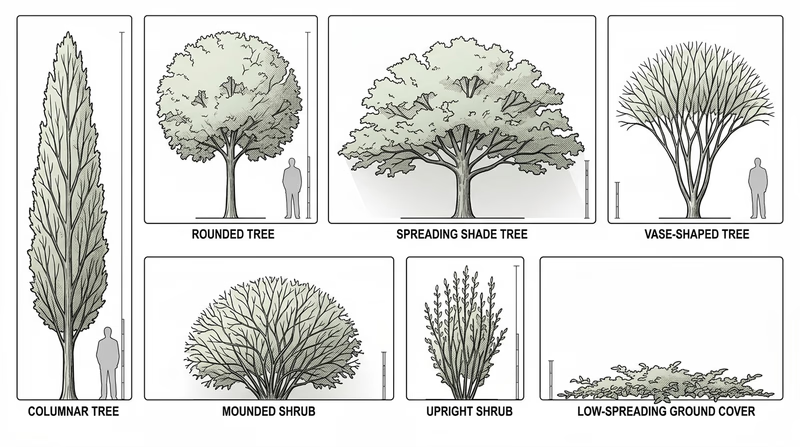
Shape is the overall outline of the plant. Common shapes include upright, vase-shaped, rounded, spreading, columnar, weeping, and mounded. Shape matters because it affects how a plant fits into space.
- A columnar tree can mark an entrance without taking up much width.
- A spreading shade tree can cool a patio or sidewalk.
- A mounded shrub can soften the base of a building.
- A low-spreading ground cover can tie planting beds together.
Size
Think about both current size and mature size. A young tree in a nursery pot may look tiny, but in 15 years it could interfere with power lines or block a doorway if planted in the wrong place.
Ask these questions:
- How tall will it get?
- How wide will it spread?
- How fast does it grow?
- What happens if it is planted too close to pavement, foundations, or utilities?
Texture
Texture describes how fine or coarse a plant appears. Small, delicate leaves often create a fine texture. Large bold leaves or heavy branching usually create a coarse texture. Mixing textures helps a planting design feel richer and more interesting.
Seasonal Interest
Some plants shine in spring flowers. Others stand out for summer shade, fall color, winter bark, berries, or evergreen foliage. A strong landscape often stays interesting in more than one season.
Plant Study Questions
Use these prompts for every plant you present- What is this plant’s shape?
- How large will it be at maturity?
- What texture does it add?
- Where could it be used in a landscape?
- What maintenance would it need?
- Why is it a good fit for your area?
How Plants Work in Design
When you present your plant choices, connect each one to a possible design use. That is the part that makes this a landscape architecture badge instead of a basic plant identification exercise.
Here are common uses you can talk about:
| Plant role | What it does |
|---|---|
| Shade tree | Cools walkways, lawns, parking edges, patios, and gathering spaces |
| Accent tree or shrub | Draws attention to an entrance, corner, or important view |
| Screening plant | Blocks an unwanted view or adds privacy |
| Space-defining plant | Helps create outdoor rooms and guide movement |
| Foundation planting | Softens the edge between building and ground |
| Ground cover | Protects soil, fills hard-to-mow areas, reduces erosion |
For example, a broad-canopy tree might be perfect near a bench or picnic table because it makes the area more comfortable. A dense evergreen shrub might screen a utility box or parking area. A low ground cover might be useful on a slope where grass is difficult to maintain.
Maintenance Matters
Every plant choice creates future work. Landscape architects think about beauty and maintenance together because a design that looks great on opening day may fail if it is too expensive or difficult to care for.
When discussing maintenance, consider:
- watering needs during establishment and in dry periods
- pruning frequency and the skill needed to do it well
- leaf, fruit, or flower drop that may require cleanup
- pest and disease concerns in your region
- whether mulch, edging, or weed control will be needed
- whether the plant is likely to outgrow its space
How to Build a Strong Presentation
The requirement asks you to bring pictures or plant samples and be ready to explain them to a group. That means organization matters.
A strong way to prepare is to make one page or note card per plant. Include:
- common name and, if useful, scientific name
- whether it is a tree, shrub, or ground cover
- shape, mature size, and texture
- one or two best uses in a landscape
- basic maintenance notes
- why it grows well in your region
You do not need to memorize everything perfectly. You do need to show that you understand how each plant would be used intentionally.
Avoid Common Mistakes
A few problems show up again and again when beginners choose landscape plants:
- picking plants for flowers alone and ignoring mature size
- choosing species that do not tolerate local winters or summers
- placing large shrubs where they will eventually block windows or signs
- using one texture or one height everywhere so the design feels flat
- forgetting that maintenance crews need room to mow, prune, and mulch
This requirement also connects directly to Req 2. When you studied the finished landscape, you were looking at what plant choices achieved. Now you are learning how those choices get made.
USDA Plant Hardiness Zone Map Use the national zone map as a starting point for understanding which plants are likely to survive winter temperatures in your area. Link: USDA Plant Hardiness Zone Map — https://planthardiness.ars.usda.gov/Now that you know how to read plant choices, you are ready to measure a real site and redesign part of it yourself.
Req 4 — Mapping Water, Access, and Comfort
This requirement turns you into a field investigator and a beginner designer. You will measure an arrival area, map what is already there, study how water moves, and then propose changes that make the place safer and more comfortable.
This page covers three connected tasks:
- 4a: make a measured site plan of the main entry area
- 4b: map how water drains across that plan
- 4c: redesign the area to improve comfort and safety
Requirement 4a
A site plan is a top-down view of a place. It does not need to look fancy, but it must be clear and accurate enough that someone else could understand the layout.
Start by choosing a study area that is large enough to show how people arrive and move toward the building, but small enough that you can measure it carefully. Include the drop-off or parking edge, the main walk, and the immediate area near the entrance.
A Good Measuring Process
- Pick one baseline, such as the edge of a sidewalk or building wall.
- Measure major lengths first: the walk, driveway width, planting bed edges, and distance to the door.
- Add fixed objects next: poles, drains, benches, signs, trees, utility boxes, and lights.
- Label features as you go so nothing gets forgotten later.
- Write the drawing scale clearly, such as 1 inch = 5 feet.
🎬 Video: Create Your Own Landscape Design | Site Survey (video) — https://youtu.be/6fLp1fWKzjQ?si=9c4WHFrHoS30ltSk
What Your Original Site Plan Should Show
These are the features your counselor will expect to see- Arrival areas: bus drop-off, parking edge, or driveway approach
- Main pedestrian route: sidewalk or path to the front entry
- Structures: building edge, walls, canopies, signs, fences, or railings
- Planting: trees, shrubs, lawn panels, beds, or ground covers
- Site furnishings: benches, lights, trash cans, bike racks, or planters
- Water features: drains, ditches, low points, or visible slopes
- Utilities and obstacles: hydrants, utility boxes, poles, or grates
Requirement 4b
This step is about seeing a site the way water sees it. Rain does not care where you hoped people would walk. It follows gravity. If the grading is poor, water can make entries muddy, icy, slippery, or inaccessible.
Look for clues even if it is not raining during your visit:
- staining on pavement or walls
- eroded mulch or exposed roots
- sediment near curbs or drains
- low spots in turf
- cracked edges where runoff cuts across soil
- moss or damp areas that stay wet longer than the rest of the site
Draw arrows to show likely flow direction. Mark any ditch, swale, drain, or basin. If you know where puddles form after storms, label those too.
Requirement 4c
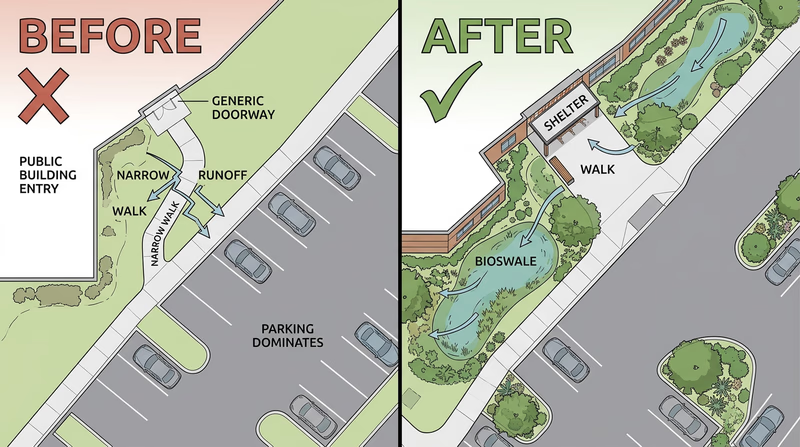
Now you get to think like a problem solver. Your redesign should respond to the issues you observed, not just add random features. If people stand in the rain near the curb, a covered waiting area may make sense. If runoff crosses the main path, you may need grading changes, a drain, or a rain garden. If the entrance is hard to find, a wider walk, better planting frame, or clearer lighting might help.
A strong redesign usually improves several things at once:
- safety by reducing conflicts between cars and people
- comfort through shade, shelter, seating, and smoother circulation
- clarity by making the arrival sequence easier to understand
- drainage by moving or capturing runoff more effectively
- appearance by organizing plants and site elements into a more unified whole
Ideas You Might Consider
| Problem you observed | Possible redesign move |
|---|---|
| People crowd near the curb with no shelter | Add a covered waiting area and bench seating |
| Walkway is too narrow or indirect | Widen or realign the path |
| Parking dominates the arrival view | Add trees, planting islands, or screening shrubs |
| Water crosses the path | Add grading improvements, drains, or a bioswale |
| Entrance is hard to read | Use paving emphasis, entry trees, lighting, or signage |
| No place to pause | Add benches in shade near but not blocking circulation |
How to Explain Your Redesign
Your counselor will want to hear why you changed what you changed. Use a sentence pattern like this:
- “I moved this walkway because…”
- “I added shade trees here because…”
- “I marked runoff arrows to show that water currently…”
- “I placed a bench here because users need a place to wait without blocking the entrance…”
That kind of explanation shows design thinking, not just drawing skill.
This requirement also connects strongly to Req 2. The same ideas are here again: entry sequence, paths, comfort, planting function, and drainage. The difference is that now you are the one proposing improvements.
EPA Green Infrastructure at Schools Introduces practical drainage and stormwater ideas such as rain gardens, permeable surfaces, and planted areas that can improve school and civic sites. Link: EPA Green Infrastructure at Schools — https://www.epa.gov/green-infrastructure/what-green-infrastructureIf you can explain the existing site clearly and defend your redesign decisions, you are doing real introductory landscape architecture work. The final requirement asks you to explore where those skills could lead as a career.
Req 5 — Exploring Landscape Architecture Careers
Landscape architecture is not just one job. It is a family of careers built around design, plants, land, public space, construction, and environmental problem-solving. If you liked visiting sites, studying circulation, choosing plants, and redesigning outdoor areas in this badge, you have already tried some of the core skills these careers use.
Three Career Paths to Start With
You need to identify three opportunities, so begin with a spread of careers that use similar thinking in different ways.
1. Landscape Architect
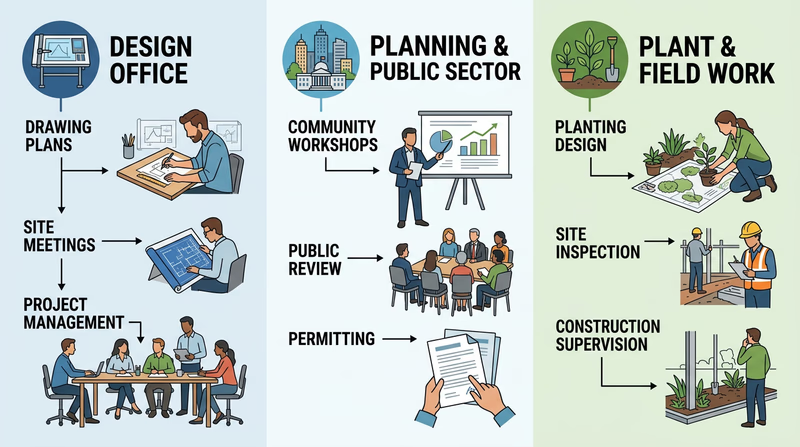
This is the clearest match to the badge. Landscape architects design parks, campuses, public spaces, waterfronts, trail systems, and outdoor areas around buildings. They produce plans, work with clients, coordinate with engineers and architects, choose materials and plants, and help guide projects from idea to construction.
2. Urban Planner or Site Planner
Urban planners think at a larger scale. They study how neighborhoods, transportation, housing, parks, and public services fit together. A site planner may focus on how land is arranged for a campus, school, mixed-use project, or housing development. These jobs use many of the same ideas about circulation, public use, and land form.
3. Nursery, Arboriculture, or Landscape Installation Professional
Some careers focus less on drawing plans and more on bringing landscapes to life and maintaining them well. Nursery managers, arborists, planting specialists, and landscape contractors need strong knowledge of plants, site conditions, and how design decisions work in the field.
🎬 Video: Career Connections: Landscape Architect (video) — https://youtu.be/vVRUsQ8WrW8?si=miQ1-ySUPKVHHO8s
Compare Three Career Options
Use these categories to organize your research- Main work: What does the person actually do during a normal week?
- Training: What education, apprenticeships, or certifications are needed?
- Work setting: Office, field, nursery, design firm, government agency, or mixed?
- Costs to enter: Tuition, training, equipment, testing, or licensing fees
- Advancement: Can this role lead to leadership, specialization, or owning a business?
- What appeals to you: Which parts of the work sound energizing or satisfying?
If You Choose Landscape Architect for Deeper Research
Many Scouts choose to research the actual profession of landscape architecture. If you do, here are the main areas to investigate.
Education and Training
In the United States, many landscape architects earn a professional degree in landscape architecture from an accredited college program. Some students begin with related studies such as environmental design, horticulture, planning, or architecture before moving into the field.
Licensure and Certification
Landscape architects often need to be licensed, especially when they stamp drawings or take legal responsibility for professional work. Requirements vary by state, but licensure usually involves education, supervised experience, and passing a registration exam.
Experience
Internships, summer jobs, office support work, plant nursery experience, and construction observation all help build real-world understanding. Knowing how sites are built is just as important as being able to draw them.
Costs
The cost of entering the field may include college tuition, software, field tools, drafting supplies, exam fees, and time spent gaining required work experience.
Career Growth
A landscape architect might start by helping with drafting, planting plans, and site analysis. Later, they may lead projects, specialize in parks or ecological restoration, manage teams, or start a firm.
Questions That Make Your Research Better
Do not stop at basic facts. Try to learn what the career actually feels like.
- What part of the job happens outdoors versus indoors?
- How much time is spent designing versus meeting with clients or contractors?
- Is the work more creative, technical, or both?
- What high school classes would help someone prepare?
- What kinds of people thrive in this field?
If possible, interview someone local. A short conversation with a practicing landscape architect, planner, arborist, or contractor can make this requirement much more real.
How to Share What You Learned
A good discussion with your counselor will cover more than one job title. Be ready to explain:
- the three opportunities you identified
- which one you researched most deeply
- what training or education it requires
- how much time and money it may take to enter
- what the career outlook looks like
- whether you can imagine yourself doing that kind of work
This is also a good place to reflect on the badge as a whole. In Req 1, you studied a completed project. In Req 4, you created your own redesign. Those are exactly the kinds of observation and problem-solving skills professionals use.
American Society of Landscape Architects — Discover Landscape Architecture Explains what landscape architects do and offers a strong starting point for career research and examples of real projects. Link: American Society of Landscape Architects — Discover Landscape Architecture — https://www.asla.org/discoverlandscapearchitecture.aspxYou have finished the requirements of the badge, but there is still more to explore. The next page looks beyond the badge at advanced ideas, experiences, and organizations in the field.
Extended Learning
A. Congratulations
You have finished a badge that asks you to see the world differently. Most people walk through a park, school entry, or public plaza without thinking much about why it feels easy, confusing, shady, hot, welcoming, or uncomfortable. Now you know how to ask those questions. That skill will stay useful long after the badge is done, whether you become a designer or just become someone who notices how places shape daily life.
B. Deep Dive: Designing for Stormwater
One of the biggest changes in modern landscape architecture is the way designers think about rain. For many years, the goal was to get stormwater off a site as fast as possible with pipes, curbs, and storm drains. That still matters, but many projects now try to slow water down, spread it out, soak some of it into the ground, and clean it before it reaches streams or lakes.
That is where features like rain gardens, bioswales, tree trenches, permeable pavement, and planted detention areas come in. A rain garden is not just a flower bed that gets wet. It is shaped to collect runoff, hold it briefly, and let it soak into prepared soil. A bioswale is a planted channel that guides and filters water as it moves. Permeable pavement allows some water to pass through instead of running straight off the surface.
These ideas matter because hard surfaces such as parking lots and roofs increase runoff. More runoff means more erosion, more flooding, and more pollution carried into waterways. Good design can reduce those problems while still making a place attractive.
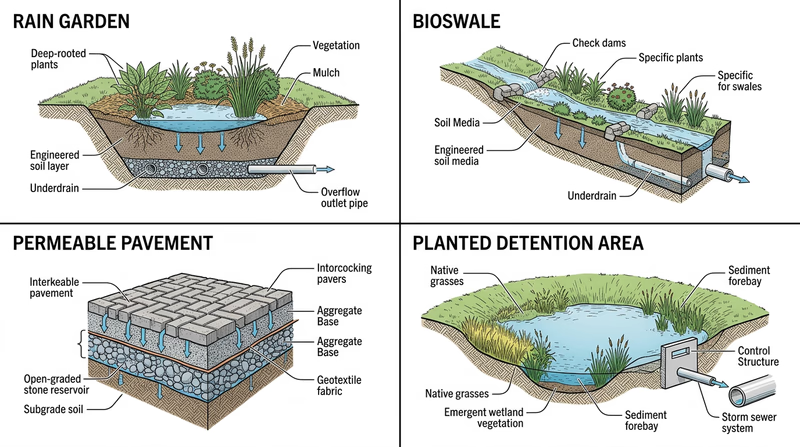
If you enjoyed the drainage part of Req 4, this is a great area to keep exploring. Many schools, parks, and civic sites now use visible green infrastructure so visitors can actually see how stormwater is being managed.
C. Deep Dive: Designing for People of Different Ages and Abilities
Landscape architecture is not only about land and plants. It is also about who gets to use a place comfortably. A site that works for an athletic teenager may not work well for a grandparent using a walker, a parent pushing a stroller, or a child who needs a calm sensory environment.
That is why accessibility is such a central part of the profession. Designers think about slopes, curb ramps, paving texture, route width, resting areas, seating height, shade, handrails, and how easy it is to understand where to go. They also think about visibility and comfort. Can someone sit in shade while waiting for a ride? Is there a safe route from a parking area to the front door? Can users move through the site without crossing dangerous traffic patterns?
Inclusive design goes beyond minimum rules. It asks how a place can be welcoming to many kinds of users from the very beginning instead of adding awkward fixes later. Some of the best landscapes feel simple and natural to use because the hard thinking happened during design.
The next time you visit a park or school, look for clues. Are there routes without steps? Is there seating with backs and arms for people who need support? Are paths wide enough for two people to move side by side? Those details tell you a lot about whether the place was designed with a broad range of users in mind.
D. Deep Dive: The Long Life of a Landscape
Buildings can seem finished on opening day, but landscapes are never truly frozen in time. Trees grow. Shrubs fill in. Roots expand. Drainage patterns shift. Maintenance crews prune, mow, replace plants, repair paving, and react to storms or drought. A landscape architect has to think ahead to all of that.
That long timeline is one of the most interesting parts of the field. A young tree may look almost too small on the day it is planted, yet five or ten years later it may be exactly the right scale. A shrub bed that looks tidy at first may become a maintenance problem if the species was placed too close together. A path that works well in dry weather may reveal a serious drainage issue after repeated storms.
This means design decisions should be judged over time, not just in a photograph. Good designers ask what a site will look like in one year, five years, and twenty years. They also ask who will care for it. A project with plants that need constant pruning or irrigation may struggle if the owner lacks money or staff.
If you like long-term thinking, this is one of the most rewarding parts of landscape architecture. You are not only designing a place for today. You are designing how it will grow, change, and be used in the future.
E. Real-World Experiences
Visit a Botanical Garden or Arboretum
These places are excellent for studying plant labels, mature tree forms, texture differences, and how collections are organized in space. Bring a notebook and record how plants are grouped and how paths guide visitors.
Walk a Downtown Plaza or Civic Space
Look at where people enter, where they stop, where they sit, and which areas stay busy or empty. Ask yourself whether shade, seating, and circulation seem to support real use.
Compare Two School or Library Entrances
Choose two public sites and compare them. Which one feels easier to understand? Which one handles arrival and waiting better? Which one is safer near traffic?
Explore a Green Infrastructure Project
Many communities now have rain gardens, creek restorations, permeable parking lots, or planted stormwater areas. These sites are a great way to see engineering and landscape architecture working together.
Interview a Professional
A short interview with a landscape architect, planner, arborist, nursery manager, or parks professional can teach you how classroom knowledge connects to real work, clients, budgets, and construction.