Req 2 — What Makes a Site Work
This requirement asks you to look at one completed project from four different angles. You are studying how the site is organized, how built features fit the plan, how the place supports people, and how plant choices affect both beauty and performance.
- 2a focuses on how the space is laid out and how people move through it.
- 2b looks at structures and activity areas such as seating, eating, and parking.
- 2c asks whether the site feels comfortable, sheltered, and secure.
- 2d turns your attention to trees, shrubs, and ground covers as working parts of the design.
Requirement 2a
A strong landscape usually feels easy to understand. You can tell where it begins, where it leads, and what each area is for. That does not happen by accident. Designers use edges, paving, plantings, grade changes, and structures to organize outdoor space.
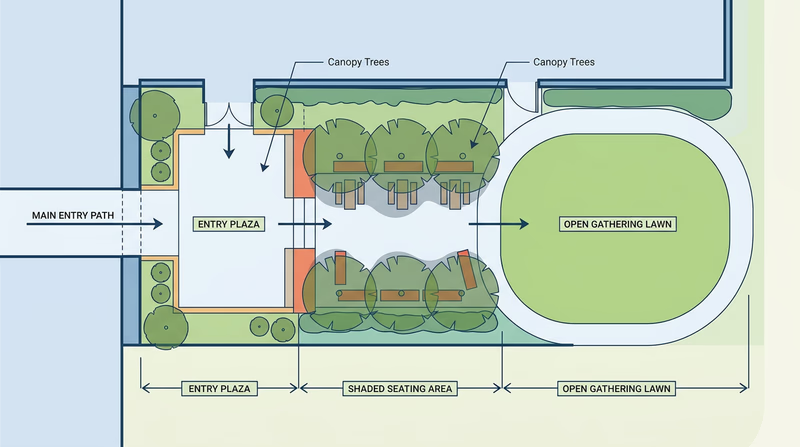
Separate spaces means the site has distinct outdoor “rooms.” A school courtyard might have a wide gathering zone near the doors, a quieter seating area under trees, and a path connecting both. A park may separate active play from quiet rest. If every activity happens in one big undefined area, the site may feel messy or uncomfortable.
A defined point of entry means people can recognize the main way in. Look for signs, widened walks, planting beds that frame the approach, lights, a gate, or a view line that draws the eye to the entrance.
A clear path system means the routes make sense. Paths should connect where people actually need to go. If users keep making shortcuts across grass, that is a clue the circulation system may not match real behavior.
Sun and shade variety matters because people use outdoor places in different weather and at different times of day. Full sun can be great in winter but miserable in summer. Shade from trees or structures often makes a site more usable for longer periods.
🎬 Video: Defining Spaces and Adding Privacy Outdoors | Design Tips | HGTV (video) — https://youtu.be/uVVCpugREjY?si=UjWU7ZHOL0LUOErs
How to Evaluate Site Organization
Use these prompts when discussing 2a with your counselor
- Spaces: Can you point to at least two or three areas with different purposes?
- Entry: Would a first-time visitor know where to enter without help?
- Paths: Do sidewalks and walks connect arrival, destination, and gathering areas naturally?
- Sun and shade: Are there choices for users depending on the weather and time of day?
Requirement 2b
Outdoor structures and activity areas should feel like they belong to the same project. A bench, pavilion, bike rack, parking lot, trash enclosure, or picnic area can either strengthen the design or fight against it.
Look at materials, location, scale, and use. A shaded bench near a walking path may invite rest at just the right moment. A picnic area near a noisy parking lot may feel less successful. Parking should help people arrive, but it should not dominate the whole site. Good design often softens parking with trees, planting islands, and safe walks to the entrance.
Pay attention to whether structures support the site’s purpose. If the project is meant to be calm and welcoming, heavy concrete barriers and poorly placed signs might feel harsh. If the site serves families or older adults, seating and drop-off areas become even more important.
🎬 Video: Ripple Park | Landscape Architecture Capstone (video) — https://youtu.be/lEXvdRFBC8s?si=bSb-EyaJNFCsz99C
Requirement 2c
This may be the most human-centered part of the badge. A beautiful place can still fail if people do not feel comfortable or safe using it.
Comfort includes shade, seating height, room to gather, smooth walking surfaces, protection from glare, and enough space so people do not feel crowded.
Shelter may come from tree canopies, covered entries, canopies, pergolas, walls that block wind, or places to pause out of rain.
Security is partly about actual safety and partly about how a place feels. Good visibility, lighting, clear sightlines, and well-marked paths help people feel more at ease. Hidden corners, blocked views, or confusing routes can make a site feel less secure even if nothing dangerous is happening.
Spaces that Heal and Comfort (website) Shows how outdoor spaces can be designed to reduce stress, support recovery, and make users feel more comfortable and welcome. Link: Spaces that Heal and Comfort (website) — https://eptdesign.com/spaces-that-heal-and-comfort/Requirement 2d
Plants do much more than decorate. In landscape architecture, they are design tools with jobs to do.
Trees can create shade, cool pavement, frame key views, and make a site feel established. Shrubs can define edges, soften hard corners, separate spaces, and guide people away from areas they should not cross. Ground covers can hold soil, reduce erosion, fill awkward spaces, and reduce muddy bare ground where turf grass would struggle.
Think about appeal and function together. A flowering tree may make an entry more memorable, but it might also signal the arrival point. A dense evergreen hedge may add privacy, but if it blocks visibility too much it can hurt the sense of security. The best plant choices solve several problems at once.
🎬 Video: Landscaping with Trees and Shrubs: Types and Planting (video) — https://youtu.be/aBVcBep4Gv8?si=qvfbVWL4ZB2Qb4DJ
| Plant type | Appeal | Function |
|---|---|---|
| Trees | Seasonal color, height, strong visual identity | Shade, cooling, structure, screening |
| Shrubs | Texture, flowering, layered planting | Space definition, buffering, directing movement |
| Ground covers | Visual unity, low-growing color or texture | Soil protection, erosion control, reduced maintenance |
Pulling It All Together
When you discuss this requirement with your counselor, do not treat the four parts as separate checkboxes. They influence one another. A tree may provide shade for comfort, define a space, soften the edge of a parking lot, and improve the site’s appearance all at once. A walkway may guide movement, improve security, and connect seating to the main entrance. Good landscape architecture works because many pieces support each other.
This is also a good time to bring back observations from Req 1. Use your site visit notes, photos, and plan to explain what the design did well and what you might improve.
You have now studied a finished project like a design critic. Next, you will focus on the living materials that make landscapes work over time.