Req 3 — Choosing Trees, Shrubs, and Ground Covers
This requirement moves you from studying finished places to choosing the living materials that help create them. Landscape architects do not just ask, “What plant looks nice?” They ask, “What will this plant do here over the next 10 or 20 years?” Size, shape, texture, climate fit, and maintenance all matter.
Start Local
The requirement tells you to choose plants that will grow in your area, and that is one of the most important ideas in the whole badge. A plant that thrives in one state may struggle badly in another because of soil, rainfall, winter temperatures, summer heat, pests, or local diseases.
That is why a local nursery, extension office, arboretum, or your counselor can be so helpful. They know what succeeds where you live.
🎬 Video: Tree and Shrub ID (video) — https://youtu.be/YcMsvqqmorM?si=NO405TME8veCY23U
What to Compare
When you collect your five shrubs, five trees, and one ground cover, study each plant through the eyes of a designer.
Shape
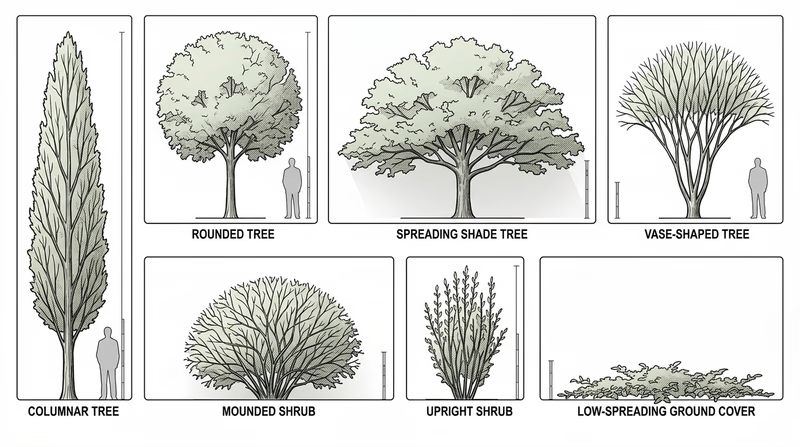
Shape is the overall outline of the plant. Common shapes include upright, vase-shaped, rounded, spreading, columnar, weeping, and mounded. Shape matters because it affects how a plant fits into space.
- A columnar tree can mark an entrance without taking up much width.
- A spreading shade tree can cool a patio or sidewalk.
- A mounded shrub can soften the base of a building.
- A low-spreading ground cover can tie planting beds together.
Size
Think about both current size and mature size. A young tree in a nursery pot may look tiny, but in 15 years it could interfere with power lines or block a doorway if planted in the wrong place.
Ask these questions:
- How tall will it get?
- How wide will it spread?
- How fast does it grow?
- What happens if it is planted too close to pavement, foundations, or utilities?
Texture
Texture describes how fine or coarse a plant appears. Small, delicate leaves often create a fine texture. Large bold leaves or heavy branching usually create a coarse texture. Mixing textures helps a planting design feel richer and more interesting.
Seasonal Interest
Some plants shine in spring flowers. Others stand out for summer shade, fall color, winter bark, berries, or evergreen foliage. A strong landscape often stays interesting in more than one season.
Plant Study Questions
Use these prompts for every plant you present
- What is this plant’s shape?
- How large will it be at maturity?
- What texture does it add?
- Where could it be used in a landscape?
- What maintenance would it need?
- Why is it a good fit for your area?
How Plants Work in Design
When you present your plant choices, connect each one to a possible design use. That is the part that makes this a landscape architecture badge instead of a basic plant identification exercise.
Here are common uses you can talk about:
| Plant role | What it does |
|---|---|
| Shade tree | Cools walkways, lawns, parking edges, patios, and gathering spaces |
| Accent tree or shrub | Draws attention to an entrance, corner, or important view |
| Screening plant | Blocks an unwanted view or adds privacy |
| Space-defining plant | Helps create outdoor rooms and guide movement |
| Foundation planting | Softens the edge between building and ground |
| Ground cover | Protects soil, fills hard-to-mow areas, reduces erosion |
For example, a broad-canopy tree might be perfect near a bench or picnic table because it makes the area more comfortable. A dense evergreen shrub might screen a utility box or parking area. A low ground cover might be useful on a slope where grass is difficult to maintain.
Maintenance Matters
Every plant choice creates future work. Landscape architects think about beauty and maintenance together because a design that looks great on opening day may fail if it is too expensive or difficult to care for.
When discussing maintenance, consider:
- watering needs during establishment and in dry periods
- pruning frequency and the skill needed to do it well
- leaf, fruit, or flower drop that may require cleanup
- pest and disease concerns in your region
- whether mulch, edging, or weed control will be needed
- whether the plant is likely to outgrow its space
How to Build a Strong Presentation
The requirement asks you to bring pictures or plant samples and be ready to explain them to a group. That means organization matters.
A strong way to prepare is to make one page or note card per plant. Include:
- common name and, if useful, scientific name
- whether it is a tree, shrub, or ground cover
- shape, mature size, and texture
- one or two best uses in a landscape
- basic maintenance notes
- why it grows well in your region
You do not need to memorize everything perfectly. You do need to show that you understand how each plant would be used intentionally.
Avoid Common Mistakes
A few problems show up again and again when beginners choose landscape plants:
- picking plants for flowers alone and ignoring mature size
- choosing species that do not tolerate local winters or summers
- placing large shrubs where they will eventually block windows or signs
- using one texture or one height everywhere so the design feels flat
- forgetting that maintenance crews need room to mow, prune, and mulch
This requirement also connects directly to Req 2. When you studied the finished landscape, you were looking at what plant choices achieved. Now you are learning how those choices get made.
USDA Plant Hardiness Zone Map Use the national zone map as a starting point for understanding which plants are likely to survive winter temperatures in your area. Link: USDA Plant Hardiness Zone Map — https://planthardiness.ars.usda.gov/Now that you know how to read plant choices, you are ready to measure a real site and redesign part of it yourself.