Req 5 — Exploring Landscape Architecture Careers
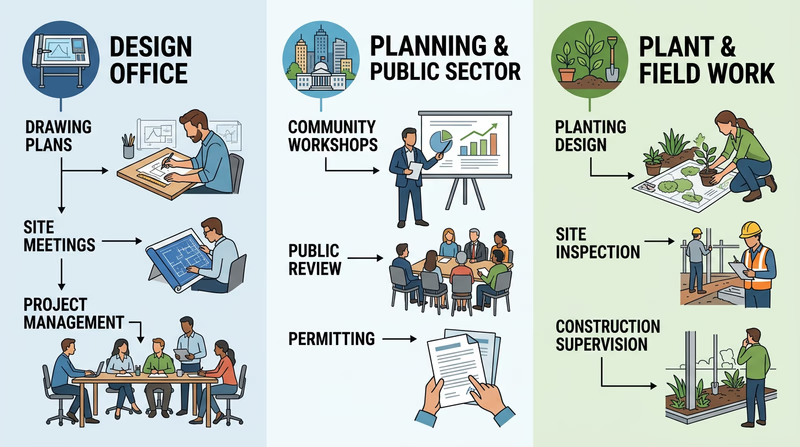
Landscape architecture is not just one job. It is a family of careers built around design, plants, land, public space, construction, and environmental problem-solving. If you liked visiting sites, studying circulation, choosing plants, and redesigning outdoor areas in this badge, you have already tried some of the core skills these careers use.
Three Career Paths to Start With
You need to identify three opportunities, so begin with a spread of careers that use similar thinking in different ways.
1. Landscape Architect
This is the clearest match to the badge. Landscape architects design parks, campuses, public spaces, waterfronts, trail systems, and outdoor areas around buildings. They produce plans, work with clients, coordinate with engineers and architects, choose materials and plants, and help guide projects from idea to construction.
2. Urban Planner or Site Planner
Urban planners think at a larger scale. They study how neighborhoods, transportation, housing, parks, and public services fit together. A site planner may focus on how land is arranged for a campus, school, mixed-use project, or housing development. These jobs use many of the same ideas about circulation, public use, and land form.
3. Nursery, Arboriculture, or Landscape Installation Professional
Some careers focus less on drawing plans and more on bringing landscapes to life and maintaining them well. Nursery managers, arborists, planting specialists, and landscape contractors need strong knowledge of plants, site conditions, and how design decisions work in the field.
🎬 Video: Career Connections: Landscape Architect (video) — https://youtu.be/vVRUsQ8WrW8?si=miQ1-ySUPKVHHO8s
Compare Three Career Options
Use these categories to organize your research
- Main work: What does the person actually do during a normal week?
- Training: What education, apprenticeships, or certifications are needed?
- Work setting: Office, field, nursery, design firm, government agency, or mixed?
- Costs to enter: Tuition, training, equipment, testing, or licensing fees
- Advancement: Can this role lead to leadership, specialization, or owning a business?
- What appeals to you: Which parts of the work sound energizing or satisfying?
If You Choose Landscape Architect for Deeper Research
Many Scouts choose to research the actual profession of landscape architecture. If you do, here are the main areas to investigate.
Education and Training
In the United States, many landscape architects earn a professional degree in landscape architecture from an accredited college program. Some students begin with related studies such as environmental design, horticulture, planning, or architecture before moving into the field.
Licensure and Certification
Landscape architects often need to be licensed, especially when they stamp drawings or take legal responsibility for professional work. Requirements vary by state, but licensure usually involves education, supervised experience, and passing a registration exam.
Experience
Internships, summer jobs, office support work, plant nursery experience, and construction observation all help build real-world understanding. Knowing how sites are built is just as important as being able to draw them.
Costs
The cost of entering the field may include college tuition, software, field tools, drafting supplies, exam fees, and time spent gaining required work experience.
Career Growth
A landscape architect might start by helping with drafting, planting plans, and site analysis. Later, they may lead projects, specialize in parks or ecological restoration, manage teams, or start a firm.
Questions That Make Your Research Better
Do not stop at basic facts. Try to learn what the career actually feels like.
- What part of the job happens outdoors versus indoors?
- How much time is spent designing versus meeting with clients or contractors?
- Is the work more creative, technical, or both?
- What high school classes would help someone prepare?
- What kinds of people thrive in this field?
If possible, interview someone local. A short conversation with a practicing landscape architect, planner, arborist, or contractor can make this requirement much more real.
How to Share What You Learned
A good discussion with your counselor will cover more than one job title. Be ready to explain:
- the three opportunities you identified
- which one you researched most deeply
- what training or education it requires
- how much time and money it may take to enter
- what the career outlook looks like
- whether you can imagine yourself doing that kind of work
This is also a good place to reflect on the badge as a whole. In Req 1, you studied a completed project. In Req 4, you created your own redesign. Those are exactly the kinds of observation and problem-solving skills professionals use.
American Society of Landscape Architects — Discover Landscape Architecture Explains what landscape architects do and offers a strong starting point for career research and examples of real projects. Link: American Society of Landscape Architects — Discover Landscape Architecture — https://www.asla.org/discoverlandscapearchitecture.aspxYou have finished the requirements of the badge, but there is still more to explore. The next page looks beyond the badge at advanced ideas, experiences, and organizations in the field.