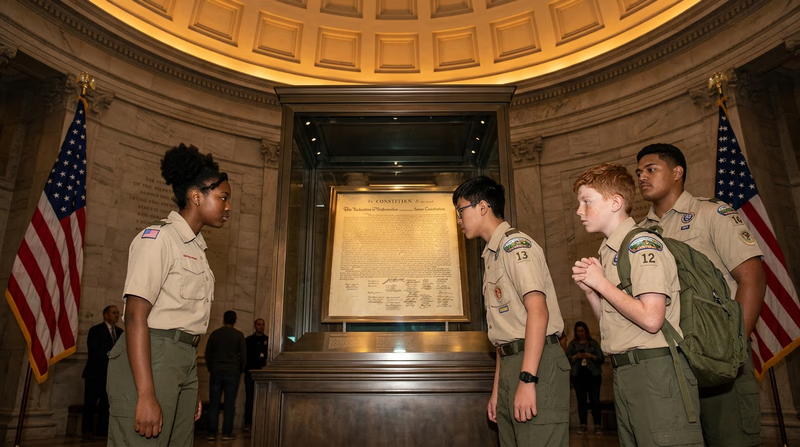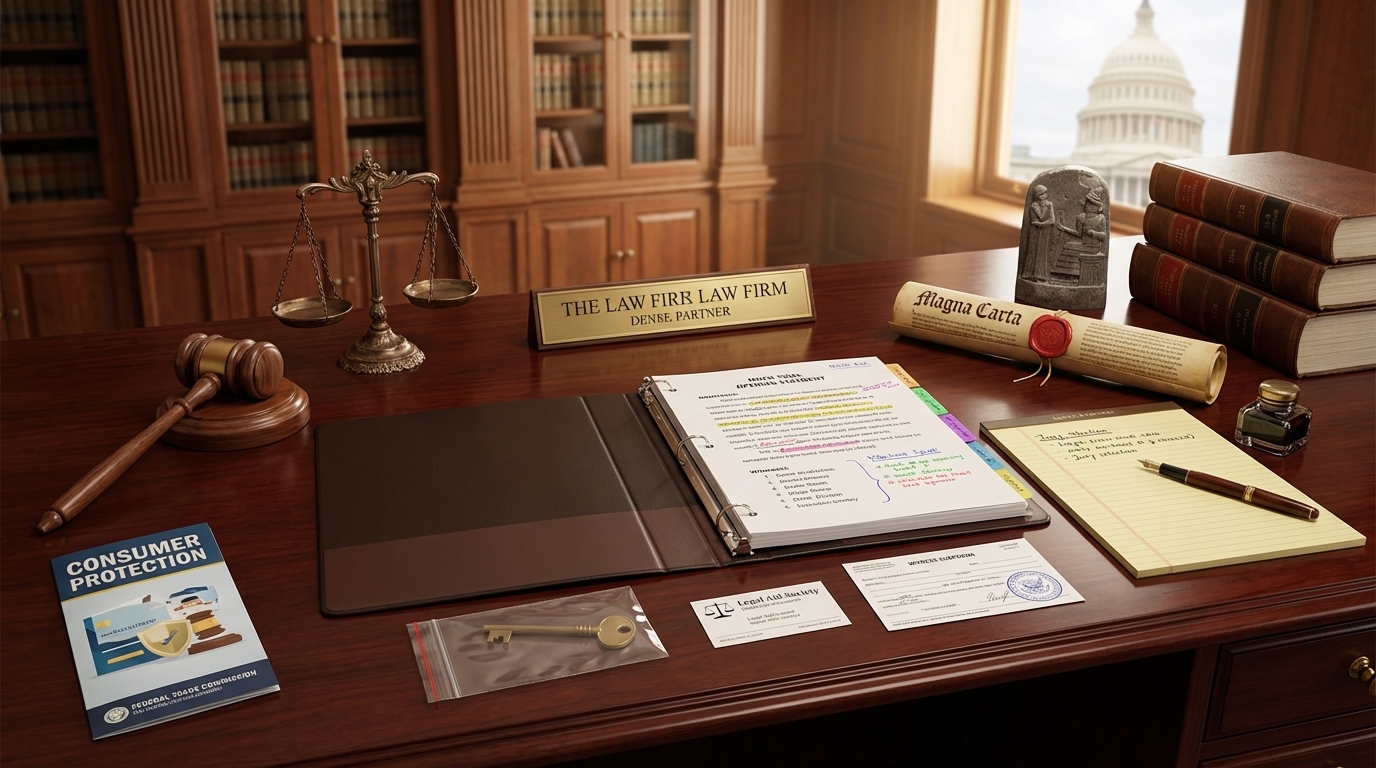
Law Merit Badge — Complete Digital Resource Guide
https://merit-badge.university/merit-badges/law/guide/
Introduction & Overview
Laws are everywhere — from the speed limit on your street to the rules that protect your right to speak your mind. Every time you buy something at a store, ride your bike on a public road, or log on to the internet, laws are working behind the scenes to keep things fair and safe. The Law merit badge gives you a front-row seat to understanding how these rules shape our daily lives and why they matter.
Whether you dream of becoming a lawyer, a police officer, a judge, or simply want to be a well-informed citizen, this badge will help you understand the system of laws that holds our society together.
Then and Now
Then — Rules of the Ancient World
Humans have been making laws for thousands of years. Around 1754 BCE, King Hammurabi of Babylon carved 282 laws into a stone pillar and placed it in public so everyone could see the rules. Centuries later, Roman Emperor Justinian organized Roman law into one massive legal code that influenced legal systems across Europe. In 1215, English nobles forced King John to sign the Magna Carta, a document that established a revolutionary idea: even the king must follow the law.
- Purpose: Maintain order, resolve disputes, protect property, and limit the power of rulers
- Mindset: The law is written, public, and applies to everyone — even those in charge
Now — A Living System
Today, the law is a vast and evolving system. The U.S. Constitution is the supreme law of our country, and federal, state, and local governments each create their own layers of laws. Courts interpret these laws, and citizens can challenge laws they believe are unjust. New laws are written every year to address challenges that the Founders could never have imagined — from cybercrime to artificial intelligence.
- Purpose: Protect individual rights, ensure public safety, regulate commerce, and resolve conflicts fairly
- Mindset: The law belongs to the people and changes as society changes
Get Ready! The legal system might sound intimidating, but it is designed for you — to protect you, to give you a voice, and to keep your community running smoothly. Let’s dig in and discover how it all works.

Kinds of Law
The legal world is enormous, but most laws fall into a handful of major categories. Understanding these categories is the first step to making sense of how the system works.
Criminal Law
Criminal law deals with actions that society considers harmful or dangerous — things like theft, assault, and fraud. When someone breaks a criminal law, the government (not a private person) brings the case against them. If found guilty, the person may face fines, community service, probation, or prison time.
Civil Law
Civil law handles disputes between people, businesses, or organizations. If your neighbor’s tree falls on your car, or a company breaks a contract, that is a civil matter. Instead of prison time, the losing side in a civil case usually pays money (called “damages”) to make things right.
Constitutional Law
Constitutional law is based on the U.S. Constitution — the supreme law of the land. It defines the structure of the government, the powers of each branch, and the fundamental rights of every citizen. When a court decides whether a law violates the Constitution, that is constitutional law in action.
Administrative & Regulatory Law
Government agencies create rules to carry out the laws passed by Congress and state legislatures. The Environmental Protection Agency sets pollution limits. The Food and Drug Administration regulates what goes into your food and medicine. These agency-made rules are called regulations, and they have the force of law.
International Law
International law governs relationships between countries. Treaties, trade agreements, and human rights conventions all fall under this umbrella. Organizations like the United Nations and the International Court of Justice help enforce these rules — though compliance often depends on cooperation rather than a single authority.
Now let’s start exploring the requirements for the Law merit badge!
Req 1 — What Is Law?
What Is Law?
At its simplest, law is a set of rules created and enforced by a governing authority. These rules tell people what they can and cannot do, and they carry consequences for those who break them. But law is more than just a list of “do nots.” It is a framework that helps millions of people live, work, and interact with each other in an organized way.
Think about a pickup basketball game. Without agreed-upon rules — traveling, fouls, out of bounds — the game would fall apart in minutes. Law works the same way for society, just on a much bigger scale.
Sources of Law
Laws do not appear out of thin air. In the United States, law comes from several major sources:
The Constitution
The U.S. Constitution is the highest law in the country. Every other law must be consistent with it. State constitutions serve a similar role within each state. If a law conflicts with the Constitution, courts can strike it down.
Statutes (Legislation)
Statutes are laws written and passed by elected legislators — Congress at the federal level, and state legislatures at the state level. City councils and county boards also pass local laws called ordinances. When people talk about “passing a law,” they usually mean a statute.
Case Law (Common Law)
When judges decide cases, their written opinions become part of the law. Future judges look at these past decisions — called precedents — to guide their own rulings. This system of building law through court decisions is called common law, and it has roots stretching back to medieval England.
Administrative Regulations
Government agencies create detailed rules to carry out the laws passed by legislatures. For example, Congress might pass a law saying “keep our air clean,” and then the Environmental Protection Agency writes specific regulations about exactly how much pollution a factory can release.
Treaties
The President can negotiate treaties with other countries, and when the Senate approves them, they become part of U.S. law. Treaties cover topics from trade to human rights to environmental protection.
Functions of Law
Why do we need law in the first place? Law serves several critical functions in society:
Keeping Order
Laws establish rules of behavior so people know what is expected. Traffic laws keep roads safe. Criminal laws deter violence and theft. Without these rules, people would have to protect themselves, and the strongest would dominate.
Protecting Rights
The Bill of Rights and other constitutional protections guarantee freedoms like speech, religion, and a fair trial. Laws also protect property rights, privacy, and the right to equal treatment regardless of race, gender, or background.
Resolving Disputes
When people disagree — over a contract, a property line, or an injury — the law provides a system (courts) where disputes can be settled peacefully by a neutral decision-maker, rather than through force or intimidation.
Promoting the Common Good
Laws like environmental regulations, public health rules, and safety standards exist to protect the well-being of the whole community. They address problems that individuals cannot solve on their own.
Introduction to Law — United States Courts Learn about the types of cases handled in federal courts and how the court system works. Link: Introduction to Law — United States Courts — https://www.uscourts.gov/about-federal-courts/types-cases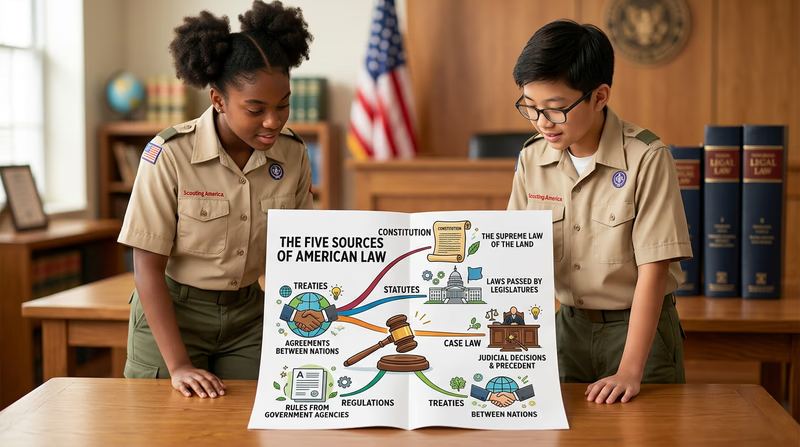
Req 2 — Landmarks in Legal History
Option A: Three Foundational Legal Documents
These three documents span nearly 3,500 years of history. Each one changed the way people thought about law, justice, and the rights of individuals.
The Code of Hammurabi (c. 1754 BCE)
King Hammurabi ruled Babylon (in present-day Iraq) and created one of the oldest known written legal codes. He had 282 laws carved into a tall stone pillar called a stele and placed it in a public area so everyone could read the rules. The laws covered everything from property disputes to marriage to wages for workers.
Hammurabi’s Code is famous for the principle of “an eye for an eye” — the idea that punishment should match the severity of the crime. While that sounds harsh by modern standards, it was actually a step forward. Before written laws, powerful people could punish others however they wanted. Hammurabi’s Code set limits on punishment and made the rules the same for everyone (though penalties did vary by social class).
Justinian’s Code (529–534 CE)
Nearly 2,300 years after Hammurabi, Roman Emperor Justinian I ordered scholars to collect and organize the entire body of Roman law. The result was the Corpus Juris Civilis (Body of Civil Law), a massive work that brought together centuries of Roman legal thought into one organized system.
Justinian’s Code is one of the most influential legal works in history. It became the foundation for the legal systems of most European countries, and its ideas about contracts, property, and civil rights still echo in modern law. If you have ever heard the legal phrase “innocent until proven guilty,” you can thank the Romans.
The Magna Carta (1215 CE)
In England, King John was taxing his nobles heavily and punishing anyone who challenged him. In 1215, a group of rebellious barons forced the king to sign a document called the Magna Carta (Latin for “Great Charter”). It established a groundbreaking idea: the king is not above the law.
Key principles from the Magna Carta include:
- No one can be imprisoned without a legal process (the seed of habeas corpus)
- Taxes cannot be imposed without the consent of a council (taxation with representation)
- Justice cannot be sold, delayed, or denied
The Magna Carta directly influenced the U.S. Constitution and the Bill of Rights. When the Founders wrote about “due process of law,” they were building on ideas that English barons fought for over 800 years ago.
Option B: The Development of the Jury System
The right to a trial by jury is one of the cornerstones of American justice. But where did the idea come from?
Ancient Roots
The concept of having ordinary citizens decide guilt or innocence dates back to ancient Athens (around 500 BCE). Athenian juries could have hundreds or even thousands of members. They would listen to arguments and vote using bronze disks — one with a solid center for “not guilty” and one with a hollow center for “guilty.”
The English Jury
The modern jury system traces most directly to medieval England. In 1166, King Henry II created a system where a group of local citizens — called a jury of presentment — would report crimes to the king’s judges. Over time, this evolved into the trial jury, where citizens would hear evidence and decide the outcome of a case.
The Magna Carta (1215) reinforced the right to trial by jury by declaring that no free person could be punished “except by the lawful judgment of his peers.” This principle became a bedrock of English common law.
The American Jury
The Founders considered the right to a jury trial so important that they protected it in three places in the Constitution:
- Article III guarantees jury trials in federal criminal cases
- The Sixth Amendment guarantees the right to a speedy and public trial by an impartial jury in criminal cases
- The Seventh Amendment preserves the right to a jury trial in civil cases involving more than $20
Today, juries in criminal cases typically have 12 members, though some states allow smaller juries for certain cases. Jurors must be selected fairly and must reach their verdict based only on the evidence presented in court.
Option C: Two Famous Trials in History
History is full of trials that changed the course of law, politics, and human rights. Here are several famous trials you could research and discuss with your counselor. Pick the two that interest you most.
The Trial of Socrates (399 BCE)
The ancient Greek philosopher Socrates was put on trial in Athens for “corrupting the youth” and “impiety” (disrespecting the gods). A jury of 501 citizens found him guilty, and Socrates was sentenced to death by drinking poison hemlock. His trial raises lasting questions about freedom of thought, the power of the state, and the courage to stand by your beliefs.
The Salem Witch Trials (1692)
In Salem, Massachusetts, a wave of hysteria led to the accusation, trial, and execution of 20 people — mostly women — on charges of witchcraft. The trials are a powerful example of what can go wrong when fear overrides evidence and due process. They led to reforms in how evidence is evaluated in American courts.
The Scopes “Monkey” Trial (1925)
High school teacher John Scopes was charged with violating a Tennessee law that banned the teaching of evolution. The trial became a national sensation, pitting famous lawyers William Jennings Bryan and Clarence Darrow against each other. It sparked a national conversation about science, education, and the limits of government power.
Brown v. Board of Education (1954)
In this landmark U.S. Supreme Court case, the Court ruled unanimously that racial segregation in public schools was unconstitutional. The decision overturned the “separate but equal” doctrine and became a catalyst for the Civil Rights Movement. Thurgood Marshall, who argued the case, later became the first African American Supreme Court Justice.
Miranda v. Arizona (1966)
Ernesto Miranda was arrested and confessed to a crime without being told he had the right to remain silent or to have a lawyer. The Supreme Court ruled that police must inform suspects of their constitutional rights before questioning them. Those warnings — “You have the right to remain silent…” — are now known as Miranda rights and are a fixture of the American justice system.
Magna Carta — National Archives Explore the history and text of the Magna Carta at the U.S. National Archives. Link: Magna Carta — National Archives — https://www.archives.gov/exhibits/featured-documents/magna-carta Landmark Supreme Court Cases — United States Courts Read about the most important Supreme Court decisions in U.S. history. Link: Landmark Supreme Court Cases — United States Courts — https://www.uscourts.gov/about-federal-courts/educational-resources/supreme-court-landmarks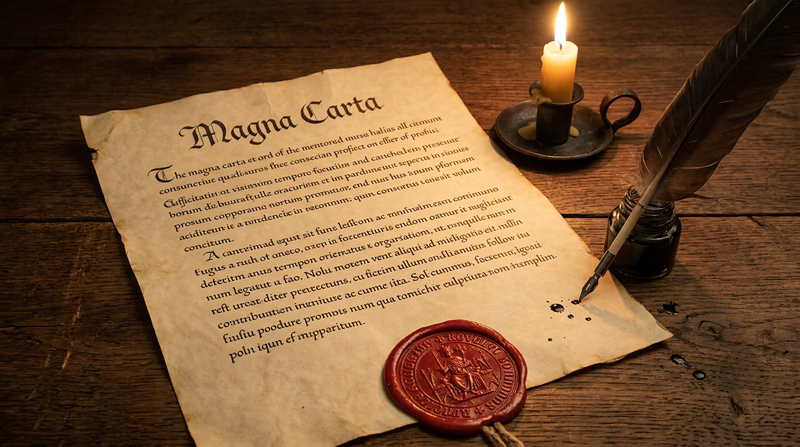
Req 3 — Civil vs. Criminal Law
Two Branches, One System
Almost every legal case in the United States falls into one of two categories: civil or criminal. Understanding the difference between them is one of the most important building blocks of legal knowledge.
What Is Criminal Law?
Criminal law deals with actions that are considered offenses against society as a whole — even if the crime was committed against just one person. Crimes like robbery, assault, arson, and drunk driving are prosecuted by the government (federal, state, or local), not by the individual victim.
In a criminal case:
- The government brings the charges (the case title looks like “State v. Smith” or “United States v. Jones”)
- A prosecutor (a government lawyer) presents the case against the accused person, called the defendant
- The defendant is presumed innocent until proven guilty
- The standard of proof is “beyond a reasonable doubt” — the highest standard in the legal system
- If found guilty, the defendant may face punishments like fines, probation, community service, or prison time
Examples of Criminal Cases
- A person is charged with shoplifting from a store
- Someone is arrested for driving under the influence of alcohol
- A hacker is charged with breaking into a computer system
- A person is accused of assault after a fight
What Is Civil Law?
Civil law handles disputes between private parties — individuals, businesses, or organizations. Instead of punishing criminal behavior, civil law aims to resolve disagreements and compensate people who have been harmed.
In a civil case:
- The person who files the case is called the plaintiff
- The person being sued is the defendant
- The case title looks like “Johnson v. ABC Company”
- The standard of proof is “preponderance of the evidence” — meaning it is more likely than not that the claim is true (think of it as “51% likely”)
- If the plaintiff wins, the defendant usually pays damages (money) rather than going to jail
Examples of Civil Cases
- A homeowner sues a contractor for doing a bad job on a repair
- A company sues another company for breaking a contract
- A person files a lawsuit after being injured in a car accident caused by another driver
- A tenant takes a landlord to small claims court over a security deposit
Key Differences at a Glance
Criminal vs. Civil Law
Key differences between the two branches- Who brings the case: Criminal — the government (prosecutor). Civil — a private person or organization (plaintiff).
- Purpose: Criminal — punish the offender and protect society. Civil — compensate the injured party and resolve disputes.
- Standard of proof: Criminal — beyond a reasonable doubt. Civil — preponderance of the evidence.
- Possible outcomes: Criminal — fines, probation, imprisonment. Civil — monetary damages, court orders (injunctions).
- Right to an attorney: Criminal — yes, the government must provide one if you cannot afford it. Civil — no guaranteed free attorney.
- Jury size: Criminal — typically 12 jurors. Civil — often 6 jurors (varies by state).
Can the Same Event Be Both?
Yes. A single incident can lead to both a criminal case and a civil case. For example, if someone punches you:
- The government could file criminal assault charges (criminal case)
- You could also sue the person for your medical bills (civil case)
These are separate proceedings with different rules, different standards of proof, and different outcomes. A person could be found “not guilty” in a criminal trial but still lose a civil lawsuit for the same event. This happened in the famous O.J. Simpson cases — he was acquitted of murder in criminal court but found liable for wrongful death in civil court.
Types of Cases — United States Courts The federal courts explain the different types of cases they handle, including criminal and civil matters. Link: Types of Cases — United States Courts — https://www.uscourts.gov/about-federal-courts/types-cases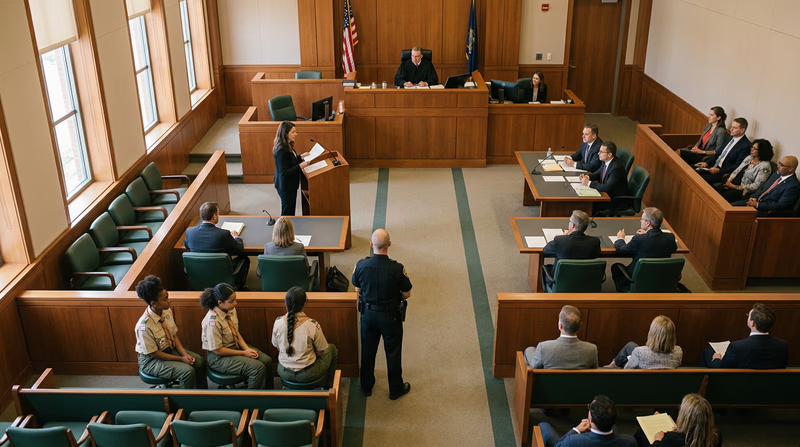
Req 4 — Law Enforcement in Society
Why This Requirement Matters
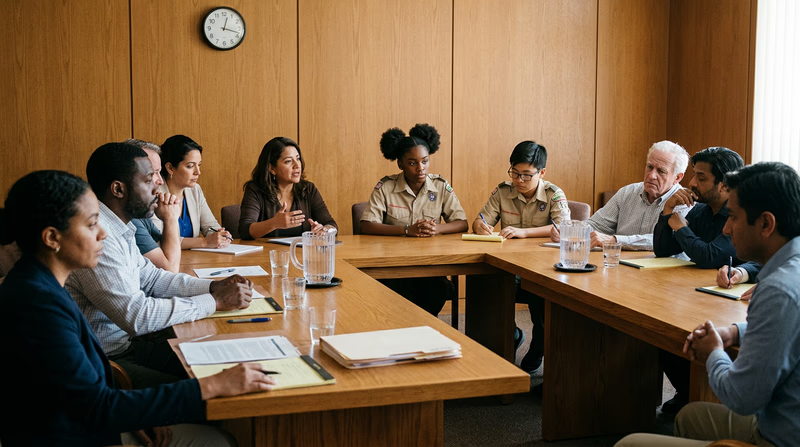
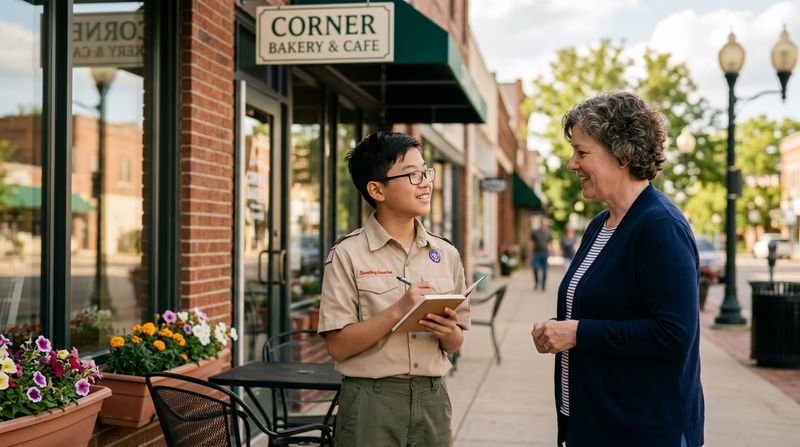
Law enforcement officers — police officers, sheriffs, state troopers, federal agents, and others — play a critical role in keeping communities safe. But different people may see that role differently based on their experiences, backgrounds, and perspectives. This requirement asks you to go out and listen, which is one of the most important skills a citizen can develop.
The Role of Law Enforcement
Before you interview anyone, it helps to understand the basics. Law enforcement officers serve several core functions:
- Preventing crime by patrolling neighborhoods and being a visible presence
- Responding to emergencies — from accidents to crimes in progress to natural disasters
- Investigating crimes by gathering evidence, interviewing witnesses, and building cases
- Enforcing laws by issuing citations, making arrests, and maintaining public order
- Serving the community through outreach programs, school resource officers, and community partnerships
Modern law enforcement also involves specialized units for things like cybercrime, drug enforcement, traffic safety, and community relations.
Levels of Law Enforcement
Law enforcement operates at multiple levels, and each level has different responsibilities:
Law Enforcement Levels
Who enforces the law at each level of government- Local police and sheriffs: Patrol cities, towns, and counties. Handle most everyday law enforcement. Respond to 911 calls.
- State police and troopers: Patrol state highways, assist local agencies, and investigate statewide crimes.
- Federal agencies: Enforce federal laws. Includes the FBI (major crimes and terrorism), DEA (drug enforcement), U.S. Marshals (fugitives and court security), and many others.
- Specialized agencies: Park rangers, campus police, wildlife officers, and transit police focus on specific areas or types of enforcement.
Conducting Your Interviews
This requirement is about real conversations with real people. Here is how to make the most of it.
Who to Ask
You need five people, and no more than one can be from your immediate family. Try to get a variety of perspectives:
- A teacher or school administrator
- A neighbor or family friend
- A local business owner
- A religious or community leader
- A coach or mentor
- Someone who works in or with law enforcement (if you know one)
What to Ask
Keep your questions open-ended to encourage real discussion. Here are some good starting points:
- “What do you think the main role of law enforcement officers is?”
- “How have law enforcement officers helped our community?”
- “What do you think law enforcement does well? What could be improved?”
- “Have you had any personal experiences — positive or negative — with law enforcement?”
Recording Your Findings
After your interviews, organize your findings. Look for:
- Common themes — What did most people agree on?
- Different perspectives — Where did opinions diverge, and why?
- Surprises — Did anyone say something you did not expect?
Req 5 — Consumer & Seller Protections
Why Consumer and Seller Protections Matter
Every time you buy a candy bar, download an app, or order something online, the law is working to make sure the deal is fair. Consumer protection laws prevent businesses from cheating, lying, or selling dangerous products. At the same time, seller protections ensure businesses are not victimized by fraud or unfair practices. Together, these laws create a marketplace where buyers and sellers can trust each other.
Major Consumer Protection Laws
The Federal Trade Commission Act (1914)
This law created the Federal Trade Commission (FTC), the main government agency responsible for protecting consumers. The FTC Act made “unfair or deceptive business practices” illegal. That means companies cannot lie in their advertising, hide important information, or use tricks to get your money.
The Fair Credit Reporting Act (1970)
This law regulates how companies collect and use your credit information. It gives you the right to see your own credit report, dispute errors, and limit who can access your financial history. As you get older and start building credit, this law will protect you directly.
The Consumer Product Safety Act (1972)
This law created the Consumer Product Safety Commission (CPSC), which sets safety standards for thousands of products — from toys to electronics to furniture. If a product is found to be dangerous, the CPSC can force a recall, requiring the company to fix or replace the product.
The Truth in Lending Act (1968)
When you borrow money — for a car, a house, or a credit card — the lender must clearly tell you exactly how much the loan will cost, including the interest rate and all fees. No hidden surprises.
The Children’s Online Privacy Protection Act (COPPA) (1998)
This law protects the privacy of children under 13 online. Websites and apps must get a parent’s permission before collecting personal information from kids. If you have ever seen a “Are you 13 or older?” prompt, COPPA is the reason.
Seller Protections
Laws do not only protect buyers. Sellers need legal protection too:
Contract Law
Contracts are legally binding agreements. If you hire someone to mow your lawn and they take your money but never show up, contract law gives you a way to get your money back or force them to do the work. Sellers rely on contracts to ensure they get paid for their goods and services.
Trademark and Patent Law
Businesses invest time and money creating products, brand names, and logos. Trademarks protect brand names and logos from being copied. Patents protect inventions. These laws prevent competitors from stealing a company’s ideas and profiting from someone else’s hard work.
Anti-Fraud Laws
Just as consumers can be scammed, businesses can be victims of fraud too — counterfeit money, stolen credit cards, fake returns, and identity theft. Laws against fraud protect both sides of every transaction.
Organizations That Help
Consumer-Focused Organizations
Consumer Help Organizations
Places consumers can turn to for assistance- Federal Trade Commission (FTC): Investigates unfair business practices and fraud. You can file complaints at ftc.gov.
- Consumer Financial Protection Bureau (CFPB): Helps consumers with banking, credit card, and loan problems.
- Better Business Bureau (BBB): A nonprofit that rates businesses and helps resolve consumer complaints.
- State Attorney General’s Office: Every state has a consumer protection division that investigates complaints and takes legal action against bad actors.
- Consumer Product Safety Commission (CPSC): Tracks product safety and manages recalls.
Seller-Focused Organizations
Seller Help Organizations
Resources that support businesses and sellers- U.S. Small Business Administration (SBA): Provides legal resources, funding, and guidance to small business owners.
- U.S. Chamber of Commerce: Advocates for business-friendly laws and offers legal resources for companies of all sizes.
- U.S. Patent and Trademark Office (USPTO): Helps businesses protect their inventions and brand names.
- Local Chambers of Commerce: Connect businesses with legal resources and community support.
Req 6 — Courtroom Experience
Option A: Attend a Court Session
Watching a real court proceeding is one of the most eye-opening parts of this merit badge. Courtrooms are open to the public, and you do not need a reservation or invitation — just walk in, sit quietly, and observe.
How to Find a Court Session
- Check your local courthouse website for a schedule of hearings and trials. Most county courts post daily calendars online.
- Call the clerk of court and ask when public hearings are scheduled. Tell them you are a Scout working on the Law merit badge — they are usually very helpful.
- Ask your merit badge counselor if they know of any upcoming cases that would be good to observe.
What to Look For
As you watch, pay attention to these elements:
Courtroom Observation Guide
Things to notice during a court session- The judge: How do they manage the courtroom? What decisions do they make?
- The attorneys: How do the lawyers for each side present their arguments? What is their style?
- The defendant: Are they present? Do they speak?
- The jury (if present): How many jurors are there? What do they seem to pay attention to?
- Courtroom procedures: Does the judge explain any rules? Are objections raised?
- The courtroom layout: Where does everyone sit? Who is present besides the main participants?
- The outcome: Is a verdict reached, or is the case continued to another date?
Writing Your 250 Words
After your visit, write about what you observed. Focus on:
- What type of case it was (civil or criminal)
- What happened during the session
- What surprised you or stood out
- How the experience changed your understanding of the legal system
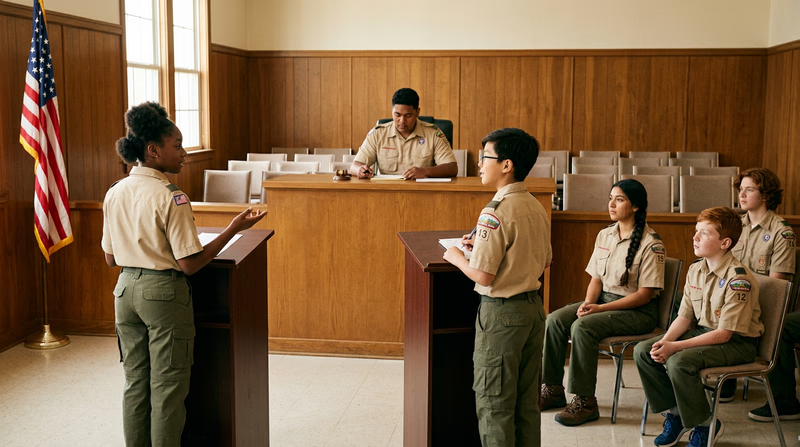
Option B: Plan and Conduct a Mock Trial
A mock trial is a simulated court case where you and your group play the roles of judge, lawyers, witnesses, jurors, and defendant. It is a fantastic way to learn how the legal system works by doing it yourself.
Planning Your Mock Trial
Step 1: Choose a Case
You can make up a scenario or use a pre-written case. Good mock trial scenarios are simple enough to understand but have enough evidence on both sides to make the outcome uncertain. Examples:
- A student is accused of plagiarizing a school paper
- A neighbor is accused of letting their dog damage someone’s garden
- A store owner claims a customer shoplifted
Step 2: Assign Roles
Mock Trial Roles
Every mock trial needs these participants- Judge: Runs the trial, rules on objections, and instructs the jury.
- Prosecutor/Plaintiff’s attorney: Presents the case against the defendant.
- Defense attorney: Represents the defendant and argues their innocence.
- Defendant: The person accused of the wrongdoing.
- Witnesses (2–4): Testify about what they saw, heard, or know.
- Jury (6–12): Listens to all evidence and decides the verdict.
- Bailiff: Calls the court to order and swears in witnesses.
Step 3: Follow Courtroom Procedure
A simplified trial follows this order:
- Bailiff calls the court to order
- Opening statements — prosecution/plaintiff goes first, then defense
- Prosecution/plaintiff presents witnesses — direct examination, then cross-examination by defense
- Defense presents witnesses — direct examination, then cross-examination by prosecution
- Closing arguments — prosecution/plaintiff goes first, then defense
- Judge instructs the jury on how to evaluate the evidence
- Jury deliberates and reaches a verdict
- Verdict is announced
Step 4: Discuss the Experience
After the verdict, discuss these questions with your group:
- Was the verdict fair? Why or why not?
- What was the strongest evidence on each side?
- What was it like to play your role?
- What did you learn about how the justice system works?
Req 7 — Visit with a Lawyer
Not All Lawyers Are in Courtrooms
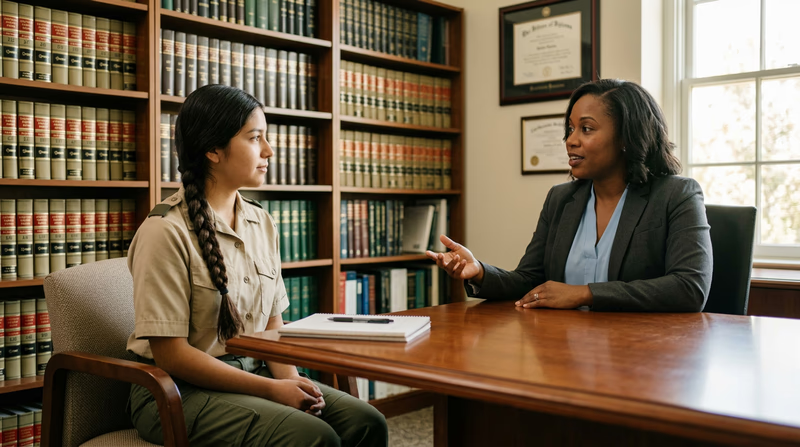
When most people think of a lawyer, they picture someone in a suit arguing a case in front of a jury. But the truth is, most lawyers rarely step inside a courtroom. This requirement asks you to meet a lawyer who works behind the scenes — in a business, bank, title company, or government office — to find out what their day-to-day work really looks like.
Types of Lawyers You Might Visit
Corporate Lawyers (Business)
Corporate lawyers help businesses follow the law. They review contracts, advise on mergers and partnerships, handle employment issues, and make sure the company complies with all the regulations that apply to their industry. A large company might have an entire team of lawyers — called in-house counsel — working full-time for that one organization.
Bank and Financial Lawyers
Lawyers at banks handle real estate transactions, loan agreements, trust management, and regulatory compliance. They make sure every financial deal follows federal and state banking laws. If you have ever bought or financed a house, a bank lawyer reviewed the paperwork.
Title Company Lawyers
When a property is bought or sold, someone needs to make sure the seller actually owns it and that there are no unpaid debts or legal claims attached to it. That is the job of a title company lawyer. They research the property’s legal history, resolve any problems, and issue title insurance to protect the buyer.
Government Lawyers
Government lawyers work at every level — city, county, state, and federal. They might prosecute criminals (as assistant district attorneys), represent government agencies in court, draft new laws and regulations, or advise elected officials on legal matters. The city attorney, state attorney general, and U.S. Attorney are all government lawyer positions.
Setting Up Your Visit
How to Find a Lawyer
- Ask your merit badge counselor — they may know a lawyer willing to meet with Scouts
- Ask your parents or troop leader if they know any lawyers in their professional network
- Contact local businesses, banks, or your city or county government and ask if their legal staff would be willing to meet with you
- Call your local bar association — many have programs connecting lawyers with students
Questions to Ask
Come prepared with thoughtful questions. Here are some good ones:
Interview Questions
Questions to ask the lawyer you visit- What kind of law do you practice? What does a typical day look like?
- What are your main duties and responsibilities?
- How did you decide to become a lawyer?
- What is the most interesting or challenging part of your job?
- How does your work help the company, bank, or agency you work for?
- What skills do you use most often — writing, negotiating, researching, public speaking?
- What advice would you give to a young person interested in the law?
Reporting What You Learned
When you meet with your counselor, be prepared to share:
- Who you visited — their name, title, and where they work
- What they do — their main duties and responsibilities
- What surprised you — something you did not expect to learn
- Your takeaway — what this visit taught you about how lawyers serve their organizations and communities
Req 8 — Becoming a Lawyer or Judge
The Path to Becoming a Lawyer
Becoming a lawyer is a long journey — typically about seven years of education after high school — but the path is well defined. While specific details vary by state, the overall process is similar across the country.
Step 1: Earn a Bachelor’s Degree (4 years)
There is no required college major for aspiring lawyers. Some choose political science, history, English, or criminal justice, but you can major in anything from engineering to philosophy. Law schools care most about your grades, your critical thinking skills, and your ability to write clearly.
Step 2: Take the LSAT
The Law School Admission Test (LSAT) is a standardized test that measures reading comprehension, logical reasoning, and analytical thinking. Most law schools require it as part of the application process. A strong LSAT score can open doors to top law schools and scholarship opportunities.
Step 3: Complete Law School (3 years)
Law school is a graduate program that takes three years of full-time study. Students earn a Juris Doctor (J.D.) degree. The first year typically covers foundational subjects like contracts, torts, criminal law, civil procedure, constitutional law, and property. In the second and third years, students choose specialized courses and often gain practical experience through clinics, internships, and moot court competitions.
Step 4: Pass the Bar Exam
After graduating from law school, you must pass the bar exam in the state where you want to practice. The bar exam is an intense two- or three-day test covering both state-specific and general legal knowledge. It is one of the most challenging professional exams in the country. Pass rates vary by state but typically range from 50% to 80%.
Step 5: Character and Fitness Review
Before receiving a law license, every applicant must pass a character and fitness review. The state bar association investigates your background to make sure you are honest, trustworthy, and fit to practice law. This includes checking your criminal record, financial history, and academic conduct.
Step 6: Get Licensed and Keep Learning
Once you pass the bar and clear the character review, you are officially a licensed attorney. But learning does not stop there. Most states require lawyers to complete Continuing Legal Education (CLE) courses every year to keep their license current.
How Judges Are Selected
Judges are the referees of the legal system. They interpret the law, manage trials, and make decisions that affect people’s lives. But how do they get their jobs? The answer depends on the type of court and the state.
Federal Judges
All federal judges — including Supreme Court Justices — are nominated by the President and confirmed by the U.S. Senate. Once confirmed, federal judges serve for life (or until they retire or are impeached), which is meant to protect them from political pressure.
State Judges
State judge selection varies widely. Most states use one or more of these methods:
How States Choose Judges
Common methods for selecting state judges- Partisan elections: Judges run for office with a political party affiliation, just like other elected officials. Voters choose between candidates from different parties.
- Nonpartisan elections: Judges run for office, but no political party is listed on the ballot. Voters choose based on the candidates’ qualifications and record.
- Gubernatorial appointment: The governor appoints judges, sometimes from a list of candidates recommended by a nominating commission.
- Merit selection (Missouri Plan): A nonpartisan commission reviews applicants and recommends candidates to the governor, who makes the appointment. After a set period, voters decide whether to keep the judge in a “retention election.”
- Legislative appointment: The state legislature votes to appoint judges (used in only a few states).
Preparing for Your Counselor Discussion
How to Become a Lawyer — Bureau of Labor Statistics The BLS Occupational Outlook Handbook covers education requirements, pay, and job outlook for lawyers. Link: How to Become a Lawyer — Bureau of Labor Statistics — https://www.bls.gov/ooh/legal/lawyers.htm Judicial Selection in the States — Ballotpedia A comprehensive state-by-state guide to how judges are chosen. Link: Judicial Selection in the States — Ballotpedia — https://ballotpedia.org/Judicial_selection_in_the_states
Req 9 — Jobs in Law
The Legal World Is Bigger Than You Think
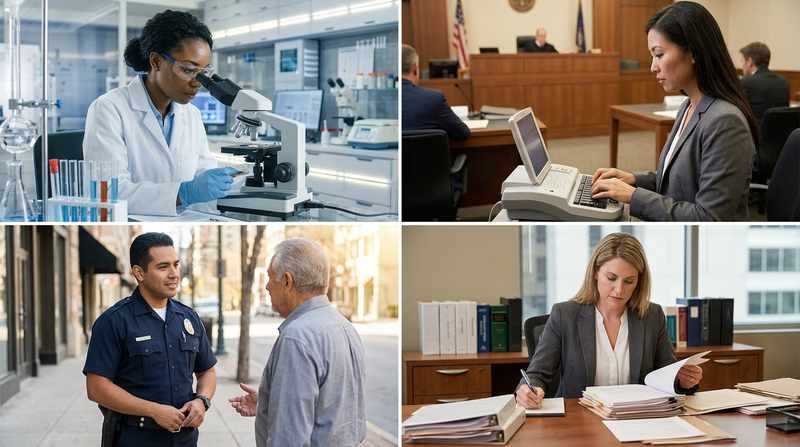
When people hear “jobs in law,” they usually think of lawyers and judges. But the legal system is an enormous machine, and it takes many different professionals to keep it running. From the detective who collects evidence to the mediator who helps people settle disputes without going to court, there are dozens of careers connected to law.
Your job is to find 15 of them. Here is a look at the landscape to help you get started — but do not just copy this list. Use it as a springboard to do your own research and discover roles that genuinely interest you.
Categories of Law-Related Careers
In the Courtroom
These professionals are directly involved in court proceedings:
- Judge — Presides over trials, interprets the law, and makes rulings
- Prosecutor — A government lawyer who brings criminal cases against defendants
- Defense attorney — Represents people or organizations accused of crimes or facing lawsuits
- Court reporter — Creates a word-for-word record of everything said during a trial using a special shorthand machine
- Bailiff — Maintains order in the courtroom, manages the jury, and provides security
In Law Enforcement and Investigation
These careers focus on preventing crime, investigating it, and maintaining public safety:
- Police officer — Patrols communities, responds to emergencies, and enforces laws
- Detective / Criminal investigator — Investigates crimes by gathering evidence, interviewing witnesses, and building cases
- Forensic scientist — Analyzes physical evidence from crime scenes — DNA, fingerprints, ballistics, digital data
- FBI agent — Investigates federal crimes including terrorism, cybercrime, and organized crime
- Probation officer — Supervises people who have been released from jail or given probation instead of prison time
In Legal Support
These professionals work alongside lawyers to keep the legal system functioning:
- Paralegal / Legal assistant — Researches legal issues, drafts documents, and helps lawyers prepare for cases
- Legal secretary — Manages law office operations, files court documents, and schedules appointments
- Law librarian — Organizes legal resources and helps lawyers and the public find the information they need
- Court clerk — Manages court records, schedules hearings, and handles administrative tasks
In Government and Policy
These roles shape the laws themselves:
- Legislator (senator, representative, city council member) — Writes, debates, and votes on new laws
- Lobbyist — Advocates for specific laws or policies on behalf of organizations, industries, or interest groups
- Compliance officer — Makes sure a company follows all relevant laws and regulations
- Regulatory analyst — Studies the impact of laws and regulations and advises government agencies
In Dispute Resolution
Not every legal conflict goes to court:
- Mediator — Helps two parties reach a voluntary agreement without a trial
- Arbitrator — Hears both sides of a dispute and makes a binding decision, similar to a private judge
In Specialized Fields
- Patent attorney — Helps inventors protect their inventions through the patent system
- Immigration lawyer — Helps people navigate visas, green cards, citizenship, and immigration law
- Legal journalist — Reports on trials, court decisions, and legal trends for news organizations
Researching Your List
Here are some ways to find law-related careers beyond the ones mentioned above:
- Browse the Bureau of Labor Statistics Occupational Outlook Handbook under “Legal Occupations”
- Search for “law careers” or “legal careers” on career exploration websites
- Ask the lawyer you visited (Requirement 7) what other professionals they work with every day
- Think about your own interests — technology? Try “cybersecurity attorney” or “digital forensics analyst.” Animals? Try “animal law attorney” or “wildlife enforcement officer.”
Req 10 — Access to Legal Help
Justice Should Not Depend on Your Wallet
The idea that everyone deserves equal justice under the law is one of the most important principles in our legal system. But hiring a lawyer can be expensive — often hundreds of dollars per hour. So what happens if you need legal help but cannot afford it? And what if you can afford a lawyer but do not know where to find one? This requirement covers both situations.
If You Cannot Afford a Lawyer
Public Defenders (Criminal Cases)
The Sixth Amendment to the U.S. Constitution guarantees that anyone accused of a crime has the right to an attorney. If you are charged with a crime and cannot afford to hire your own lawyer, the court will appoint a public defender to represent you at no cost. This right was established by the landmark Supreme Court case Gideon v. Wainwright (1963).
Legal Aid Societies (Civil Cases)
For civil matters — like eviction, divorce, immigration, or consumer disputes — there is no constitutional right to a free lawyer. However, legal aid organizations provide free or low-cost legal services to people who qualify based on income. Nearly every state and major city has a legal aid society.
Pro Bono Services
Many private lawyers donate a portion of their time to work for free — called pro bono work (short for the Latin phrase “pro bono publico,” meaning “for the public good”). The American Bar Association recommends that every lawyer contribute at least 50 hours of pro bono service per year.
Law School Clinics
Law schools across the country run legal clinics where law students — supervised by experienced professors — provide free legal help to people in the community. These clinics handle real cases and give students hands-on experience while helping people who need it.
Other Free Resources
Free and Low-Cost Legal Resources
Places to get help when money is tight- ABA Free Legal Answers: An online Q&A site where volunteer lawyers answer legal questions for free (abafreelegalanswers.org).
- LawHelp.org: Helps people find free legal aid programs in their state.
- State and local bar association hotlines: Many bar associations offer free legal information lines or lawyer referral services with reduced-fee initial consultations.
- Courthouse self-help centers: Many courthouses have free walk-in help centers where staff can assist you with forms and procedures (though they cannot give legal advice).
- Nonprofit legal organizations: Groups like the ACLU, NAACP Legal Defense Fund, and Legal Services Corporation provide free legal representation in specific types of cases.
If You Can Afford a Lawyer but Don’t Know One
Finding the right lawyer for your specific situation is important. Here are the best ways to find one:
Lawyer Referral Services
Most state and local bar associations run lawyer referral services. You call the service, describe your legal issue, and they connect you with a qualified lawyer in your area who handles that type of case. Many offer a reduced-fee initial consultation (often around $30–50 for 30 minutes).
Online Directories
Reputable legal directories let you search for lawyers by location and specialty:
- The ABA Lawyer Referral Directory lists certified lawyer referral programs nationwide
- State bar association websites let you verify that a lawyer is licensed and in good standing
Personal Referrals
Ask people you trust — family members, friends, coworkers, your employer — if they know a good lawyer. Personal recommendations are one of the most common ways people find legal representation.
Your Employer or Union
Some employers offer legal assistance plans as an employee benefit, similar to health insurance. Labor unions may also provide legal services to their members.
Find Legal Help — LawHelp.org Find free legal aid programs, information, and court help in your state. Link: Find Legal Help — LawHelp.org — https://www.lawhelp.org/ ABA Free Legal Answers A virtual legal advice clinic where volunteer lawyers answer civil legal questions online for free. Link: ABA Free Legal Answers — https://abafreelegalanswers.org/
Req 11 — Areas of Law
(a) Administrative Law
Administrative law governs how government agencies make and enforce rules. Congress and state legislatures pass broad laws, but agencies like the Environmental Protection Agency (EPA), the Federal Communications Commission (FCC), and the Food and Drug Administration (FDA) write the detailed regulations that carry out those laws.
Why it matters: Administrative law affects nearly every part of daily life — the safety of your food, the quality of your drinking water, the radio frequencies your phone uses, and the standards your school must meet. When an agency proposes a new rule, citizens and businesses have the right to comment on it, ensuring public participation in government decisions.
(b) Alternative Dispute Resolution
Not every disagreement needs to go to court. Alternative Dispute Resolution (ADR) refers to methods of resolving conflicts outside the traditional courtroom setting. The two most common forms are:
- Mediation — A neutral third party (the mediator) helps both sides communicate and reach a voluntary agreement. The mediator does not decide who is right or wrong.
- Arbitration — A neutral third party (the arbitrator) hears both sides and makes a binding decision, similar to a judge. It is faster and usually cheaper than going to court.
Why it matters: Courts are expensive and slow. ADR gives people a faster, less costly way to resolve disputes. Many contracts — including the ones you agree to when signing up for apps and services — include clauses requiring disputes to be settled through arbitration rather than in court.
(c) Bankruptcy
Bankruptcy is a legal process that helps people or businesses who cannot pay their debts get a fresh start. Under federal bankruptcy law, a person can ask a court to either reorganize their debts (create a payment plan) or discharge them (wipe them out and start over).
The two most common types for individuals are:
- Chapter 7 — Most debts are eliminated, but you may have to give up some property
- Chapter 13 — You keep your property but follow a court-approved plan to repay debts over 3–5 years
Why it matters: Without bankruptcy protection, people crushed by medical bills, job loss, or other financial disasters would have no legal path to recovery. Bankruptcy gives them a second chance while still protecting creditors’ rights. It also helps businesses restructure and save jobs rather than shutting down completely.
(d) Biotechnology Law
Biotechnology law deals with the legal and ethical issues around biological research and technology — genetic engineering, gene therapy, cloning, stem cell research, genetically modified organisms (GMOs), and DNA testing.
Why it matters: Science is advancing faster than the law can keep up. Can a company patent a human gene? Should genetically modified crops be labeled? How should DNA evidence be used in criminal cases? Biotechnology law grapples with some of the most complex and controversial questions of our time, balancing scientific progress with ethical boundaries and public safety.
(e) Environmental Law
Environmental law protects the natural world — air, water, land, and wildlife — from pollution and destruction. Major federal environmental laws include the Clean Air Act, the Clean Water Act, and the Endangered Species Act.
Why it matters: Without environmental laws, companies could dump waste into rivers, pollute the air without limits, and destroy wildlife habitats without consequence. These laws set standards for pollution control, require environmental impact assessments before major projects, and hold polluters accountable. Environmental law connects directly to the Scout Outdoor Code: “I will be clean in my outdoor manners” and “I will be conservation-minded.”
(f) Family Law
Family law covers legal matters involving family relationships — marriage, divorce, child custody, adoption, child support, and domestic violence protection. Family courts handle some of the most emotionally charged cases in the legal system.
Why it matters: Family law directly affects millions of people. When parents divorce, family law determines where children live, who makes decisions about their education and healthcare, and how financial support is handled. Adoption laws ensure children are placed in safe, loving homes. Domestic violence laws protect victims and hold abusers accountable.
(g) Immigration Law
Immigration law governs who can enter, live, and work in the United States. It covers visas, green cards, citizenship, asylum, deportation, and border security. Immigration law is primarily federal — meaning the national government, not individual states, makes the rules.
Why it matters: The United States has always been a nation of immigrants, and immigration law shapes who gets the opportunity to become part of American society. It balances national security with humanitarian responsibilities, economic needs, and family reunification. Immigration cases can be life-changing for the people involved, affecting where they live, whether families stay together, and whether someone fleeing danger can find safety.
(h) Information Technology Law
IT law (also called cyber law) addresses legal issues created by computers, the internet, and digital technology — cybercrime, data breaches, online fraud, digital contracts, social media regulation, and the legal responsibilities of tech companies.
Why it matters: Technology evolves far faster than the law. Who is responsible when a company’s data breach exposes your personal information? Is it legal for a website to track your every click? Can you be held responsible for what you post online? IT law is one of the fastest-growing and most dynamic areas of legal practice, and it affects anyone who uses a phone, computer, or the internet — which means virtually everyone.
(i) Intellectual Property Law
Intellectual Property (IP) law protects creations of the mind. The three main types of IP protection are:
- Copyright — Protects original creative works like books, music, movies, software, and artwork. Copyright protection is automatic the moment you create something.
- Patents — Protect inventions and new processes. You must apply for a patent, and it gives you exclusive rights to your invention for a limited time (usually 20 years).
- Trademarks — Protect brand names, logos, and slogans that identify a business. Think of the Nike swoosh or the McDonald’s golden arches.
Why it matters: Without IP law, anyone could copy your song, steal your invention, or use your company’s name to sell inferior products. IP law encourages innovation and creativity by ensuring that creators and inventors benefit from their work. It also protects consumers by preventing confusion about who makes a product.
(j) International Law
International law governs relationships between countries. It includes treaties, trade agreements, human rights conventions, laws of war, and the rules of international organizations like the United Nations.
Why it matters: No single country can solve global problems alone. International law provides a framework for cooperation on issues like climate change, terrorism, trade, and human rights. It establishes rules for how countries treat each other — and how they treat their own citizens. While enforcement can be challenging (there is no “world police”), international law represents humanity’s best effort at creating a peaceful global order.
(k) Privacy Law
Privacy law protects your right to control your personal information — who collects it, how it is used, and who can see it. Key U.S. privacy laws include HIPAA (health records), FERPA (school records), COPPA (children’s online data), and various state-level data privacy laws.
Why it matters: In the digital age, your personal data is collected constantly — by apps, websites, stores, schools, and government agencies. Privacy law sets limits on what organizations can do with your information. It protects your medical records from being shared without permission, your school grades from being made public, and your online activity from being sold to advertisers without your knowledge. As technology advances, privacy law is becoming one of the most important areas of legal practice.
Preparing for Your Discussion
Areas of Practice — American Bar Association The ABA organizes its work by legal specialty — browse their sections to learn more about any area of law. Link: Areas of Practice — American Bar Association — https://www.americanbar.org/groups/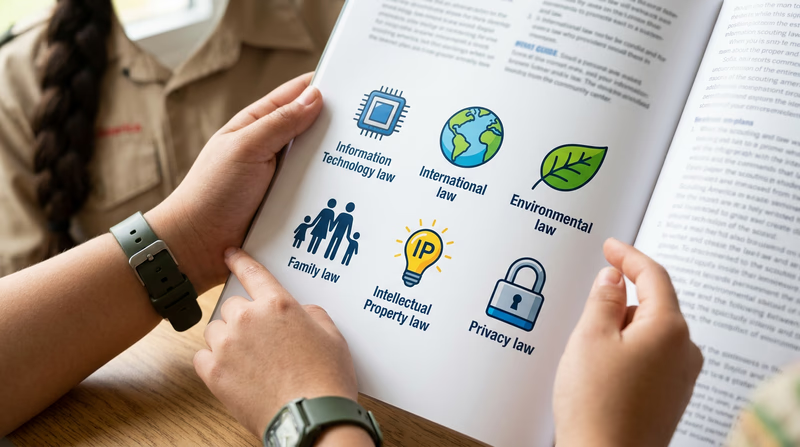
Extended Learning
A. Introduction
Congratulations on completing the Law merit badge requirements! You now have a solid understanding of what law is, where it comes from, and how it shapes our daily lives. But the legal world is vast, and there is so much more to explore. Whether you are considering a career in law or simply want to be a more informed citizen, the resources and experiences below will help you keep learning.
B. Deep Dive: How a Bill Becomes a Law
You have learned about the sources of law and the different types of legal systems. But how does a new law actually get created? The process is longer and more complex than most people realize.
It begins with an idea. Anyone can suggest a new law — a citizen, an interest group, a government agency — but only a member of Congress (a senator or representative) can formally introduce a bill. The member who introduces it becomes the bill’s sponsor.
Once introduced, the bill is assigned to a committee that specializes in the subject matter. For example, a bill about environmental protection would go to the Environment and Public Works Committee. The committee studies the bill, holds hearings where experts and citizens testify, and may rewrite parts of it. Most bills die in committee — they never make it to a vote.
If the committee approves the bill, it goes to the full chamber (the Senate or House of Representatives) for debate and a vote. If it passes one chamber, it must then pass the other chamber in the same form. If the two chambers pass different versions, a conference committee works out a compromise.
Once both chambers pass the same version, the bill goes to the President, who can either sign it into law or veto it. Congress can override a presidential veto, but it takes a two-thirds vote in both chambers — a very high bar.
The entire process can take weeks, months, or even years. Of the thousands of bills introduced each session of Congress, only a small fraction become law. This is by design — the Founders wanted lawmaking to be deliberate and difficult, so that only well-considered laws would pass.
C. Deep Dive: The U.S. Court System
Understanding how courts are organized helps you see how the legal system fits together. The United States actually has two parallel court systems — federal and state — and each has multiple levels.
Federal Courts handle cases involving federal law, the Constitution, disputes between states, and cases involving the U.S. government. The federal system has three levels:
- U.S. District Courts — The trial courts where federal cases begin. There are 94 district courts across the country.
- U.S. Courts of Appeals — Also called circuit courts, these handle appeals from district courts. There are 13 circuits, each covering a group of states.
- The U.S. Supreme Court — The highest court in the land. It has nine justices and is the final word on what the Constitution means. The Supreme Court hears only about 70–80 cases per year out of the thousands of petitions it receives.
State Courts handle the vast majority of legal cases — over 95% of all cases in the United States are decided in state courts. Each state organizes its courts differently, but most have a similar three-tier structure: trial courts, appellate courts, and a state supreme court.
A case typically starts in a trial court, where evidence is presented and a judge or jury makes a decision. If the losing side believes a legal error was made, they can appeal to a higher court. Appellate courts do not hold new trials — they review the trial court’s record to decide whether the law was applied correctly.
D. Deep Dive: Your Rights If You Are Stopped by Police
As a young person, it is important to know your constitutional rights during interactions with law enforcement. This knowledge protects you and helps you handle these situations calmly and safely.
The Fourth Amendment protects you from unreasonable searches and seizures. Police generally need a warrant to search your home or belongings, though there are important exceptions (like searches during a lawful arrest or when evidence is in plain view).
The Fifth Amendment gives you the right to remain silent. You do not have to answer questions that might incriminate you. If you are arrested, police must read you your Miranda rights before questioning you.
The Sixth Amendment guarantees your right to an attorney. If you are arrested and cannot afford a lawyer, one will be appointed for you.
Understanding your rights is not about being confrontational — it is about being informed. Knowing what the law says helps you stay safe and make good decisions.
E. Real-World Experiences
These experiences bring the law to life beyond the merit badge requirements.
Visit the National Archives
Attend a City Council or School Board Meeting
Tour Your County Courthouse
Participate in a Youth Court Program
Join a Mock Trial or Debate Team
F. Organizations
These organizations offer resources, programs, and opportunities for young people interested in law and justice.
The largest professional organization for lawyers in the United States. Their Division for Public Education offers programs and resources specifically for students.
Organization: American Bar Association (ABA) — https://www.americanbar.org/
Founded by retired Supreme Court Justice Sandra Day O’Connor, iCivics provides free educational games and resources that teach students about government, law, and civic participation.
Organization: iCivics — https://www.icivics.org/
A nonprofit that creates programs and materials to educate young people about law, democracy, and human rights. Their classroom curriculum is used in schools nationwide.
Organization: Street Law, Inc. — https://www.streetlaw.org/
An interactive museum in Philadelphia dedicated to the U.S. Constitution. Offers online exhibits, podcasts, and educational resources for students of all ages.
Organization: National Constitution Center — https://constitutioncenter.org/
The nation’s largest funder of civil legal aid for low-income Americans. Their website connects people to free legal help across all 50 states.
Organization: Legal Services Corporation — https://www.lsc.gov/