Req 1 — What Is Law?
What Is Law?
At its simplest, law is a set of rules created and enforced by a governing authority. These rules tell people what they can and cannot do, and they carry consequences for those who break them. But law is more than just a list of “do nots.” It is a framework that helps millions of people live, work, and interact with each other in an organized way.
Think about a pickup basketball game. Without agreed-upon rules — traveling, fouls, out of bounds — the game would fall apart in minutes. Law works the same way for society, just on a much bigger scale.
Sources of Law
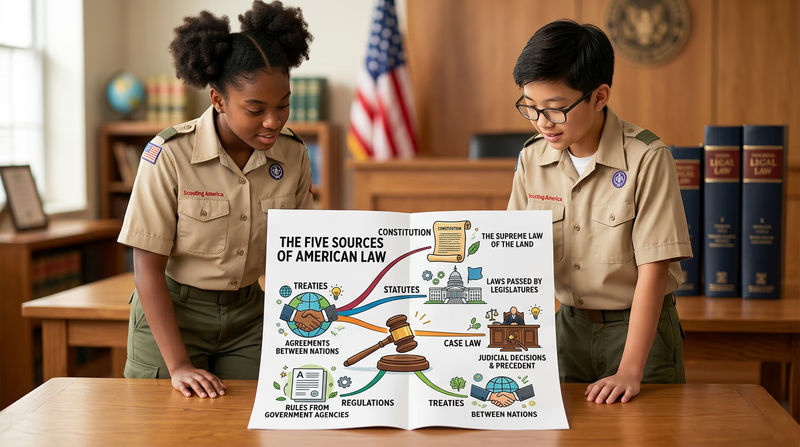
Laws do not appear out of thin air. In the United States, law comes from several major sources:
The Constitution
The U.S. Constitution is the highest law in the country. Every other law must be consistent with it. State constitutions serve a similar role within each state. If a law conflicts with the Constitution, courts can strike it down.
Statutes (Legislation)
Statutes are laws written and passed by elected legislators — Congress at the federal level, and state legislatures at the state level. City councils and county boards also pass local laws called ordinances. When people talk about “passing a law,” they usually mean a statute.
Case Law (Common Law)
When judges decide cases, their written opinions become part of the law. Future judges look at these past decisions — called precedents — to guide their own rulings. This system of building law through court decisions is called common law, and it has roots stretching back to medieval England.
Administrative Regulations
Government agencies create detailed rules to carry out the laws passed by legislatures. For example, Congress might pass a law saying “keep our air clean,” and then the Environmental Protection Agency writes specific regulations about exactly how much pollution a factory can release.
Treaties
The President can negotiate treaties with other countries, and when the Senate approves them, they become part of U.S. law. Treaties cover topics from trade to human rights to environmental protection.
Functions of Law
Why do we need law in the first place? Law serves several critical functions in society:
Keeping Order
Laws establish rules of behavior so people know what is expected. Traffic laws keep roads safe. Criminal laws deter violence and theft. Without these rules, people would have to protect themselves, and the strongest would dominate.
Protecting Rights
The Bill of Rights and other constitutional protections guarantee freedoms like speech, religion, and a fair trial. Laws also protect property rights, privacy, and the right to equal treatment regardless of race, gender, or background.
Resolving Disputes
When people disagree — over a contract, a property line, or an injury — the law provides a system (courts) where disputes can be settled peacefully by a neutral decision-maker, rather than through force or intimidation.
Promoting the Common Good
Laws like environmental regulations, public health rules, and safety standards exist to protect the well-being of the whole community. They address problems that individuals cannot solve on their own.
Introduction to Law — United States Courts Learn about the types of cases handled in federal courts and how the court system works.