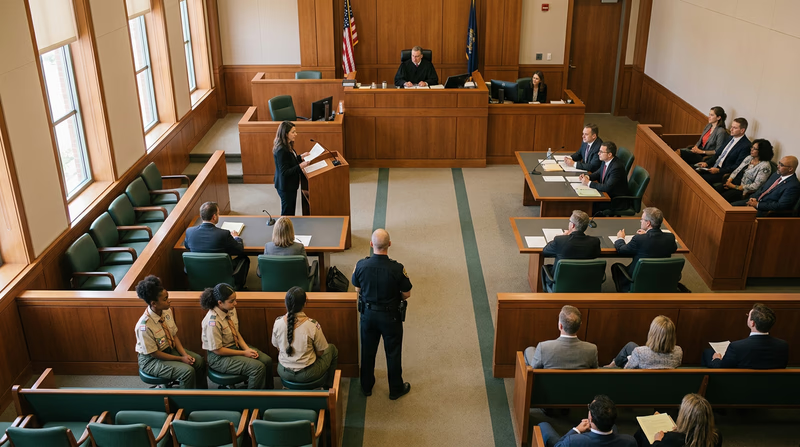
Req 3 — Civil vs. Criminal Law
Two Branches, One System
Almost every legal case in the United States falls into one of two categories: civil or criminal. Understanding the difference between them is one of the most important building blocks of legal knowledge.
What Is Criminal Law?
Criminal law deals with actions that are considered offenses against society as a whole — even if the crime was committed against just one person. Crimes like robbery, assault, arson, and drunk driving are prosecuted by the government (federal, state, or local), not by the individual victim.
In a criminal case:
- The government brings the charges (the case title looks like “State v. Smith” or “United States v. Jones”)
- A prosecutor (a government lawyer) presents the case against the accused person, called the defendant
- The defendant is presumed innocent until proven guilty
- The standard of proof is “beyond a reasonable doubt” — the highest standard in the legal system
- If found guilty, the defendant may face punishments like fines, probation, community service, or prison time
Examples of Criminal Cases
- A person is charged with shoplifting from a store
- Someone is arrested for driving under the influence of alcohol
- A hacker is charged with breaking into a computer system
- A person is accused of assault after a fight
What Is Civil Law?
Civil law handles disputes between private parties — individuals, businesses, or organizations. Instead of punishing criminal behavior, civil law aims to resolve disagreements and compensate people who have been harmed.
In a civil case:
- The person who files the case is called the plaintiff
- The person being sued is the defendant
- The case title looks like “Johnson v. ABC Company”
- The standard of proof is “preponderance of the evidence” — meaning it is more likely than not that the claim is true (think of it as “51% likely”)
- If the plaintiff wins, the defendant usually pays damages (money) rather than going to jail
Examples of Civil Cases
- A homeowner sues a contractor for doing a bad job on a repair
- A company sues another company for breaking a contract
- A person files a lawsuit after being injured in a car accident caused by another driver
- A tenant takes a landlord to small claims court over a security deposit
Key Differences at a Glance
Criminal vs. Civil Law
Key differences between the two branches
- Who brings the case: Criminal — the government (prosecutor). Civil — a private person or organization (plaintiff).
- Purpose: Criminal — punish the offender and protect society. Civil — compensate the injured party and resolve disputes.
- Standard of proof: Criminal — beyond a reasonable doubt. Civil — preponderance of the evidence.
- Possible outcomes: Criminal — fines, probation, imprisonment. Civil — monetary damages, court orders (injunctions).
- Right to an attorney: Criminal — yes, the government must provide one if you cannot afford it. Civil — no guaranteed free attorney.
- Jury size: Criminal — typically 12 jurors. Civil — often 6 jurors (varies by state).
Can the Same Event Be Both?
Yes. A single incident can lead to both a criminal case and a civil case. For example, if someone punches you:
- The government could file criminal assault charges (criminal case)
- You could also sue the person for your medical bills (civil case)
These are separate proceedings with different rules, different standards of proof, and different outcomes. A person could be found “not guilty” in a criminal trial but still lose a civil lawsuit for the same event. This happened in the famous O.J. Simpson cases — he was acquitted of murder in criminal court but found liable for wrongful death in civil court.
Types of Cases — United States Courts The federal courts explain the different types of cases they handle, including criminal and civil matters.