Req 4 — Law Enforcement in Society
Why This Requirement Matters
Law enforcement officers — police officers, sheriffs, state troopers, federal agents, and others — play a critical role in keeping communities safe. But different people may see that role differently based on their experiences, backgrounds, and perspectives. This requirement asks you to go out and listen, which is one of the most important skills a citizen can develop.
The Role of Law Enforcement
Before you interview anyone, it helps to understand the basics. Law enforcement officers serve several core functions:
- Preventing crime by patrolling neighborhoods and being a visible presence
- Responding to emergencies — from accidents to crimes in progress to natural disasters
- Investigating crimes by gathering evidence, interviewing witnesses, and building cases
- Enforcing laws by issuing citations, making arrests, and maintaining public order
- Serving the community through outreach programs, school resource officers, and community partnerships
Modern law enforcement also involves specialized units for things like cybercrime, drug enforcement, traffic safety, and community relations.
Levels of Law Enforcement
Law enforcement operates at multiple levels, and each level has different responsibilities:
Law Enforcement Levels
Who enforces the law at each level of government
- Local police and sheriffs: Patrol cities, towns, and counties. Handle most everyday law enforcement. Respond to 911 calls.
- State police and troopers: Patrol state highways, assist local agencies, and investigate statewide crimes.
- Federal agencies: Enforce federal laws. Includes the FBI (major crimes and terrorism), DEA (drug enforcement), U.S. Marshals (fugitives and court security), and many others.
- Specialized agencies: Park rangers, campus police, wildlife officers, and transit police focus on specific areas or types of enforcement.
Conducting Your Interviews
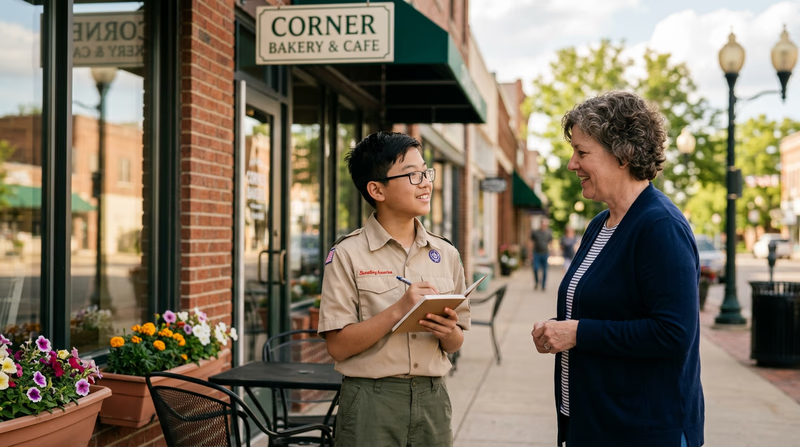
This requirement is about real conversations with real people. Here is how to make the most of it.
Who to Ask
You need five people, and no more than one can be from your immediate family. Try to get a variety of perspectives:
- A teacher or school administrator
- A neighbor or family friend
- A local business owner
- A religious or community leader
- A coach or mentor
- Someone who works in or with law enforcement (if you know one)
What to Ask
Keep your questions open-ended to encourage real discussion. Here are some good starting points:
- “What do you think the main role of law enforcement officers is?”
- “How have law enforcement officers helped our community?”
- “What do you think law enforcement does well? What could be improved?”
- “Have you had any personal experiences — positive or negative — with law enforcement?”
Recording Your Findings
After your interviews, organize your findings. Look for:
- Common themes — What did most people agree on?
- Different perspectives — Where did opinions diverge, and why?
- Surprises — Did anyone say something you did not expect?