Req 5 — Consumer & Seller Protections
Why Consumer and Seller Protections Matter
Every time you buy a candy bar, download an app, or order something online, the law is working to make sure the deal is fair. Consumer protection laws prevent businesses from cheating, lying, or selling dangerous products. At the same time, seller protections ensure businesses are not victimized by fraud or unfair practices. Together, these laws create a marketplace where buyers and sellers can trust each other.
Major Consumer Protection Laws
The Federal Trade Commission Act (1914)
This law created the Federal Trade Commission (FTC), the main government agency responsible for protecting consumers. The FTC Act made “unfair or deceptive business practices” illegal. That means companies cannot lie in their advertising, hide important information, or use tricks to get your money.
The Fair Credit Reporting Act (1970)
This law regulates how companies collect and use your credit information. It gives you the right to see your own credit report, dispute errors, and limit who can access your financial history. As you get older and start building credit, this law will protect you directly.
The Consumer Product Safety Act (1972)
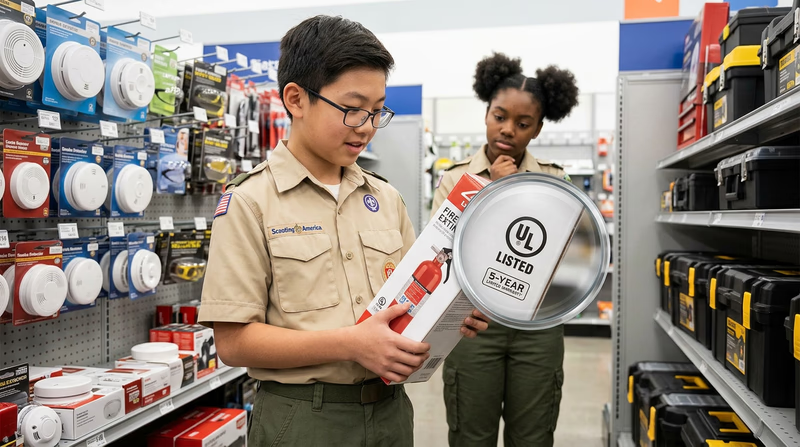
This law created the Consumer Product Safety Commission (CPSC), which sets safety standards for thousands of products — from toys to electronics to furniture. If a product is found to be dangerous, the CPSC can force a recall, requiring the company to fix or replace the product.
The Truth in Lending Act (1968)
When you borrow money — for a car, a house, or a credit card — the lender must clearly tell you exactly how much the loan will cost, including the interest rate and all fees. No hidden surprises.
The Children’s Online Privacy Protection Act (COPPA) (1998)
This law protects the privacy of children under 13 online. Websites and apps must get a parent’s permission before collecting personal information from kids. If you have ever seen a “Are you 13 or older?” prompt, COPPA is the reason.
Seller Protections
Laws do not only protect buyers. Sellers need legal protection too:
Contract Law
Contracts are legally binding agreements. If you hire someone to mow your lawn and they take your money but never show up, contract law gives you a way to get your money back or force them to do the work. Sellers rely on contracts to ensure they get paid for their goods and services.
Trademark and Patent Law
Businesses invest time and money creating products, brand names, and logos. Trademarks protect brand names and logos from being copied. Patents protect inventions. These laws prevent competitors from stealing a company’s ideas and profiting from someone else’s hard work.
Anti-Fraud Laws
Just as consumers can be scammed, businesses can be victims of fraud too — counterfeit money, stolen credit cards, fake returns, and identity theft. Laws against fraud protect both sides of every transaction.
Organizations That Help
Consumer-Focused Organizations
Consumer Help Organizations
Places consumers can turn to for assistance
- Federal Trade Commission (FTC): Investigates unfair business practices and fraud. You can file complaints at ftc.gov.
- Consumer Financial Protection Bureau (CFPB): Helps consumers with banking, credit card, and loan problems.
- Better Business Bureau (BBB): A nonprofit that rates businesses and helps resolve consumer complaints.
- State Attorney General’s Office: Every state has a consumer protection division that investigates complaints and takes legal action against bad actors.
- Consumer Product Safety Commission (CPSC): Tracks product safety and manages recalls.
Seller-Focused Organizations
Seller Help Organizations
Resources that support businesses and sellers
- U.S. Small Business Administration (SBA): Provides legal resources, funding, and guidance to small business owners.
- U.S. Chamber of Commerce: Advocates for business-friendly laws and offers legal resources for companies of all sizes.
- U.S. Patent and Trademark Office (USPTO): Helps businesses protect their inventions and brand names.
- Local Chambers of Commerce: Connect businesses with legal resources and community support.