 Getting Started
Introduction & Overview
A plain piece of leather can become a wallet, key fob, sheath, bookmark, bracelet, or belt that lasts for years. Leatherwork teaches you how to measure carefully, use sharp tools safely, and turn a flat material into something useful and personal. If you like making things with your hands, this badge gives you skills you can use for gifts, gear repairs, and creative projects.
Then and Now
Then
Leather has been part of daily life for thousands of years. People used animal hides for shoes, water containers, belts, saddles, shields, and protective clothing long before factories existed. Early leatherworkers scraped, stretched, smoked, and treated hides with natural oils and plant tannins so the material would not rot.
In many places, leathercraft was a necessary trade. A village needed harness makers, cobblers, and saddle makers because travel, farming, and carrying tools depended on strong leather goods.
Now
Today, leatherwork is both a craft and an industry. Large tanneries process hides for boots, furniture, sports gear, and luxury bags, while individual makers hand-tool custom wallets, notebook covers, guitar straps, and outdoor gear. Modern leatherworkers use better steels, safer finishes, and precise patterns, but the core ideas are still the same: choose the right leather, cut accurately, and finish your work with care.
Some people come to leatherwork because they want to make useful gear. Others love the design side — carving patterns, stamping borders, or blending dyes. Either way, the craft rewards patience more than speed.
Get Ready!
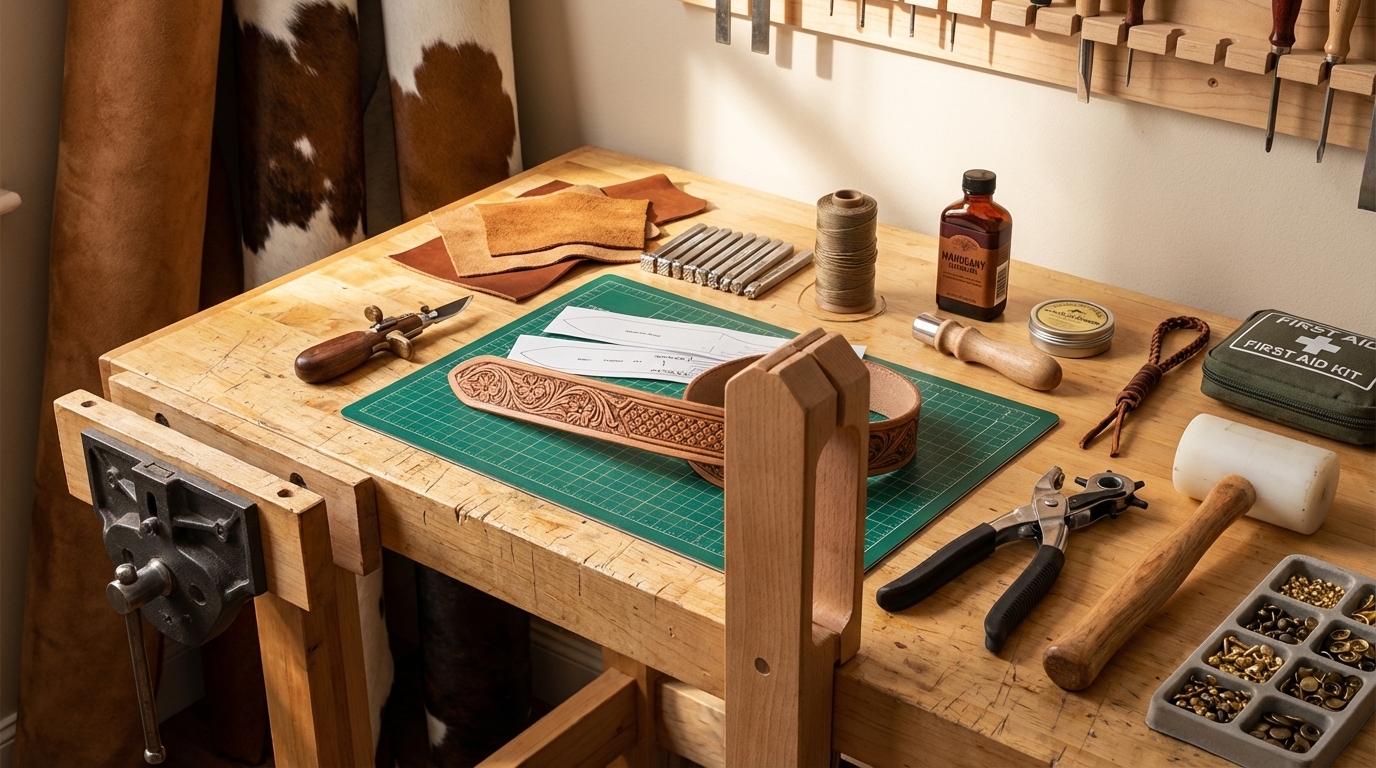
You do not need a huge workshop to begin. A safe work surface, a few basic tools, and the habit of measuring twice before cutting once will take you a long way. By the end of this guide, you will know how leather behaves, how to avoid common mistakes, and how to talk confidently with your counselor about the choices you made.
Kinds of Leatherwork
Utility Leathercraft
This is the practical side of the craft: belts, sheaths, pouches, key fobs, coasters, dog collars, and simple cases. Utility projects teach layout, straight cuts, hole spacing, edge finishing, and strong assembly. They are often the best first projects because you can see quickly whether your measurements and tool control are improving.
Decorative Tooling
Tooling means adding patterns to the surface of vegetable-tanned leather. You might carve lines with a swivel knife, stamp basket-weave textures, or press a maker’s mark into the leather. Decorative work teaches control, rhythm, and planning because once a mark is stamped, it is usually there for good.
Braiding and Lacing
Some leather projects are built less by stitching and more by weaving strands together. Braiding and lacing show up in bracelets, zipper pulls, decorative edges, and handles. This branch of leatherwork is great for Scouts who like patterns and repeated hand motions.
Care and Restoration
Leatherwork is not only about making new things. It also includes cleaning, conditioning, re-dyeing, repairing stitches, and protecting older items from cracking or mildew. Knowing how to care for leather helps boots, gloves, tack, and furniture last much longer.
Now you have the big picture. The first step is learning how to work safely and how to respond if something goes wrong.