Req 3a — Patterns and Transfer
A project can go wrong before the knife ever touches the leather. If your pattern is crooked, too close to the edge, or transferred in the wrong place, every later step becomes harder. Good layout is the quiet skill that makes the rest of the project look easy.
What pattern layout means
Pattern layout is deciding exactly where each piece belongs on the leather before you cut or tool it. You are trying to use the hide wisely, avoid weak or stretchy spots, and leave enough room around your design for clean cuts and edge finishing.
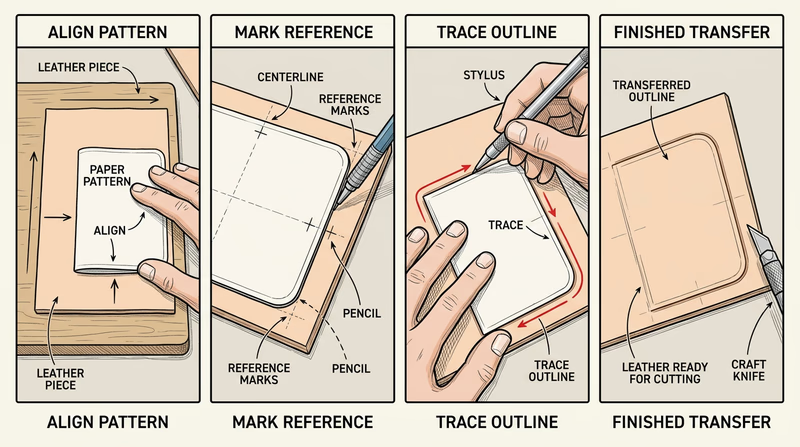
Transfer is the moment when your paper pattern or design is moved onto the leather surface. That can mean tracing an outline, transferring a border, or marking stitching and hardware locations.
A smart layout routine
Before you transfer a pattern
Set up the project so your marks end up where you want them
- Check the leather grain and firmness so the pattern sits on a suitable part of the hide.
- Look for scars, holes, thin spots, or stretchy areas before placing the pattern.
- Leave enough margin around the pattern for cutting and edge work.
- Confirm the direction of straps, folds, or decorative lines so they match the final use of the item.
- Lightly mark centerlines or reference points before tracing.
🎬 Video: Transferring Patterns (video) — https://youtu.be/zkA_TImwL7k?si=uy8jlrqb-_nJdl3v
🎬 Video: "Tap offs" or Mirrored Image Transfers (video) — https://youtu.be/dIZWhRV43WE?si=hEtWo21YxszT8uoa
Tips for accurate transfer
Use a stylus, scratch awl, or other marking tool lightly enough that you mark the leather without cutting it. On vegetable-tanned leather, slightly damp leather often takes a clean transfer better than bone-dry leather, but it should not be soaking wet unless the technique specifically calls for that.
If your design needs symmetry, fold the paper pattern and check both halves before you transfer. If your project includes snaps, rivets, or stitching, mark those locations now so they line up with the actual design instead of being guessed later.
Mistakes to avoid
Do not press so hard that your transfer line becomes a cut line. Do not crowd multiple pieces so tightly that you cannot trim them cleanly. And do not skip a test transfer on scrap if you are using a new tool or method.
In Req 3b, you will see why clean transfer lines matter so much — they are the roadmap for accurate cutting.