Req 3g — Snaps and Rivets
Snaps and rivets look small, but they change how a leather article works. A snap can create a closure. A rivet can strengthen a stress point or hold layers together quickly. Both reward accuracy because metal hardware does not forgive crooked placement.
🎬 Video: How to Set Snaps (video) — https://youtu.be/egQHoUw58r4?si=3coK-uKt6ziz5AOM
🎬 Video: How to Remove a Snap (video) — https://youtube.com/shorts/Bb387hzctjA?si=_UNKaVRDZEq2oXed
🎬 Video: How to Set Rivets (video) — https://youtu.be/l0VJgjHJN1c?si=IdbPEWFEAzINzoIm
Snaps
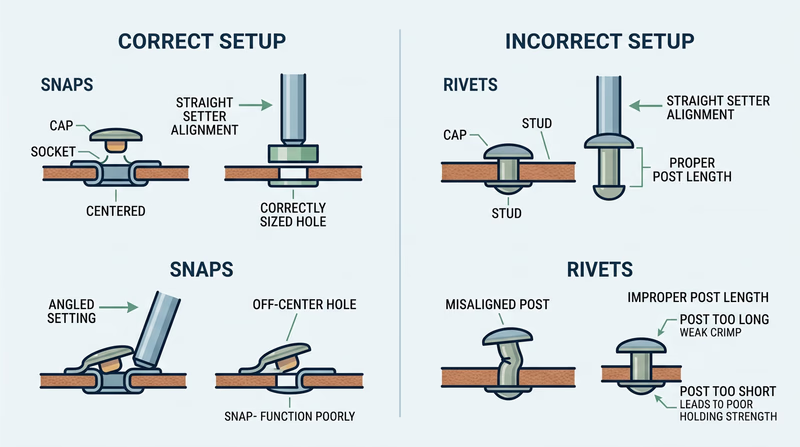
A snap has matching parts that must line up so the closure opens and closes smoothly. If the snap is set at an angle or installed through the wrong hole size, it may wobble or fail.
Rivets
Rivets are often used where straps pull or layers need reinforcement. They are fast and strong, but once set, they are not as easy to adjust as stitches. That means measuring and dry-fitting first matters a lot.
Planning hardware placement
Check the fold, closure direction, and the thickness of all leather layers before you set hardware. If the post is too short, the hardware may not hold. If it is too long, the set may feel loose or uneven.
In the next step, you will see how edges complete the project visually. A well-set snap on a rough edge still looks unfinished.