Req 5c — Care, Repair, and Comparison
Leather lasts longest when people treat it like a material with needs, not like plastic. Dirt dries it out. Water can stain or stiffen it. Too much heat can crack it. Good care means cleaning gently, conditioning when needed, and storing the item so it can keep its shape.
🎬 Video: How to Clean & Shine Leather Shoes! (video) — https://youtu.be/MSaNoMNrZxU?si=NLIb7JASM5tkReY9
🎬 Video: How to Care for Your Baseball Glove (video) — https://youtu.be/sNXcHCHK-wI?si=PN2HDyT5eopuOtnZ
🎬 Video: How to Clean a Western Saddle (video) — https://youtu.be/g_oDJhwVKFI?si=RyU4gxTsFrK672hj
🎬 Video: How to Remove Mold and Mildew on Leather (video) — https://youtu.be/2NUr6y3R7Mg?si=6s2_1YHwovPiZQ_S
A simple care routine
Brush or wipe off dirt first. Use a cleaner that fits the item. Let the leather dry naturally away from strong heat. Then condition if the item needs moisture restored. Not every leather item needs heavy conditioning every time, so part of the skill is noticing when the leather feels dry, stiff, or dull.
Leather vs. synthetic materials
Leather often wins in durability, repairability, and the way it ages. Many leather items develop character instead of just wearing out. Synthetics may win in price, water resistance, uniform appearance, and ease of cleaning.
A smart comparison is not “Which is always better?” It is “Which material is better for this use?” Hiking boots, gloves, furniture, sports gear, and fashion items all make different demands.
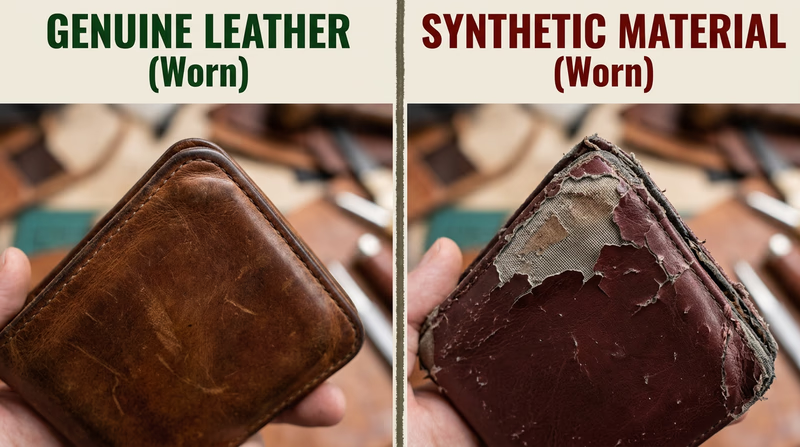
Points to compare with your counselor
Build a balanced discussion
- Durability over time
- Repairability
- Feel and comfort
- Water resistance
- Cost
- Appearance as the material ages
From there, the last option shows you the leather trade through the eyes of people who work in it every day.