 Getting Started
Introduction & Overview
Every year, thousands of people find themselves in trouble in the water — and someone nearby has the chance to save a life. The Lifesaving merit badge teaches you to be that someone. You will learn how to spot a person in distress, choose the safest rescue method, and act with confidence when every second counts.
Lifesaving is one of the most demanding and rewarding merit badges in all of Scouting. It is also one of the badges that can count toward earning the rank of Eagle Scout. The skills you build here are real — the kind that stay with you for the rest of your life.
Then and Now
Then — The Birth of Organized Rescue
For most of recorded history, drowning was simply accepted as a tragic part of life near water. That began to change in 1774, when a group of London doctors formed the Royal Humane Society — one of the first organizations dedicated to resuscitating drowning victims. Their early methods included rolling victims over barrels and blowing tobacco smoke into their lungs (not recommended today!).
By the late 1800s, surf lifesaving clubs were forming in Australia and the United States. Volunteer rescuers trained with ropes, boats, and cork life rings. The first official lifeguards appeared on American beaches in the early 1900s, and the American Red Cross began teaching water safety courses in 1914.
- Purpose: Save drowning victims using whatever was available
- Mindset: Brave volunteers rushing into the water — heroic, but often dangerous for the rescuer
Now — Trained, Equipped, and Systematic
Modern lifesaving is built on science, training, and a clear order of rescue methods. Today’s lifeguards and rescuers follow standardized protocols developed by the American Red Cross, the YMCA, and the United States Lifesaving Association. Equipment like rescue tubes, rescue boards, and automated external defibrillators (AEDs) are standard at pools and beaches across the country.
The biggest shift? The emphasis on prevention. Programs like the BSA’s Safe Swim Defense and the CDC’s drowning-prevention campaigns have dramatically reduced drowning rates. Modern lifesaving starts before anyone gets in the water.
- Purpose: Prevent drowning through education, supervision, and rapid response
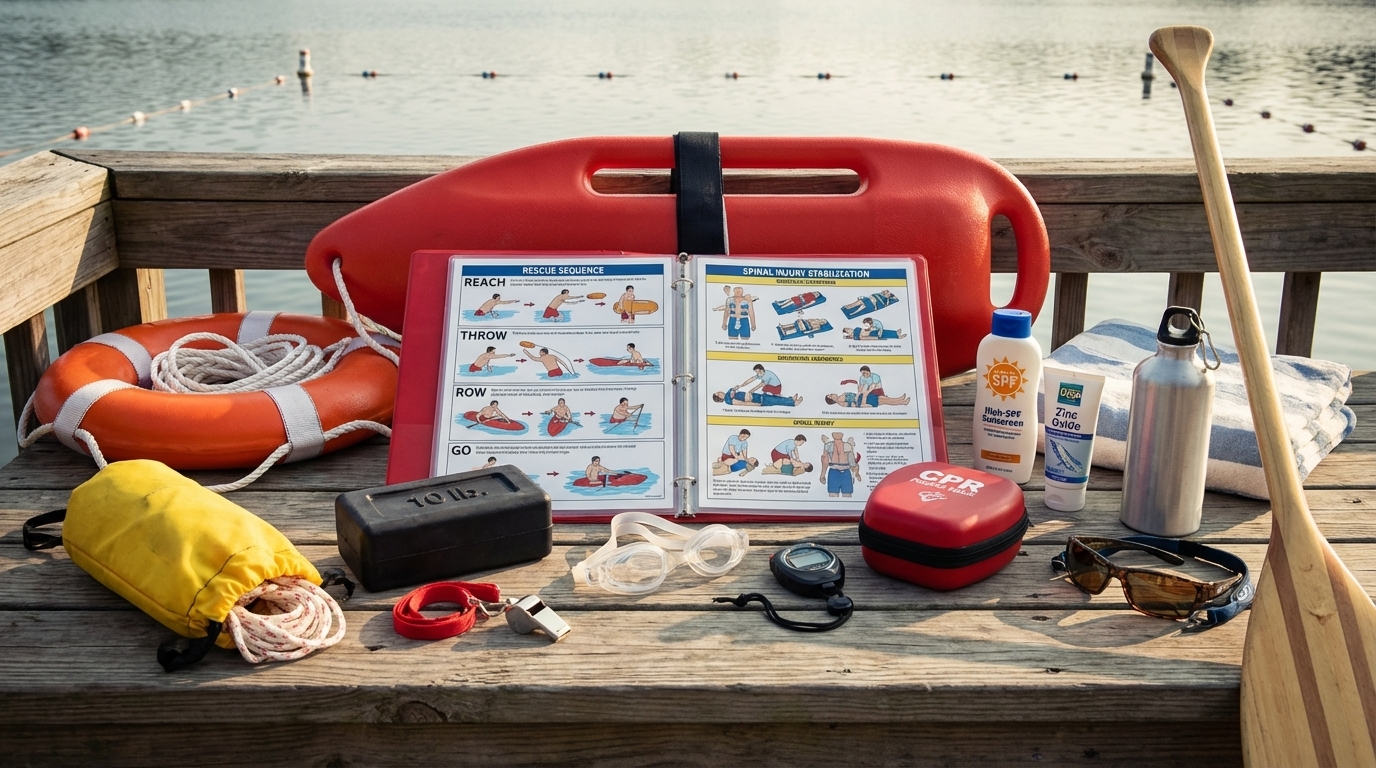
- Mindset: Reach-Throw-Row-Go — always choose the safest rescue method first
Get Ready! You are about to learn skills that could genuinely save someone’s life. This guide will prepare you for every requirement — from understanding water hazards to performing rescues and CPR. Take it seriously, practice with focus, and you will walk away from this badge a more capable and confident Scout.
Kinds of Lifesaving
Water rescue happens in many different environments. Each one presents unique challenges. Understanding where rescues take place will help you adapt your skills to the real world.
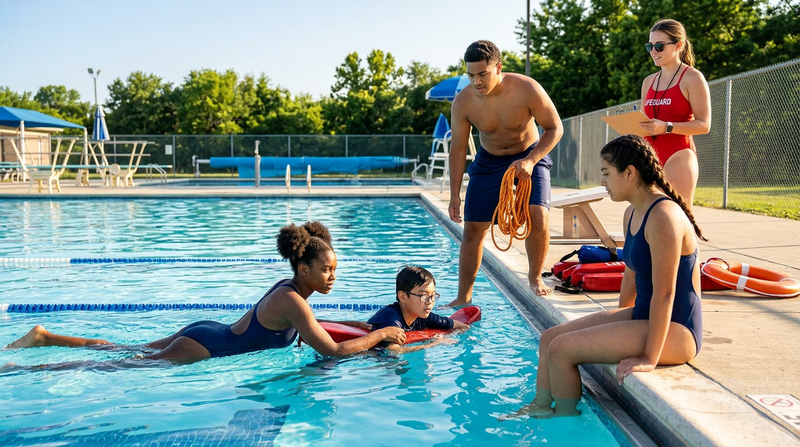
Pool Lifeguarding
Swimming pools are the most controlled aquatic environment. The water is clear, the depth is marked, and rescue equipment is close at hand. Most pool emergencies involve weak swimmers who drift into deep water, medical events like seizures, or unsupervised children.
Open-Water Lifesaving
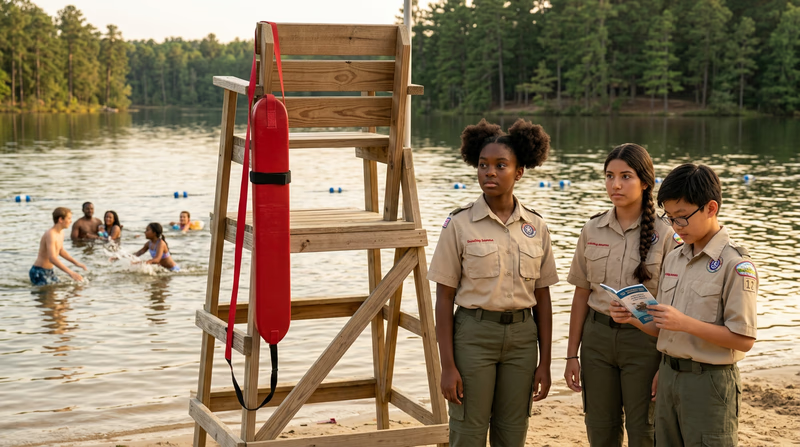
Lakes, ponds, quarries, and reservoirs present challenges that pools do not. Water may be murky, the bottom uneven, and underwater hazards invisible. Temperature layers called thermoclines can cause sudden cold shock. There are no lane lines or walls to grab.
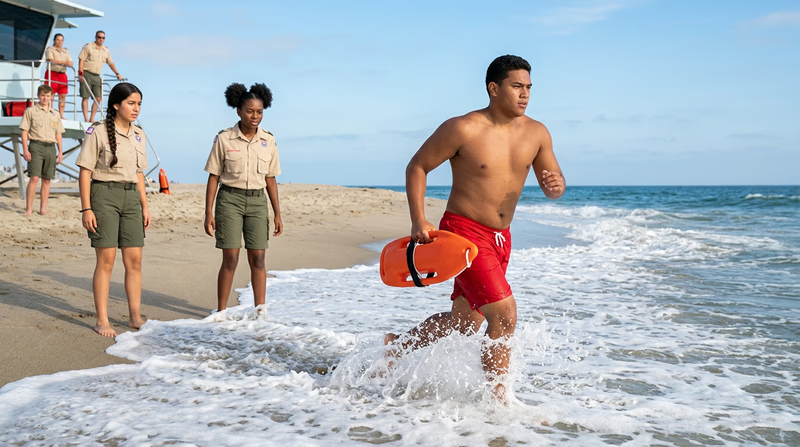
Surf Rescue
Ocean beaches add waves, rip currents, and tidal changes to the mix. Surf rescuers use specialized equipment like rescue boards, fins, and personal watercraft. Reading the water — understanding where rip currents form and how waves break — is a critical skill.
Swiftwater Rescue
Rivers, streams, and floodwaters move — and moving water is incredibly powerful. Even knee-deep flowing water can knock an adult off their feet. Swiftwater rescue is a specialized discipline that uses throw bags, tethered swimmers, and technical rope systems.
Ice Rescue
Frozen lakes and ponds create a unique and extremely dangerous rescue environment. When ice breaks, victims plunge into water that is at or near freezing. Hypothermia sets in within minutes, and the ice around the break zone is often too weak to support a rescuer’s weight.
Now let’s dive into the requirements for the Lifesaving merit badge — starting with the foundation of every safe aquatic activity.