Req 1 — Safe Swim Defense
Before you learn a single rescue technique, you need to understand the system that keeps everyone safe in the water. The BSA’s Safe Swim Defense is a set of eight principles that apply to every aquatic activity in Scouting — from swimming at summer camp to canoeing on a lake. Think of it as the rulebook that prevents emergencies from happening in the first place.
The Eight Points of Safe Swim Defense
Here is a breakdown of each principle and why it matters for lifesaving:
1. Qualified Supervision — Every swimming activity must be supervised by a mature, conscientious adult who understands the activity and the risks. For swimming, this means someone trained in water rescue and first aid. You would not start a campfire without an experienced adult nearby, and swimming is no different.
2. Personal Health Review — Before anyone enters the water, a health review confirms that each swimmer is physically able to participate. Some medical conditions — such as epilepsy, heart conditions, or recent injuries — can create serious danger in the water. This is not about excluding anyone; it is about making sure every swimmer has the support they need.
3. Safe Area — The swimming area must be checked for hazards before anyone gets in. In a pool, that might mean checking water clarity and depth markers. In open water, it means scouting for drop-offs, underwater obstacles, currents, and cold spots. A safe area has clearly defined boundaries.
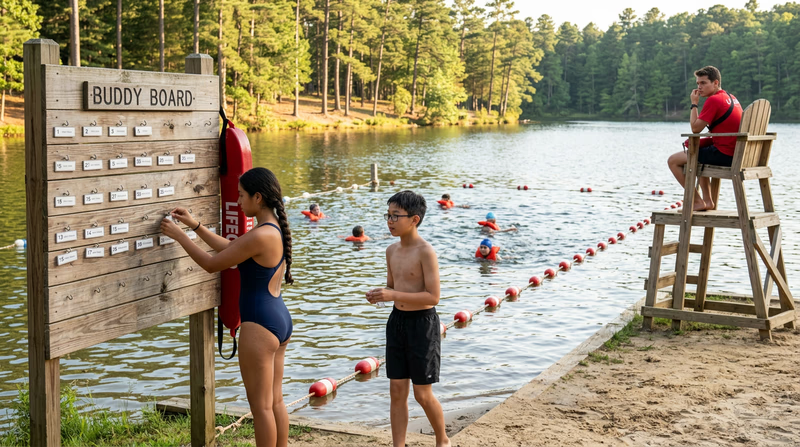
4. Lifeguards on Duty — Trained lookouts must be stationed where they can see the entire swimming area. This is different from general supervision. Lifeguards have one job: watch the water. They do not participate in the activity — their eyes stay on the swimmers.
5. Ability Groups — Swimmers are classified by skill level: Swimmer, Beginner, and Learner. Each group swims in an area matched to their ability. This prevents a beginner from accidentally wandering into deep water. During your lifesaving training, you will be working in the Swimmer area.
6. Buddy System — Every swimmer has a buddy. Buddies enter and exit the water together, stay within arm’s reach of each other, and check in regularly during buddy checks. If your buddy goes under, you are the first person to notice.
7. Discipline — Everyone follows the rules. No running on the pool deck. No diving in shallow water. No horseplay that could push someone underwater. Discipline is not about being strict for the sake of it — it is about keeping the environment safe so everyone can have fun.
8. Emergency Preparedness — Before any swimming activity begins, there must be a plan in place for what happens if something goes wrong. That includes having rescue equipment ready, a first-aid kit nearby, and knowing how to contact emergency medical services. This is where your lifesaving training fits in — you are becoming part of that emergency preparedness.
Why This Comes First
You might wonder why you need to learn a prevention system before you learn how to rescue someone. The answer is simple: the best rescue is the one that never has to happen. Most drowning incidents are preventable. When Safe Swim Defense is followed correctly, the chance of an emergency drops dramatically.
As you work through the rest of this merit badge, you will see Safe Swim Defense principles woven into every rescue scenario. A qualified supervisor ensures your practice sessions are safe. A buddy system means someone is watching when you perform drills. Ability groups ensure the right people are in the right part of the water.
Safe Swim Defense — BSA The official BSA guide to Safe Swim Defense, including all eight principles and their application.