Req 10 — Lead-and-Wait Techniques
Every lifesaving instructor will tell you the same thing: the most dangerous moment in a water rescue is when you make contact with a panicking victim. The lead-and-wait technique is your strategy for handling an active, panicking victim without putting yourself in a potentially fatal grip.
Why Contact Is Dangerous
A person experiencing the instinctive drowning response is not thinking clearly. Their brain has switched to pure survival mode, and their body is doing one thing: pushing down on anything to keep their mouth above water. If you swim within reach, they will grab you, climb on top of you, and push you under — not because they want to hurt you, but because their survival instinct demands it.
Even a small person in a panic can overpower a larger rescuer in the water. On land, you have leverage. In the water, you have almost none.
What Is Lead-and-Wait?
Lead-and-wait is a positioning strategy. Instead of swimming directly to the victim, you lead them toward safety by positioning yourself between the victim and shore, staying just out of reach. You wait for the right moment — when the victim is calmer, more exhausted, or focused on the aid you are presenting — before making any contact.
How It Works
Step by step:
- Approach with a buoyant aid. Swim toward the victim but stop about 10 feet away.
- Assess the victim’s state. Are they actively panicking? Grabbing at the water? Lunging toward you?
- Position yourself between the victim and shore. You want them to have to swim through your position to get to safety.
- Present the aid. Push the buoyant device toward the victim from a safe distance. “Here — grab this!”
- If they lunge at you: Back away. Submerge if necessary. Maintain distance.
- Wait. An active drowning victim will exhaust themselves within 20–60 seconds. As they tire, they become easier to help.
- Re-present the aid when the victim is calmer. Speak constantly: “I’m here to help. Grab the float. I’m not going to leave you.”
- Once they grab the aid, begin towing — but stay at arm’s length through the aid.
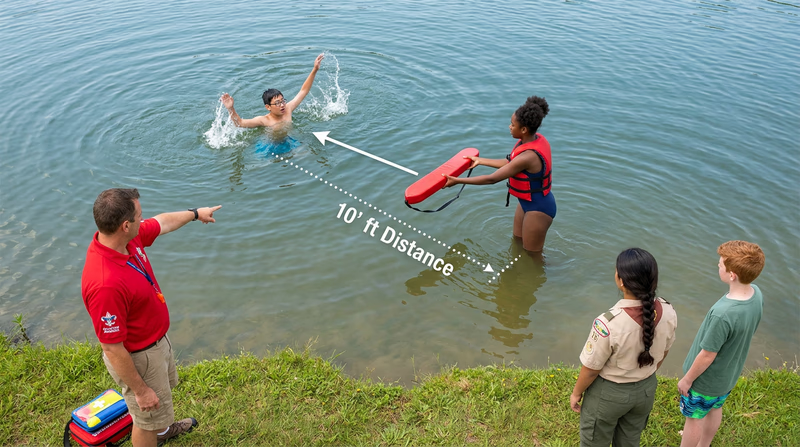
The Psychology of Lead-and-Wait
This technique works because of how panic behaves in water:
- Panic is exhausting. The instinctive drowning response burns enormous energy. A person cannot maintain it for more than about a minute.
- A voice calms. Hearing a confident, steady voice — “I’m here, you’re going to be okay” — triggers a shift from panic to cooperation.
- Visible rescue aids attract. A panicking person will instinctively grab at anything buoyant. By presenting the aid from a safe distance, you redirect their grabbing instinct away from you and toward the device.
- Proximity to shore helps. By positioning yourself between the victim and shore, you create a natural path. As the victim tires and the panic subsides, they will move toward you — and toward safety.
When to Use Lead-and-Wait
| Situation | Use Lead-and-Wait? |
|---|---|
| Conscious, calm victim | No — present the aid directly |
| Conscious, distressed but responsive | Maybe — assess their ability to follow instructions |
| Active drowning, lunging and grabbing | Yes — this is exactly what the technique is designed for |
| Unconscious victim | No — they need immediate contact and support |
What If Lead-and-Wait Is Not Working?
Sometimes a victim will not calm down, will not grab the aid, and continues to thrash. In these situations:
- Keep talking. Your voice is your most powerful tool.
- Stay patient. They will tire. It feels like an eternity, but it is usually less than a minute.
- Approach from behind if you must make contact. The rear approach is the safest position because the victim cannot easily grab you.
- Call for backup. If another rescuer is available, a two-person rescue is far safer.