Req 13 — Unconscious Rescue
Rescuing an unconscious victim is a race against time. An unconscious person in the water cannot breathe, cannot hold onto a device, and cannot assist in their own rescue. The clock is ticking from the moment they go unresponsive — brain damage begins within 4–6 minutes without oxygen. Speed, proper technique, and a plan for what happens after the rescue are all critical.
Confirming Unconsciousness
Before making contact with a victim who appears unconscious, you must verify their condition. The requirement says to speak to the subject and splash water on them. Here is why:
- A victim who appears unconscious may actually be in the final moments of active drowning — barely conscious and about to grab you.
- Splashing water on the face can trigger a response (blinking, flinching, turning) that tells you the victim is still somewhat conscious.
- If there is no response to voice or splash, you can proceed with a contact rescue more safely — an unconscious victim will not grab you.
Approach the victim, stop 6–10 feet away, and shout: “Can you hear me? Are you okay?” Splash water toward their face. Watch for any reaction. If none — proceed with the rescue.
13a — Equipment Assist (Buoyant Aid)
This technique uses a rescue tube or other buoyant aid to support the unconscious victim while you tow them to shore.
Step by step:
- Enter with a stride jump, carrying the buoyant aid.
- Swim to the victim using a strong approach stroke.
- Verify unconsciousness (voice + splash).
- Position the aid under the victim’s shoulders and upper back — this keeps their face above water.
- Secure the aid — if using a rescue tube, wrap it around the victim’s chest and clip it.
- Tow the victim to shore using the sidestroke, pulling by the strap or the aid itself.
- Remove from the water quickly — lift them out with assistance if available.
- Position for CPR — place them flat on their back on a hard surface.
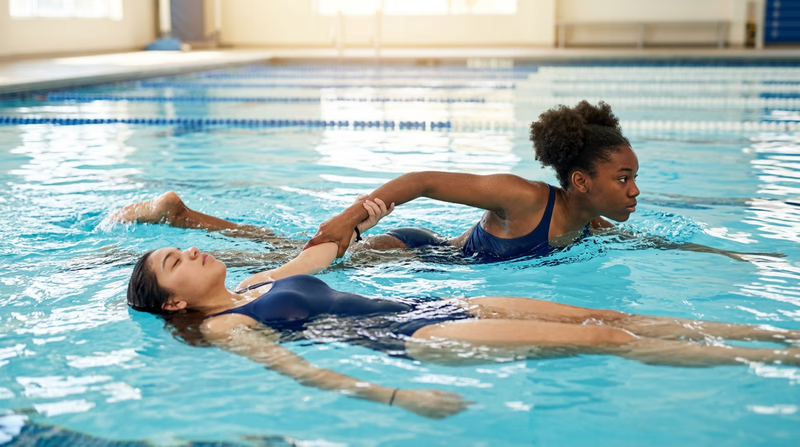
13b — Front Approach and Wrist Tow
This technique is used when no equipment is available and the victim is faceup.
Step by step:
- Enter and swim to the victim with a strong approach stroke.
- Verify unconsciousness (voice + splash).
- Approach from the front — swim to the victim’s head.
- Grasp one of the victim’s wrists with your dominant hand.
- Roll the victim faceup if they are facedown (turn them toward you so you can see their face).
- Extend their arm above their head and tow, keeping their face above water.
- Swim on your side using the sidestroke, pulling the victim by the wrist.
- Remove from the water and position for CPR.
13c — Rear Approach and Armpit Tow
This technique approaches the victim from behind — the safest approach position if there is any doubt about the victim’s consciousness.
Step by step:
- Enter and swim to the victim with a strong approach stroke.
- Verify unconsciousness (voice + splash).
- Swim to the victim’s back — position yourself behind their head.
- Reach under one armpit and cup your hand against their upper back/shoulder area.
- Roll the victim faceup if needed, supporting their head.
- Tow using the sidestroke or backstroke kick, keeping the victim’s face above water.
- Remove from the water and position for CPR.
Getting the Victim Out of the Water
Removing an unconscious person from the water is one of the most physically challenging parts of the rescue. An unconscious body is limp, heavy, and offers no help.
Extrication Steps
Getting the victim onto the deck or shore
- At a pool: Position the victim at the wall. Place their hands on the gutter or deck edge. Get out of the water, then reach down and pull them up and over the edge by their wrists or under the arms.
- With a partner: One person supports from the water, the other pulls from the deck.
- On a sloping shore: Drag the victim up the slope by their arms, keeping their body straight.
- Always protect the head and neck — support the head as you move the victim.
- Place them flat on their back on a firm surface immediately.
Positioning for CPR
Once the victim is out of the water and on a firm surface:
- Place them flat on their back.
- Tilt the head back and lift the chin to open the airway (unless spinal injury is suspected).
- Check for breathing — look, listen, feel for 5–10 seconds.
- If not breathing, begin CPR immediately. You will learn the specifics in Req 16.
- Send someone to call 911 and get an AED if not already done.