Req 3c — Rescue Order
When you see someone in trouble in the water, your first instinct might be to jump in and swim to them. But that is actually the last option, not the first. Water rescue follows a specific order designed to keep the rescuer as safe as possible while still getting help to the victim quickly.
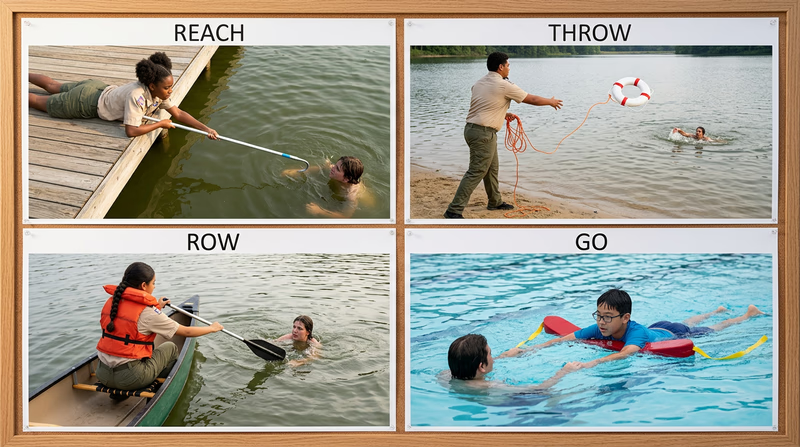
Reach — Throw — Row — Go
This four-step sequence is the backbone of water rescue. You start with the safest method and only move to the next one if the previous method will not work.
1. Reach
If the victim is close to the edge of a pool, dock, or shoreline, you can rescue them without ever entering the water. Extend something for them to grab:
- Your arm or leg (lie flat to avoid being pulled in)
- A towel, shirt, or belt
- A pole, paddle, branch, or pool noodle
Why it is safest: You stay on solid ground. There is zero chance of the victim grabbing you and pulling you under.
When it works: The victim is within arm’s reach or one object-length of the edge.
2. Throw
If the victim is too far to reach, throw them something that floats. Aim for accuracy — land the device within arm’s reach of the victim, preferably just past them so you can pull it back toward them.
- Ring buoy with attached line
- Throw bag (a bag filled with coiled rope)
- Any buoyant object: cooler, empty jug, kickboard, life jacket
Why it is safe: You still stay on dry ground. The victim gets flotation and you can pull them in with the line.
When it works: The victim is within throwing range (typically up to about 50 feet with practice).
3. Row
If the victim is too far to reach or throw to, use a boat, canoe, kayak, or paddleboard to get to them. You approach from downwind or downcurrent, extend a paddle or oar, and let the victim hold on to the watercraft.
Why it is safer than swimming: You have a large, buoyant platform between you and the victim. You are much harder to capsize than to overpower in the water.
When it works: A watercraft is available and you know how to operate it.
4. Go (Swim)
Swimming to the victim is the last resort. It puts you in the water with a panicking person, which is the most dangerous position for a rescuer. If you must go, bring a buoyant aid with you — never swim to a victim empty-handed.
Why it is the most dangerous: A panicking victim can grab you, push you under, and drown you. Even trained lifeguards prefer to keep a rescue device between themselves and the victim.
When it is necessary: The victim is too far for other methods, no watercraft is available, and they are running out of time.
Always Call for Help
No matter which rescue method you use, one of the first things you should do is activate the emergency action plan. That means:
- Shout for help — alert other people nearby
- Send someone to call 911
- If at a facility, activate the emergency alarm
- Point at a specific person and say: “You — call 911 now!”
Pointing at one person and giving a direct command works much better than yelling “Someone call 911!” to a crowd. People tend to assume someone else will do it.
American Red Cross Water Safety Water safety tips and resources from the American Red Cross, including how to respond to water emergencies.