Req 3e — When NOT to Rescue
This may be the most important page in this entire guide. Knowing when not to attempt a swimming rescue is just as critical as knowing how to perform one. An untrained or ill-prepared rescuer who enters the water can quickly become a second victim — doubling the emergency instead of solving it.
The Hard Truth About In-Water Rescues
Swimming out to rescue someone is the most dangerous rescue method for the rescuer. The water itself is hazardous, the victim may be panicking, and the physical demands of towing another person while swimming are enormous. Professional lifeguards train for hundreds of hours before attempting in-water rescues, and even they use flotation equipment whenever possible.
As a Scout, you are learning these skills under supervision with practice subjects who are cooperating. A real emergency is far more chaotic. Knowing your limits is not weakness — it is wisdom.
When NOT to Attempt an In-Water Rescue
Do NOT Enter the Water If...
Situations where a swimming rescue puts you at unacceptable risk
- You are not a strong swimmer or are already fatigued
- The water has a strong current, heavy surf, or whitewater
- The water is extremely cold (risk of cold-water shock and rapid exhaustion)
- The victim is much larger or stronger than you
- There is no flotation device available to take with you
- You cannot see the victim or the bottom of the water
- There are dangerous conditions: lightning, flooding, ice, or debris in the water
- You are alone with no one to call for help or back you up
- The distance to the victim is beyond your swimming ability
- You have a medical condition that could be triggered by exertion or cold water
What You SHOULD Do Instead
Not entering the water does not mean doing nothing. There is always something you can do:
1. Call for help immediately. Dial 911. Shout for anyone nearby. Professional rescue teams have boats, ropes, helicopters, and training for the conditions you cannot handle.
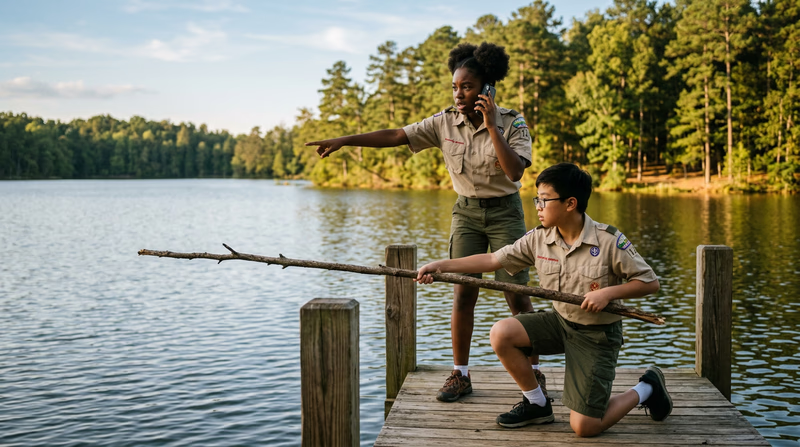
2. Use Reach and Throw methods. These work from shore. Extend a branch, throw a rope, toss a cooler — anything that keeps you on solid ground while getting flotation to the victim.
3. Keep eyes on the victim. If the victim submerges, note the exact location using landmarks on shore. This information is critical for rescue teams.
4. Direct others. If bystanders are present, give them specific tasks: “You — call 911. You — get that rope. You — watch the water and point to where you last saw them.”
5. Provide information to responders. When emergency services arrive, tell them: how many victims, where they were last seen, what the water conditions are, and what has already been tried.
The Emotional Challenge
Walking away from someone in the water goes against every instinct in your body. It feels wrong. But consider this: if you jump in and get into trouble, now there are two people drowning and no one on shore to call for help.
The hardest decision a rescuer ever makes is deciding not to go in. But it is often the right decision — the one that keeps you alive and leads to a successful rescue by someone better equipped.
National Drowning Prevention Alliance Education, advocacy, and resources for drowning prevention — including bystander response guidance.