Req 3a — Two Habitats, Six Hours
This option turns you into a field detective. You are not just making a list of mammals. You are comparing two places and asking why different species show up in one habitat but not the other. That is the heart of ecology.
Choosing Two Good Study Areas
Pick places that are clearly different. Good pairs include:
- stream corridor and dry upland woods
- meadow edge and dense forest
- suburban greenbelt and marsh
- lower elevation trail and ridge overlook
The stronger the contrast, the easier it will be to explain differences in mammal presence.
What to Record in Both Habitats
Bring the same level of detail to each outing
- Date and start/end time
- Weather and temperature
- Habitat type and major plants
- Mammals seen directly
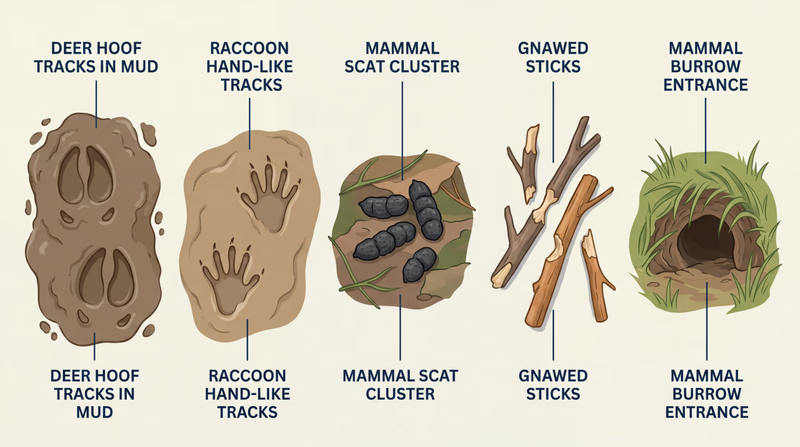
- Signs found: tracks, scat, burrows, browse, chew marks, fur, beds, trails
- Estimated count of each species or sign set
- Human disturbance such as roads, dogs, noise, or buildings
Sight or Sign Still Counts as Evidence
Many mammals are active when you are not. That means sign is just as important as direct observation. A deer may be gone, but fresh tracks, clipped browse, and droppings tell you it used that area. A beaver may be hidden, but cut sticks and a lodge are strong evidence. A small mammal may never show itself, but a burrow entrance, seed husks, and a runway through grass reveal its presence.
Why Mammals Do Not All Live in the Same Habitat
This part is the real science question in the requirement. Mammals differ because they need different combinations of:
- food
- shelter and nesting sites
- water
- cover from predators or weather
- room to move
- temperature conditions they can tolerate
A meadow vole thrives where there is thick grass cover. A flying squirrel needs wooded habitat with trees for shelter and movement. A muskrat is strongly tied to wetlands. A pronghorn needs open country. Habitat is not random. It matches a species’ body design, behavior, diet, and survival strategy.
A Simple Way to Organize Your Report
For each habitat, make a table or neat list.
| Habitat | Mammal or sign | Count | Evidence |
|---|---|---|---|
| Creek edge | Raccoon | 2 track sets | Tracks in mud near water |
| Creek edge | Beaver | 1 active area | Cut saplings and lodge |
| Dry ridge | White-tailed deer | 4 | Direct sighting at dusk |
| Dry ridge | Eastern gray squirrel | 6 | Sightings and feeding sign |
Then finish with a comparison paragraph:
- Which mammals appeared in both places?
- Which showed up only in one place?
- What habitat features explain those differences?
Official Resources
Use these resources to sharpen your track and sign skills before you head out.
🎬 Video: How to Find Mammal Signs (video) — https://www.youtube.com/watch?v=x8DfP0Nh7kA
After comparing two habitats, you may decide you prefer repeated visits to one place. The next option shows how to do that well.