Req 2 — The Language of Metal
This requirement gives you the vocabulary that makes the rest of the badge easier to understand. You are learning what metals are, how they are grouped, and how people change their properties. Once those ideas make sense, the hands-on work in the next requirements feels much less mysterious.
- Native metal — a metal found in nature in metallic form rather than locked inside ore. Gold, silver, and copper are classic examples.
- Malleable — able to be hammered or pressed into shape without breaking.
- Metallurgy — the science and practice of extracting, studying, alloying, heating, and shaping metals.
- Alloy — a mixture of two or more elements in which at least one is a metal, made to improve properties such as strength, hardness, or corrosion resistance.
- Nonferrous — a metal or alloy with little or no iron.
- Ferrous — a metal or alloy that contains iron.
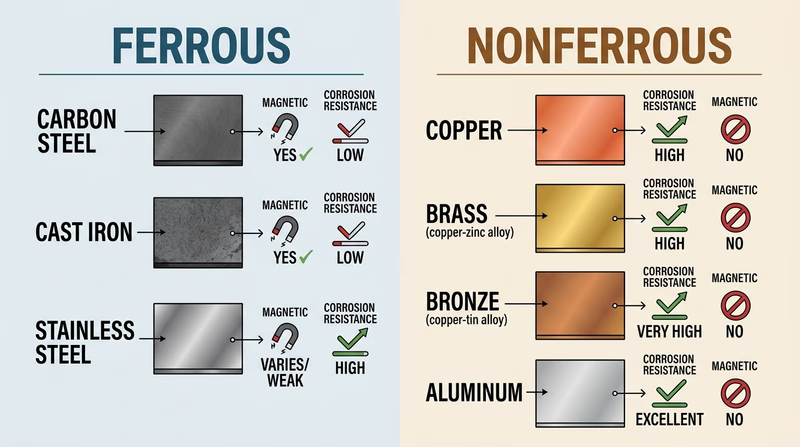
Requirement 2a: Early Nonferrous Alloys
Two strong examples are:
- Bronze — mostly copper combined with tin
- Brass — copper combined with zinc
Bronze is the more famous pre-Iron Age alloy because it was widely used for tools, weapons, vessels, and artwork before iron technology spread. Brass also has a long history, though its use became more common in later ancient periods and afterward. Both are nonferrous because neither is based on iron.
What matters most is understanding why people used alloys. Pure copper is useful, but adding other metals can make it harder, stronger, easier to cast, or better-looking.
Requirement 2b: Modern Ferrous Alloys
Three common ferrous alloys are:
- Carbon steel
- Cast iron
- Stainless steel
These all contain iron, but they behave very differently. Carbon steel is widely used because it can be strong, affordable, and workable. Cast iron pours well into molds but is brittle compared with many steels. Stainless steel includes chromium, which helps it resist corrosion.
When your counselor asks about ferrous alloys, do not stop at the name. Be ready to say what makes each one useful.
Requirement 2c: Work-Hardening
Work-hardening happens when you deform certain metals without heating them enough to reset their structure. Hammering, bending, peening, or rolling can make the metal harder and less willing to move. In simple terms, the metal becomes tougher to shape because you have already strained it.
That is why a piece of copper or brass often feels different after repeated bending. At first it moves easily. After more hammering or bending, it resists more strongly and may crack if you keep forcing it.
Requirement 2d: Annealing
Annealing means heating a metal in a controlled way so it becomes softer and easier to work.
For a nonferrous metal such as copper or brass, annealing usually means heating the piece to the proper temperature and then allowing the structure to reset so the metal becomes workable again. In many shop situations, copper is heated and then cooled according to the method your instructor teaches.
For a ferrous metal such as steel, annealing also involves heating to the right temperature, but cooling practice matters a great deal. Many steels are softened by slow cooling so the internal structure changes in a way that reduces hardness.
The exact temperature and cooling method depend on the metal, which is why metalworkers do not treat every alloy the same.
What Req 2 Teaches You
Carry these ideas into the next requirement
- Names matter: Ferrous and nonferrous tell you a lot about behavior.
- Alloys are designed: People mix metals to improve properties.
- Hardness can change: Hammering and bending can harden metal.
- Heat can reset the structure: Annealing can make metal workable again.
The next requirement turns this vocabulary into something you can feel with your own hands. You will compare worked metal with annealed metal and notice the difference in effort.