Req 5a1 — Tinsmith Tools
Sheet metalworking tools fall into a few main jobs: measuring and marking, cutting, bending, shaping, supporting, and joining. A Scout does not need to memorize every specialty tool in a professional shop, but you should understand the basic ones your counselor uses and what each one is meant to do.
Common Sheet Metal Tools
- Rule or tape measure — measures stock and finished dimensions
- Scratch awl or scribe — marks lines on metal more precisely than a pencil
- Combination square — checks 90-degree lines and layout accuracy
- Tin snips — cut sheet metal; left-cut, right-cut, and straight-cut snips handle curves differently
- Hand seamer — bends tabs, hems, and straight edges cleanly
- Wooden or rawhide mallet — shapes metal with less surface marring than a steel hammer
- Ball-peen hammer — used for riveting and shaping
- Stake, anvil, or metal form — supports the work while bending or forming
- Files — smooth sharp edges and remove burrs
- Rivet set and drill or punch — prepare and secure riveted joints
- Soldering or brazing equipment — joins parts permanently with heat and filler metal
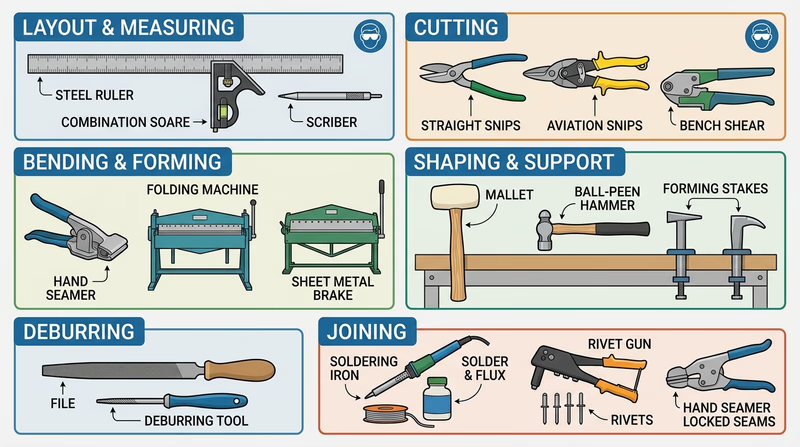
Match the Tool to the Job
A good metalworker does not just ask, “Can this tool do it?” They ask, “Is this the right tool for a safe, clean result?” Tin snips may cut a line, but a hand seamer gives better control on a bend. A mallet may shape a surface without marking it, while a harder hammer may leave dents you did not want.
What Your Counselor Wants to Hear
When you describe a tool, explain both its name and its purpose. “These are tin snips” is only half an answer. A stronger answer is: “These are straight-cut snips. They are used to cut sheet metal along marked lines, especially for straight cuts and gentle curves.”
Knowing the tool language now will help you sketch smarter in the next requirement, because you will start thinking about how each part will actually be made.