Req 5b1 — Silversmith Tools
5b1.
Name and describe the use of a silversmith’s basic tools.
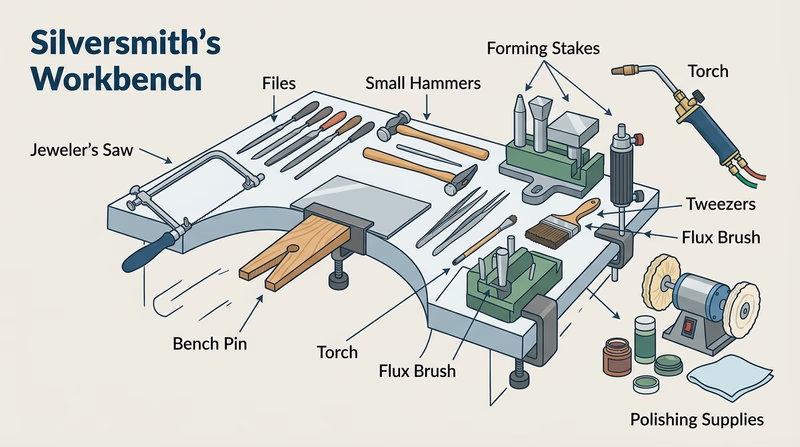
Silversmithing tools are smaller than many blacksmithing or sheet-metal tools, but they are just as specialized. Each one supports a controlled action: marking, sawing, filing, shaping, soldering, or finishing.
Common Silversmith Tools
- Jeweler’s saw and blades — cut fine shapes and interior openings
- Bench pin — supports small work while sawing or filing
- Files — refine edges, remove burrs, and adjust fit
- Ball-peen or chasing hammer — shape or texture metal with control
- Mallet — moves metal while reducing marring
- Stake, dapping block, or forming tools — support curved or sunken shaping
- Soldering torch — provides controlled heat for soldering
- Tweezers or solder pick — position small hot parts safely
- Flux brush — applies flux to support clean solder flow
- Polishing materials — smooth and brighten the final surface
Precision Matters More Than Force
A jeweler’s saw is not just a smaller saw. It is meant for accuracy and control. A bench pin is not just a block of wood. It gives your saw blade support where you need it. These tools work together to help you make clean shapes without tearing or twisting the metal.
When you describe a silversmithing tool to your counselor, explain the purpose in plain language. That shows you understand the process, not just the vocabulary.