Make two objects out of 18- or 20-gauge sheet copper. Use patterns either provided by your counselor or made by you and approved by your counselor. Both objects must include a soldered joint. If you have prior silversmithing experience, you may substitute sterling silver, nickel silver, or lead-free pewter.
This requirement brings the whole silversmith path together. You will shape, join, and finish two objects, and both must prove that you can make a clean soldered joint. That means careful fit-up, controlled heat, and good surface preparation.
Requirement 5b3a: Add a Sawed Component
5b3a.
Make two objects out of 18- or 20-gauge sheet copper. Use patterns either provided by your counselor or made by you and approved by your counselor. Both objects must include a soldered joint. If you have prior silversmithing experience, you may substitute sterling silver, nickel silver, or lead-free pewter. At least one object must include a sawed component you have made yourself..
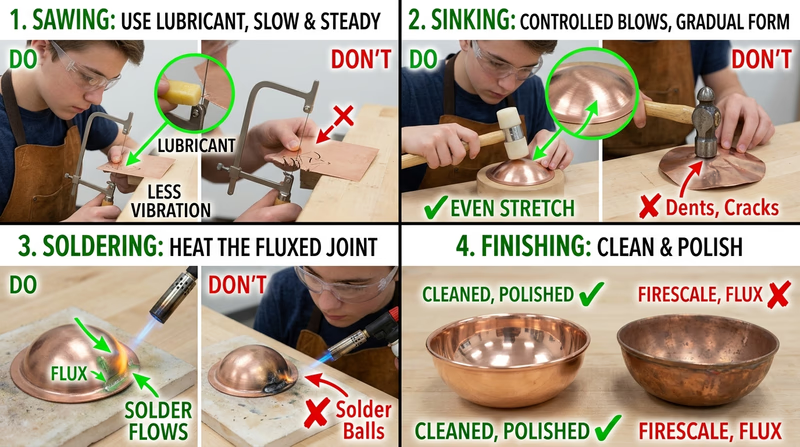
Sawing is one of the skills that separates fine hand work from simple cutting. A sawed component might be a decorative shape, an interior cutout, or a precise outline. The important part is that it shows control.
Requirement 5b3b: Add a Sunken Part
5b3b.
Make two objects out of 18- or 20-gauge sheet copper. Use patterns either provided by your counselor or made by you and approved by your counselor. Both objects must include a soldered joint. If you have prior silversmithing experience, you may substitute sterling silver, nickel silver, or lead-free pewter. At least one object must include a sunken part you have made yourself..
A sunken part means you deliberately form the metal inward to create a shallow recessed shape. This teaches you how support tools and controlled hammering can move metal without tearing it.
Requirement 5b3c: Clean and Polish
5b3c.
Make two objects out of 18- or 20-gauge sheet copper. Use patterns either provided by your counselor or made by you and approved by your counselor. Both objects must include a soldered joint. If you have prior silversmithing experience, you may substitute sterling silver, nickel silver, or lead-free pewter. Clean and polish your objects..
Finishing is not an afterthought. Cleaning removes flux residue, oxidation, fingerprints, and scratches. Polishing helps the final shape and workmanship show clearly. A strong project may begin with accurate cutting and joining, but it looks complete only after proper cleanup.
If your solder joints are clean, your saw cuts controlled, and your finished surfaces thoughtful, you will have done more than complete a requirement. You will have practiced the mindset of careful bench work.