Req 5c3 — Making & Pouring Your Molds
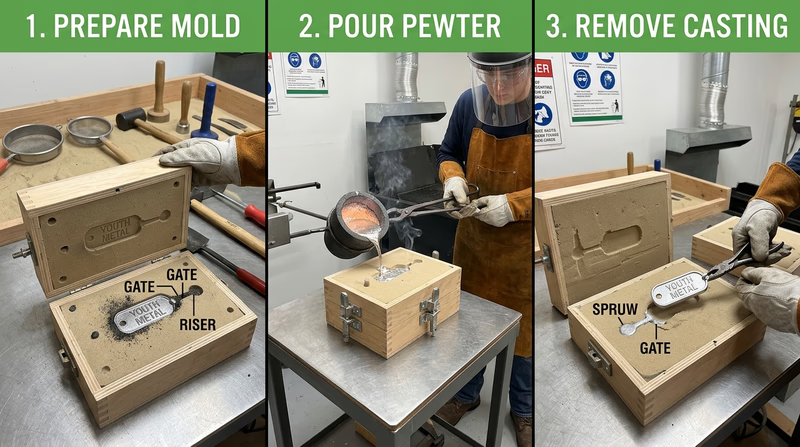
This requirement asks you to prove two things: that you can make a working mold, and that you understand why gate and vent placement matter. The casting process starts with the mold, not the metal.
Requirement 5c3a
A counselor-provided mold gives you a controlled first test. It lets you focus on the pouring process, observing metal flow, and learning what a successful fill looks like.
Requirement 5c3b
Your self-made mold is the real proof of understanding. If the cavity, gate, and vent work together, the metal should fill cleanly and release a recognizable casting. If the result is imperfect, that also teaches you something valuable about the design.
Why Gates and Vents Matter
The gate gives the molten metal a path into the cavity. The vent gives trapped air a path out. Without both, the metal may hesitate, cool too soon, or leave gaps and voids.
Founding teaches a different kind of craftsmanship from forging or tinsmithing. Instead of forcing metal into shape directly, you create the conditions that allow the shape to happen.