Mining in Society Merit Badge — Complete Digital Resource Guide
https://merit-badge.university/merit-badges/mining-in-society/guide/
Introduction & Overview
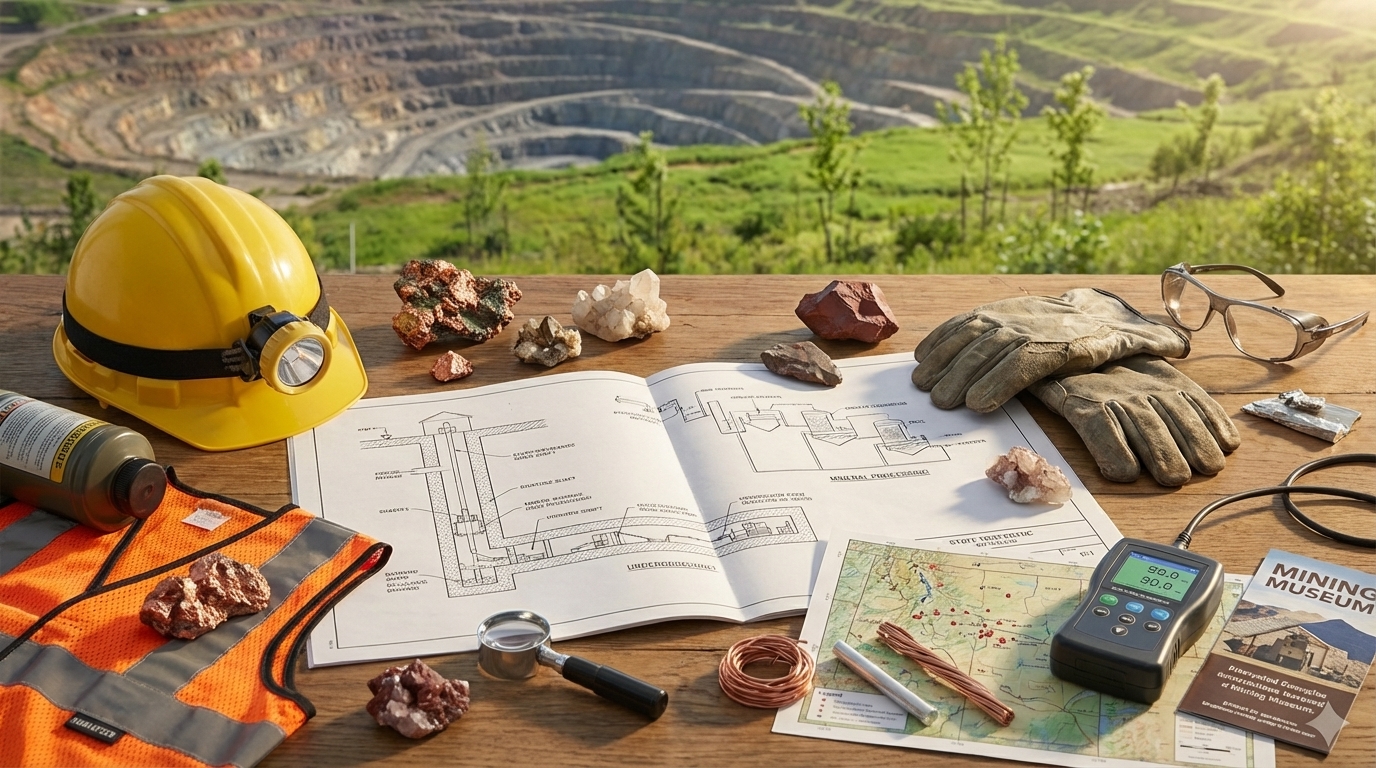
Mining is one of those subjects you notice more once you start looking for it. The copper in a wire, the gypsum in drywall, the salt on a road, and the stone under a sidewalk all began as material taken from the Earth. This badge helps you see how mining supports daily life, how it affects communities and landscapes, and why safety and stewardship matter just as much as production.
Mining in Society is not only about digging holes in the ground. It is about geology, engineering, transportation, environmental science, history, and careers that shape how modern life works. As you work through this guide, you will connect the minerals around you to the mines, people, and decisions that made them available.
Then and Now
Then
Humans have been miners for thousands of years. Long before factories and power plants, people dug flint for tools, copper for simple metalwork, salt for preserving food, and stone for building shelters and monuments. Ancient miners followed veins of ore with hand tools, fire-setting, and animal power. In many places, entire settlements grew around a useful deposit because a mine could change trade, wealth, and even military power.
During the Industrial Revolution, mining expanded fast. Coal powered steam engines. Iron ore fed steel mills. Explosives, railroads, pumps, and mechanized drills let miners reach deeper and move more rock than ever before. That growth also came with hard lessons about cave-ins, explosions, dust disease, polluted water, and boom-and-bust mining towns.
Now
Modern mining uses satellite imagery, detailed geology, environmental monitoring, ventilation systems, computers, and highly specialized equipment. Some mines are giant surface operations with haul trucks as tall as houses. Others are underground networks where miners rely on roof support, gas monitoring, and constant communication. Many operations now plan reclamation from the start so land can be stabilized, replanted, and returned to new uses after mining ends.
Mining also matters for today’s biggest technology questions. Electric vehicles need copper, lithium, nickel, graphite, and rare earth elements. Fertilizer ingredients such as phosphate and potash support agriculture. Construction depends on crushed stone, sand, gravel, cement ingredients, and metals. Even recycling depends on knowing where materials came from and how they can be recovered again.
Get Ready!
This badge rewards curiosity. You will map real mines, compare mining methods, study safety, think about reclamation, and choose a few directions that match your interests. If you like history, engineering, environmental science, or how everyday objects are made, you will have plenty to explore.
Kinds of Mining in Society
Surface Mining
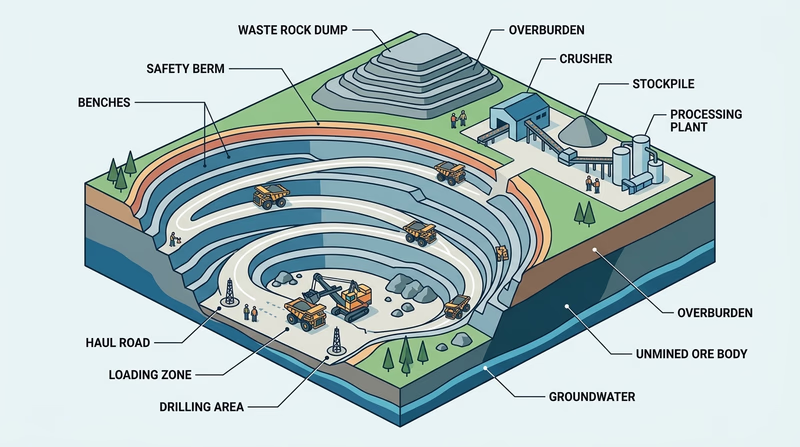
Surface mining removes material from open pits, quarries, or strip mines when the deposit is close enough to the surface to reach economically. It is often used for limestone, sand and gravel, coal, and some metal ores. Surface mines can move huge amounts of rock efficiently, but they also create large visible changes to the landscape and require careful water, slope, dust, and reclamation planning.
Underground Mining
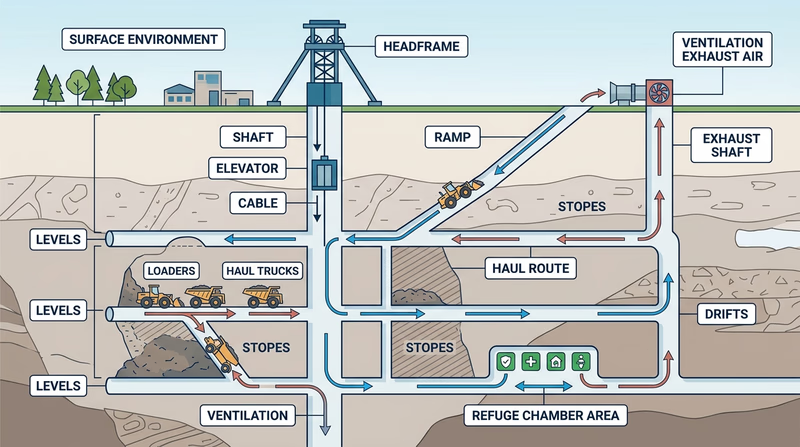
Underground mining follows a deposit below the surface through shafts, ramps, and tunnels. It is often used when the resource is deep, narrow, or better protected underground than in a surface operation. Underground mines demand strong attention to ventilation, ground support, emergency planning, and worker communication.
Quarrying and Construction Materials
Many Scouts picture gold or coal when they hear the word mining, but quarrying matters just as much. Crushed stone, sand, gravel, clay, gypsum, and limestone are the raw materials behind roads, schools, bridges, sports fields, and houses. These operations are often closer to the places where people live because bulky materials are expensive to haul long distances.
Processing, Transport, and Reclamation
A mine is only one part of the story. After rock is removed, it may be crushed, concentrated, smelted, refined, shipped by rail or truck, and used in manufacturing. Later, the same site may be reclaimed for wildlife habitat, recreation, solar power, industry, or public land use. Mining in society means thinking about the full life cycle, not just the digging stage.
You have the big picture. Next, you will connect specific minerals to real products and start seeing how deeply mining is woven into ordinary life.
Req 1 — Minerals in Everyday Life
This requirement has three connected parts. You will build a mineral-to-product list, explain how mining supports things that are grown, and then trace the minerals you chose to the countries where they are found. Think of it as a chain: mineral → product → place.
- 1a helps you connect minerals to everyday objects.
- 1b shows that farming depends on mined materials too.
- 1c widens the view from your own list to the global supply of minerals.
Requirement 1a: Minerals and the products they make possible
The trick here is not to memorize a random list. It is to choose minerals from several different categories so you can show your counselor how broad mining really is. If all 10 minerals come from electronics, you will miss the bigger story. Try mixing building materials, metals, agriculture minerals, and minerals used in technology.
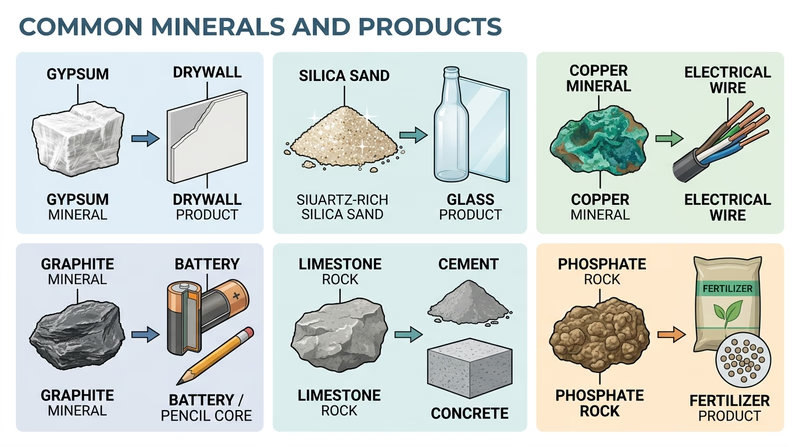
A strong list usually includes some materials you can see easily and some that hide inside finished products. Copper is easy to spot in wire. Silica is less obvious until you remember that glass begins with sand rich in quartz. Gypsum hides in drywall. Graphite works inside pencils and batteries. Phosphate shows up in fertilizers that help crops grow.
Build a balanced mineral list
Aim for variety so your examples show how wide mining reaches- One or two construction minerals: Think about stone, gypsum, limestone, clay, or silica.
- Several metal-related minerals: Look for minerals that lead to metals used in wiring, tools, cans, vehicles, or electronics.
- One or two agriculture-related minerals: Fertilizer and soil treatment often begin with mined materials.
- One technology example: Batteries, chips, magnets, or screens are good places to look.
- One energy or transportation example: Consider steelmaking materials, cement ingredients, or minerals used in fuel production and infrastructure.
When you write your product for each mineral, be specific. “Electronics” is too broad. “Copper wiring in a house” is better. “Construction” is broad. “Drywall made from gypsum” is clear. Your counselor wants to see that you understand the connection between the mineral and a real use.
Requirement 1b: Mining and the things that are grown
At first glance, farming may seem completely separate from mining. Plants grow in soil, not in tunnels or quarries. But modern agriculture depends on mined materials at almost every step.
Fertilizers are the clearest example. Phosphate rock and potash are mined and processed into fertilizers that help plants build roots, stems, and fruit. Limestone may be crushed and spread to reduce soil acidity so crops can grow better. Sulfur and other mineral products are also used in agriculture and industrial chemistry.
Mining also helps with the tools and systems that make large-scale growing possible. Steel for tractors, combines, irrigation equipment, and grain bins depends on mined iron ore and other minerals. Copper is used in wiring, motors, and pumps. Sand and gravel help build farm roads, bridges, and foundations. Without these materials, planting, watering, harvesting, storing, and shipping food would be much harder.
Then there is processing. Grain may move through mills made from steel and concrete. Fruit may be sorted on conveyors driven by electric motors. Food packaging often uses aluminum, steel, glass, and mineral-filled paper coatings. Even the refrigeration systems that keep produce fresh rely on metal equipment, concrete floors, and electrical systems that all begin with mined resources.
A good counselor discussion explains that mining supports growing in three ways: it provides plant nutrients, it provides equipment and infrastructure, and it provides processing and packaging materials after crops are harvested.
Requirement 1c: Where minerals are found
Now you are taking your list from Req 1a and making it global. Different minerals occur in different geologic settings, so the world supply is spread unevenly. One country may produce a great deal of copper, another may dominate potash, and another may be known for bauxite, lithium, or phosphate. That matters because manufacturers and governments depend on reliable access to these materials.
The easiest way to research this is to use one trusted source consistently so your information is easy to compare. Look up each mineral, note the major producing countries, and write one quick observation. You might notice that some minerals are found on several continents while others are strongly associated with just a few countries.
For each mineral on your list
Capture the same details every time- Write the mineral name clearly.
- Name one specific product it is used in.
- Record several countries where the mineral is found or produced.
- Add one sentence about what surprised you.
- Be ready to discuss whether the supply seems widespread or concentrated.
If your counselor asks what you learned, good answers might include ideas like these: some products depend on international supply chains, some minerals are common while others are concentrated in fewer places, and mining decisions in one part of the world can affect prices and manufacturing in another.
In Req 2, you will shift from the world map to your own state or region. That makes this global research a useful warm-up.
USGS Mineral Commodity Summaries A trusted source for mineral uses, production, and major producing countries. It is one of the best places to research both your product examples and where each mineral is found. Link: USGS Mineral Commodity Summaries — https://www.usgs.gov/centers/nmic/mineral-commodity-summaries Minerals Education Coalition — Minerals in Your Life Student-friendly examples of how mined minerals show up in everyday objects such as phones, homes, vehicles, and clean-energy technology. Link: Minerals Education Coalition — Minerals in Your Life — https://mineralseducationcoalition.org/mining-minerals-information/minerals-in-your-life/You now have minerals, products, and producing countries connected in one picture. Next, you will put mining on a map and see how deposits, transportation, and communities fit together in a real region.
Req 2 — Mapping Mines and Resources
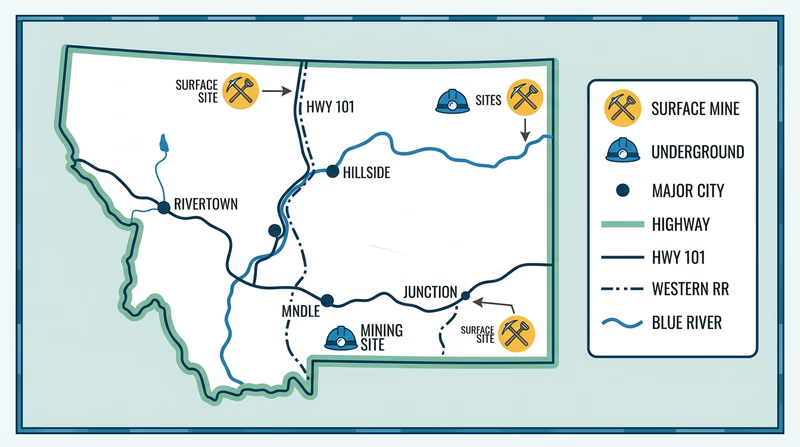
This requirement turns mining from an idea into a place. A map helps you notice patterns: mines often sit near a geologic deposit, but processing plants and shipping routes also matter. Cities, highways, rivers, and railroads are not just background details. They show how a mined resource moves from the ground to a mill, factory, power plant, construction site, or export terminal.
Start with a paper map or digital map of your state. If your state has only a few mining operations, use a broader region instead. The requirement allows that. Your goal is to build a map that tells a story, not just scatter five dots randomly.
What to mark on your map
A good mining map includes more than the mine name. For each of your five locations, add enough notes that your counselor can see what kind of operation it is and why it matters.
What each mine entry should include
Capture the same details at all five locations- Mine or operation name: Write the specific name if you can find it.
- Location: Mark it clearly on your map.
- Resource: Note what is mined or processed there.
- Type of operation: Identify whether it is surface or underground.
- Transport connections: Notice whether it sits near a highway, rail line, river, or port.
- Use of the resource: Explain where the material likely goes next.
You may find that your five operations are very different. One might be a limestone quarry near a growing city, because crushed stone is heavy and expensive to move far. Another might be a metal mine in a remote area because the ore body is tied to local geology. A third might be a processing or crushing site placed near a rail line so the material can move in bulk.
Surface or underground?
This part of the requirement asks you to classify each operation. A surface mine removes material from open pits, strip mines, quarries, or gravel pits when the resource is close enough to the surface. An underground mine uses shafts, declines, or tunnels to reach deeper deposits.
Do not guess from the commodity alone. Coal, salt, gypsum, limestone, and metal ores can be mined in different ways depending on depth, thickness, and local conditions. Try to verify the mine type from a trusted description, a company page, a government map, or a local geological survey.
Why cities, roads, railroads, and rivers matter
Mining is as much about logistics as geology. A deposit may be valuable, but the operation still needs fuel, equipment, workers, permits, power, and a practical way to move bulk material. That is why this requirement makes you put transportation and population features on the same map.
- Cities may provide workers, markets, and processing facilities.
- Highways carry equipment, fuel, and shorter-haul loads.
- Railroads are especially important for bulk materials such as coal, stone, and ore concentrate.
- Rivers and ports matter when heavy material can move more cheaply by barge or ship.
When you discuss how each resource is used, connect the use to the location. Limestone near a growing metro area may feed cement plants and road building. Sand and gravel near a river valley may supply construction. Copper or gold operations may be farther from cities but linked to roads and processing chains.
How to talk through your findings
Your counselor conversation will go better if you organize your map into a short presentation. Move site by site and explain what you found.
🎬 Video: Mining For Beginners - How Does a Metals and Mineral Mine Work? — Energy and Mining Innovation — https://www.youtube.com/watch?v=wsAzlmz5dso
Once you know where mines are and what they produce, the next question is obvious: how do miners work safely in such demanding places? That is where you are headed next.
Req 3 — Mine Safety and Protective Gear
This requirement is about matching a hazard to the tool or habit that reduces it. Mines can involve falling rock, moving equipment, dust, loud noise, low visibility, unstable ground, poor air, and emergency situations where every second matters. Good mine safety is not one single rule. It is layers of protection working together.
Requirement 3a
Why miners wear layers of protection
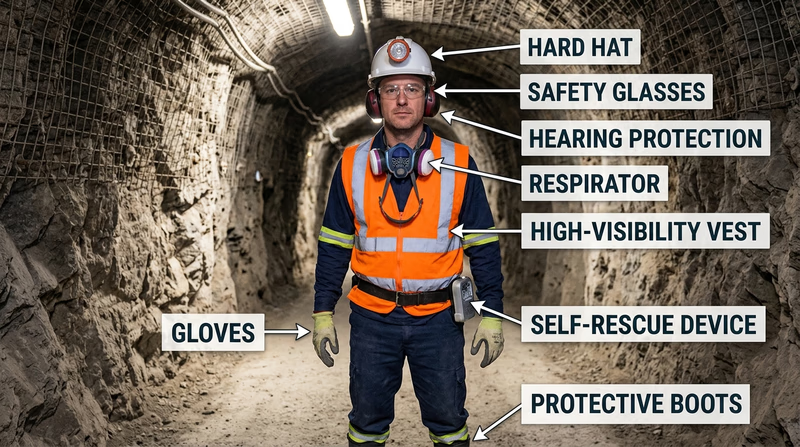
A mine is a place where several hazards may happen at once. A miner might be near loud machinery, airborne dust, dim light, and vehicle traffic all in the same shift. That is why personal protective equipment, often called PPE, is chosen as a system rather than as isolated items.
How each item helps
- Hard hat: Protects the head from falling or swinging objects and from bumping low overhead ground support or equipment.
- Safety glasses: Shield the eyes from dust, flying chips, sparks, and splashes.
- Earplugs or hearing protection: Reduce damage from drills, crushers, fans, and haul equipment.
- Dust mask or respirator: Helps protect lungs from harmful dusts, depending on the hazard and the equipment used.
- Self-rescue device: In some underground settings, miners carry a device that provides breathable air or helps them escape a smoke or toxic-gas emergency.
- High-visibility vest or clothing: Makes a worker easier to see around heavy equipment, especially in dim conditions or bad weather.
Why wearing it correctly matters
PPE only helps if it is fitted, maintained, and worn the right way. Glasses hanging from a shirt collar do not protect eyes. Earplugs worn loosely do not block enough noise. A hard hat with broken suspension may not spread an impact properly. In real mine safety, the habit matters as much as the gear.
Think hazard first
A good counselor answer connects each piece of PPE to a specific risk- Head protection goes with falling or striking hazards.
- Eye protection goes with flying particles and dust.
- Hearing protection goes with constant high noise.
- Respiratory protection goes with dust, fumes, or poor air quality hazards.
- High visibility goes with mobile equipment and low-light conditions.
- Self-rescue equipment goes with emergency escape situations.
Requirement 3b
Hand protection for impact, pinch, and vibration
Miners use tools, lift materials, handle rock, connect hoses, and work around moving parts. That creates risks from cuts, pinch points, vibration, and crush injuries. Gloves help, but the type matters. A glove that is useful for rough rock may not be right around rotating equipment where snagging is a concern. Good training teaches when gloves help, when they must fit tightly, and when a task needs a different control such as a lockout procedure or a guard.
Foot protection for crush and slip hazards
Feet face a constant mix of weight, sharp edges, wet ground, mud, loose rock, ladders, and uneven walking surfaces. Sturdy boots with toe protection, ankle support, and slip-resistant soles help reduce the risk of crush injuries and falls. In underground operations, mud and water can turn a routine walkway into a sliding hazard. In surface mines, loose gravel, steep haul roads, and changing weather make footing just as important.
Housekeeping matters too
Not every injury comes from a dramatic accident. Hoses left across a walkway, spilled material near a ladder, poor lighting, and cluttered work areas cause trips and falls. Safe mines rely on inspection, cleanup, and clear travel ways, not just tougher boots.
Requirement 3c
How monitoring equipment warns miners
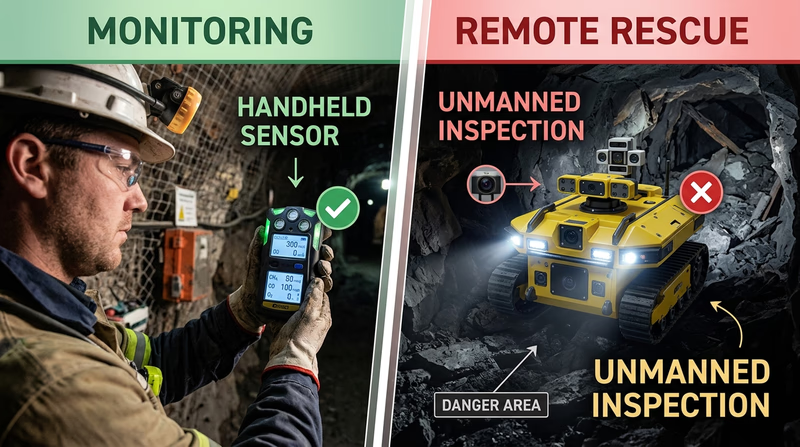
Mines use instruments because humans cannot reliably detect every danger with their senses. Gas monitors can warn of oxygen-deficient air or dangerous gases. Ground monitors and inspections help detect unstable conditions. Ventilation systems are tracked to make sure fresh air reaches workers. Communication systems let miners report problems quickly. Alarms and sensors matter because the danger may be invisible until it is too late.
What technology adds during emergencies
Robots, drones, and remote equipment can go where it is too dangerous to send rescuers first. A drone might enter a damaged area to collect video or gas readings. A robot may travel into unstable ground or smoky spaces. Remote sensors can tell rescue teams whether an area has breathable air, rising water, or blocked travel ways. The goal is simple: gather information without creating new victims.
Rescue still depends on planning
Technology helps, but it does not replace training. Rescue plans, escape routes, refuge areas, ventilation knowledge, and practiced communication are still essential. The best emergency response begins long before an accident happens.
You have looked at the hazards inside working mines. Next, you will examine a different safety message: why abandoned mines and quarries are never places to explore on your own.
Req 4 — Why Abandoned Mines Are Dangerous
A quiet mine site can fool people. A hole in a hillside, an old quarry wall, a rusty building, or a shallow-looking pool may seem like an interesting place to explore. In reality, abandoned mines and quarries are some of the most dangerous human-made landscapes outdoors because the hazards are often hidden until someone gets too close.
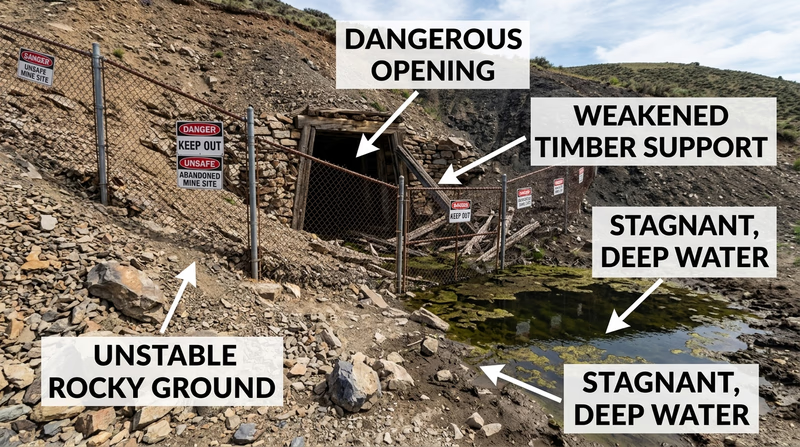
The biggest danger is that old mine workings were not built for visitors. Timber supports rot. Rock loosens. Ground above old tunnels may collapse without warning. A person can step onto what looks like solid ground and fall through into a shaft or unstable opening.
Water is another major danger. Pools in quarries and mine pits may look calm, but they can be much deeper than they appear, with steep drop-offs, cold water, hidden machinery, or underwater debris. Cold shock can make even a strong swimmer panic. Water in abandoned mine workings may also be contaminated by metals, acidity, or other harmful substances.
Air can be dangerous too. In enclosed or partly enclosed spaces, oxygen may be too low to breathe safely. Toxic gases may collect where there is little ventilation. That means a person can be overcome without seeing any obvious sign of danger.
Old equipment and structures add another layer of risk. Rusted ladders, unstable walkways, crumbling concrete, loose cables, and broken machinery can all fail suddenly. Even if a site seems dry and solid, one unsafe step can turn a curiosity visit into a rescue emergency.
Common hazards at abandoned mines and quarries
These sites are dangerous even when nobody is working there- Open shafts and hidden openings: A fall can be fatal.
- Unstable ground and collapsing rock: Roofs, walls, and slopes may fail without warning.
- Deep or contaminated water: Pools may hide steep edges, machinery, or poor water quality.
- Bad air: Low oxygen or toxic gases may collect in enclosed areas.
- Unsafe structures: Rusted ladders, platforms, and buildings can collapse.
- No quick rescue: Remote locations and hidden openings make emergency response much harder.
A good discussion with your counselor should explain not only what the dangers are, but why they are hard to judge from the surface. That is the key lesson. People get hurt because these sites often look less dangerous than they really are.
🎬 Video: Hidden dangers in abandoned mines — 4 News Now — https://www.youtube.com/watch?v=5NQ-zlfPV4g
Now that you understand the serious risks around abandoned sites, you are ready for a different kind of learning: choosing one mining experience that lets you explore the field in a guided, focused way.
Req 5 — Choose Your Mining Experience
You must choose exactly one option for this requirement. Each path teaches something different about mining, so the best choice depends on what access you have, how much travel is realistic, and whether you are most interested in history, equipment, processing, or seeing mining in action.
Your Options
- Req 5a — Compare Two Virtual Mine Tours: Explore two mine types online and compare how they plan, permit, equip, and produce resources.
- Req 5b — Museum Mining History: Visit a museum exhibit and connect mining history to larger events in society.
- Req 5c — Visit an Active Mine: See a working operation and follow the path from exploration to processing.
- Req 5d — Mining Equipment in Action: Visit an equipment maker or supplier and learn how machines fit into the mining process.
- Req 5e — Ore Processing Basics: Focus on how rock is broken down and how minerals are separated or purified.
- Req 5f — Your Community’s Mining Story: Research a local mine and how it shaped your area socially, culturally, and economically.
How to choose
| Option | Best for Scouts who… | Equipment / travel needs | What you will gain |
|---|---|---|---|
| 5a | Need a flexible option from home | Internet access | Comparison skills and a broad look at different mine types |
| 5b | Like history and museums | Travel to an exhibit | A stronger understanding of mining’s role in past events |
| 5c | Want the most direct real-world experience | Permission, travel, guided visit | Firsthand insight into how a working mine operates |
| 5d | Enjoy machinery and engineering | Permission, travel, guided visit | A clear view of how mining equipment supports each work stage |
| 5e | Prefer chemistry and processing systems | Mostly desk research | A stronger grasp of ore reduction, extraction, and metal production |
| 5f | Want local relevance and interviews | Research time, local contacts | A richer picture of how mining has shaped your own community |
Questions to ask before choosing
Pick the option you can complete well, not just the one that sounds coolest- What access do you have? A mine visit is great, but a virtual tour may be the most practical.
- How much time do you have? A local history project can take longer if you need interviews or archives.
- What interests you most? History, field visits, engineering, and chemistry each point to a different option.
- What evidence can you bring? Notes, photos, brochures, screenshots, and comparisons all make your counselor discussion stronger.
Choose the path that gives you the clearest, most detailed conversation with your counselor. The first option is virtual and flexible, so that is the one linked next.
Req 5a — Compare Two Virtual Mine Tours
This option works well because it lets you compare mines you could never visit in a single day. The goal is not just to watch two videos. It is to compare two different mine types in an organized way so you can explain what stays the same in mining and what changes from one operation to another.
A strong pair might be an underground metal mine and a surface quarry, or a coal operation and a copper mine, or a salt mine and an open-pit metal mine. The more clearly the two sites differ, the easier your comparison will be.
What to compare
The requirement gives you four main categories. Build your notes around them.
Resource exploration
How did the company or organization know the resource was there? Look for clues such as drilling, sampling, geologic mapping, core logging, or long-term surveys. Exploration often begins long before mining starts.
Mine planning and permitting
How is the mine designed and approved? You may hear about environmental studies, permits, water management, land access, safety plans, waste handling, or community review. Even a short tour often hints at the amount of planning behind the scenes.
Equipment used
List the major machines and why they fit that mine type. Surface mines may use drills, loaders, shovels, crushers, and giant haul trucks. Underground operations may use bolters, loaders, ventilation systems, shuttle cars, or hoists.
Minerals produced
Be specific about what each mine produces. One site may produce limestone for cement or aggregate for roads. Another may produce ore that later becomes copper or gold. The product helps explain the design of the mine.
Comparison notes to capture
Use the same questions for both mines- What resource is mined there?
- Is the operation surface or underground?
- How was the deposit explored?
- What permits or planning steps are mentioned?
- What major machines do you notice?
- What happens to the material after it leaves the mine?
If you want a strong comparison, do not choose two nearly identical sites. Pick mines that make you think. For example, a quarry near a city may focus on bulk rock and truck traffic, while an underground metal mine may focus on shafts, ventilation, and ore processing.
National Mining Hall of Fame and Museum A useful place to start looking for mining-history material, educational content, and examples of mine types and mining methods. Link: National Mining Hall of Fame and Museum — https://www.mininghalloffame.orgTake good notes while you tour the sites online. The next option turns from virtual visits to museum exhibits and the history of mining.
Req 5b — Museum Mining History
Museums are useful because they slow mining down. In a working operation, you may only catch quick glimpses. In an exhibit, you can study old tools, minerals, maps, models, and photos closely enough to understand how people mined in a different time and why it mattered.
When you visit, try to answer two questions. First, what kind of mining does the exhibit represent? Second, why was that mining important beyond the mine itself? Good exhibits connect mining to railroads, cities, wars, farming, manufacturing, migration, or technology.
What to look for in the exhibit
Notice whether the exhibit focuses on hard-rock mining, coal, quarrying, precious metals, industrial minerals, or something else. Look for signs of the time period too. Hand tools, candles, ore carts, and wooden supports tell a different story than diesel equipment, electric drills, and modern safety gear.
Finding the exhibit’s history
The requirement asks about the history of the exhibit itself. That could mean when the collection was created, where the artifacts came from, or why the museum built the exhibit. Ask a docent or read the exhibit panel closely. A museum may be preserving a local mining story that shaped the whole region.
Three ways mineral resources changed history
You only need three examples, but choose examples that show real influence. Good examples include:
- Coal and the Industrial Revolution: Coal powered steam engines, railroads, factories, and steel production.
- Iron ore and steelmaking: Iron and steel transformed bridges, ships, machinery, and city construction.
- Gold and silver rushes: Precious-metal discoveries changed migration patterns, local economies, transportation routes, and settlement.
- Salt mining: Salt preserved food and became economically and strategically important.
- Copper mining: Copper became vital for electrical systems, communication, and modern technology.
🎬 Video: Mining in Montana with Ellen Baumler — Montana Historical Society — https://www.youtube.com/watch?v=EJtVZG1_1tg
Museum history helps you understand where mining has been. The next option moves into the present by focusing on what you can learn from an active mine.
Req 5c — Visit an Active Mine
This is one of the best ways to understand mining because you can see how many stages connect together. A mine is not only a pit, shaft, or portal. It is a whole system that begins before any material is removed and continues after the rock leaves the site.
Follow the mining sequence
As you visit, organize your notes around the same sequence used in the requirement.
Explore
Ask how the company found and studied the deposit. Exploration might include drilling, geologic mapping, sampling, or geophysical surveys. This stage answers the question, “Is there enough resource here, and is it worth mining?”
Plan
Planning covers mine design, safety systems, water management, waste handling, equipment selection, and transportation. A mine must decide where to dig, where to haul material, how to process it, and how to keep workers safe.
Permit
Permitting is where the mine gets legal approval to operate. The details vary, but it often includes environmental review, land-use permissions, and safety compliance. This stage reminds you that mining happens within rules and public responsibilities.
Mine
This is the extraction stage most people picture. Material is drilled, blasted, cut, loaded, and moved. A surface mine may use benches and haul roads. An underground mine may rely on ramps, shafts, and ventilation.
Process
After extraction, the material may be crushed, sorted, washed, concentrated, or otherwise prepared for shipment or further treatment. Processing can happen right at the mine or at a nearby plant.
Questions to ask on the visit
These make your counselor discussion much stronger- What resource is mined here?
- Is this a surface or underground operation?
- How was the deposit explored?
- What permits or approvals were needed?
- Which machines are most important here?
- What processing happens on-site, and what happens somewhere else?
- Where does the product go after it leaves the mine?
Photographs and brochures are helpful because they give you evidence to discuss later, but your notes matter just as much. Write down what surprised you. Many Scouts discover that permitting, safety, maintenance, and processing take more planning than they expected.
MSHA Safety and Health Useful background reading before a mine visit so you understand the kinds of safety systems and procedures you may hear about on site. Link: MSHA Safety and Health — https://www.msha.gov/safety-and-healthAn active mine visit shows the whole chain in motion. The next option narrows the focus to the machines that make that chain work.
Req 5d — Mining Equipment in Action
Mining equipment tells you a lot about a mine because every machine solves a specific problem. Some tools find deposits. Some break rock. Some move material. Some protect workers. Others process ore or keep the whole site running. This option helps you see mining through an engineering lens.
Think in stages, not just machine names
When you visit a manufacturer or supplier, sort the equipment by the part of the mining process it supports.
Exploration equipment
Core drills, sampling tools, and survey technology help geologists learn where the resource is, how deep it is, and whether it is worth mining.
Extraction equipment
Drills, loaders, shovels, cutting machines, continuous miners, bolters, and haul trucks support the actual removal of material. The exact machines depend on whether the mine is surface or underground and what resource is being extracted.
Support and safety equipment
Ventilation systems, pumps, conveyors, communication gear, ground-support supplies, lighting, and gas-monitoring devices keep the mine operating safely.
Processing equipment
Crushers, screens, mills, flotation cells, filters, and other plant equipment reduce rock size, separate useful minerals, and prepare the product for transport or further treatment.
What to ask the supplier or manufacturer
Focus on purpose, not just size or brand- What jobs is this machine designed to do?
- In which part of the mining process is it used?
- Is it mainly for surface mines, underground mines, or both?
- What safety features are built into it?
- What kind of maintenance does it need?
- How has the equipment changed over time?
One of the best discussion points is how equipment changes with the mine type. A giant haul truck makes sense in a broad surface pit but not in a narrow underground tunnel. Underground machinery often has to be compact, low-profile, and designed for tight turns and limited air space. Processing equipment, on the other hand, may look more like factory equipment than “mining” equipment at all.
If you can take photos or collect brochures, use them later to explain not only what the machine is called but why it belongs in that part of the process. Your counselor will likely care more about the connection than the brand name.
Minerals Education Coalition — Mining and Mineral Processing Provides background on mining methods and processing systems so you can better understand where each piece of equipment fits. Link: Minerals Education Coalition — Mining and Mineral Processing — https://mineralseducationcoalition.org/mining-minerals-information/You have looked at equipment as a system. Next, you will zoom in on ore processing and the difference between breaking rock apart and chemically separating valuable minerals.
Req 5e — Ore Processing Basics
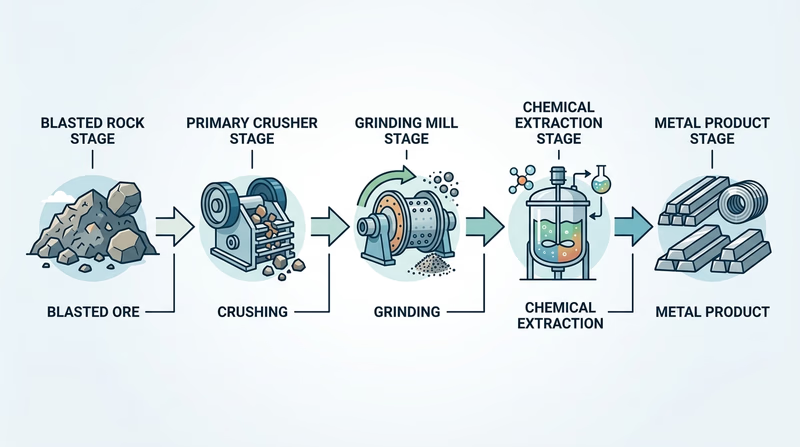
This requirement is about what happens after ore comes out of the ground. Most mined rock is not pure mineral. Valuable material is mixed with waste rock, so the operation has to break the material down and separate what it wants from what it does not. That can happen with physical size reduction, chemical extraction, or both.
Method one: Mechanical size reduction
The simplest way to reduce rock in size is mechanical crushing and grinding. Crushers squeeze or break large rock into smaller pieces. Mills grind that material further so the useful minerals can be separated more easily. The point is not just to make the rock smaller. It is to expose more mineral surfaces so later steps work better.
A quarry making aggregate may rely mostly on physical crushing and screening because the final product is the rock itself, sorted by size. A metal mine may crush and grind ore so the valuable minerals can later be concentrated or chemically treated.
Method two: Chemical extraction
Chemical extraction uses a solution or reaction to separate the valuable mineral from the ore. One common example is leaching, where a chemical solution moves through crushed ore and dissolves the target mineral. The dissolved mineral can then be recovered from the solution.
The key idea is that chemical extraction does not just break rock into smaller pieces. It changes where the valuable mineral is located by moving it into a solution or another form that can be collected.
How the two methods differ
This comparison is useful in your counselor discussion- Mechanical size reduction breaks rock physically.
- Chemical extraction separates the desired mineral using a chemical process.
- Crushing and grinding prepare material for later steps.
- Leaching or similar methods help recover minerals that are not easy to separate by size alone.
Smelting versus refining
These two words are related, but they are not the same.
Smelting
Smelting uses heat, and often chemical reactions, to separate a metal from its ore or concentrate. In smelting, the goal is usually to free the metal from oxygen, sulfur, or other compounds and produce a more metal-rich material.
Refining
Refining is the step that improves purity after the metal has already been recovered in rougher form. A refinery removes remaining impurities so the final product meets the quality needed for manufacturing, wiring, structural uses, or other applications.
A simple way to remember it is this: smelting gets the metal out; refining cleans it up.
Minerals Education Coalition — Mining and Mineral Processing A readable introduction to mining, processing, and the steps between ore and finished mineral products. Link: Minerals Education Coalition — Mining and Mineral Processing — https://mineralseducationcoalition.org/mining-minerals-information/You have looked at processing from a technical angle. The next option turns back toward people and place by asking how a mine shaped a local community.
Req 5f — Your Community's Mining Story
This option is about more than geology. It asks you to study a mine as part of a community story. A mine can create jobs, attract railroads, change land use, shape neighborhoods, affect water and air, inspire local pride, and leave long-term environmental or economic challenges after production slows or stops.
Build a clear local timeline
Start by finding out the basics. What resource was mined? When did the mine begin? Was it surface or underground? Who discovered the deposit, and why was it worth developing? Then follow the story forward. Did the mine expand, close, reopen, or change ownership? Did a town grow around it or rely on it?
Look for mining’s consequences in three areas
Social and cultural effects
Did mining attract workers from different regions or countries? Did it create a strong company-town identity, labor history, or local traditions? Are there museums, place names, festivals, or old buildings connected to the mine?
Economic effects
How did mining affect jobs, local businesses, transportation, taxes, or demand for housing and services? Did the community thrive because of the mine? What happened if the operation slowed down or ended?
Environmental effects
How did mining change the land, water, vegetation, or later land use? Was there cleanup, reclamation, or redevelopment? This connects naturally to Req 6, where you will focus more directly on sustainability and reclamation.
Good interview questions
Use these with a historian, community leader, or local business person- What role did this mine play in the community’s growth?
- What jobs or businesses depended on it?
- How did it change the local landscape or transportation network?
- What positive effects do people remember?
- What problems or losses came with it?
- What traces of that mining story can still be seen today?
A strong discussion with your counselor usually ends with a balanced view. Mining may have brought jobs and growth while also creating environmental impacts or long-term economic dependence. Showing both sides makes your research stronger.
🎬 Video: The history and future of Butte, Montana — CBS Sunday Morning — https://www.youtube.com/watch?v=_-UA0Bc2_PI
You have now completed the choose-one section. Next, you will look at what happens after mining: sustainability, reclamation, and the future of mined land.
Req 6 — Mining, Reclamation, and Sustainability
This requirement connects three ideas that belong together: controlling impacts during mining, reclaiming the land afterward, and deciding what the land should become for wildlife and people. Mining is not only about extracting a resource. It is also about what the operator does while mining is active and what remains when the work is over.
- 6a focuses on a modern site and the controls used right now.
- 6b explains reclamation and connects it to Scouting values.
- 6c asks what society gains when mined land is restored and reused well.
Requirement 6a
A modern mine has to manage much more than ore production. It may need to control dust, noise, stormwater, runoff, erosion, waste rock placement, tailings handling, habitat disturbance, fuel storage, and traffic. Sustainability in mining does not mean “no impact.” It means reducing harm where possible, planning carefully, monitoring conditions, and thinking ahead to land use after mining.
Look for concrete controls when you research your chosen site. Examples include watering roads to reduce dust, lined storage areas, water-treatment systems, sediment ponds, progressive reclamation on completed sections, wildlife monitoring, and limits on where waste material can go.
Environmental controls to look for
Choose a site and see which of these are mentioned- Dust control: Water sprays, covered conveyors, or speed limits on haul roads.
- Water management: Diversion ditches, settling ponds, treatment systems, or monitoring wells.
- Slope and erosion control: Benching, grading, drainage planning, and revegetation.
- Waste management: Planned storage of waste rock or tailings.
- Habitat protection: Buffer zones, seasonal limits, or restoration work.
What sustainability means here
For this discussion, sustainability means meeting today’s need for materials while reducing unnecessary damage and planning for the future. A counselor will likely appreciate hearing that sustainability in mining involves tradeoffs. Society needs minerals for homes, transportation, energy systems, and agriculture, but responsible mining tries to lower impacts and leave the site in a condition that is safer and more useful after mining ends.
Requirement 6b
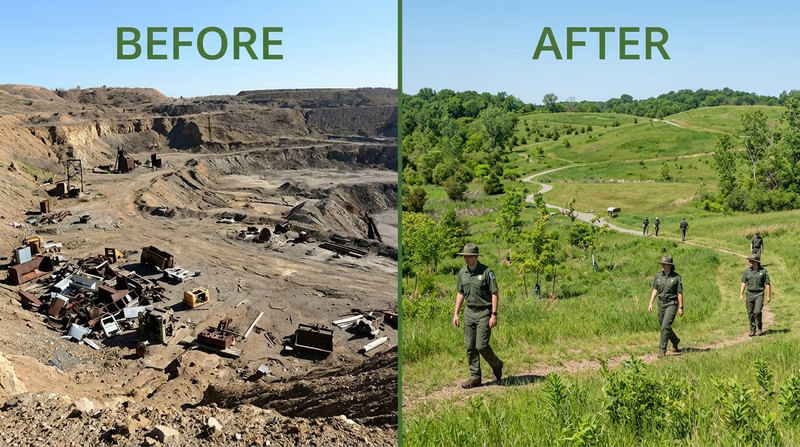
Reclamation is the work of stabilizing, reshaping, revegetating, and otherwise improving land disturbed by mining after active extraction ends, and sometimes while mining is still continuing in another part of the site. It can include grading slopes, replacing topsoil, planting vegetation, managing water, removing hazards, and preparing the land for a new use.
Reclamation does not mean turning every site back into exactly what it was before. In some places that is impossible. Instead, it means making the land safer, more stable, and more beneficial than if it were simply abandoned.
How reclamation connects to Leave No Trace and the Outdoor Code
The connection is not perfect, because Leave No Trace is usually about minimizing impact while visiting the outdoors, not running an industrial site. Still, the values overlap in important ways.
- Dispose of waste properly connects to safe handling of waste rock, tailings, fuel, and contaminated water.
- Leave what you find reminds us that landscapes have value, and disturbance should be planned carefully rather than done carelessly.
- Protect wildlife and natural features connects to habitat restoration and long-term land stewardship.
- The Outdoor Code calls Scouts to be conservation-minded, clean in outdoor manners, and careful with natural resources. Reclamation is one way society tries to live up to those responsibilities after resource extraction.
Requirement 6c
This part asks a values question. Why should society care what happens after mining ends? One answer is safety. Unstable slopes, pits, polluted water, or abandoned facilities can remain hazardous. Another answer is long-term usefulness. Restored land can support wildlife habitat, recreation, forestry, grazing, renewable energy, or public space.
There is also a fairness question. Communities that lived with the impacts of mining often expect something better than permanent damage after the resource is gone. Reclaimed land can become a visible sign that extraction was followed by responsibility.
The Summit Bechtel Family National Scout Reserve is a strong example because it shows how land with a mining past can be transformed into a place for outdoor adventure, conservation, and Scouting programs. That transformation is not magic. It depends on planning, land shaping, cleanup, access design, and a new vision for how people and nature can use the landscape.
🎬 Video: This Is What Happens When We Mine for Metals — Lumina Learning — https://www.youtube.com/watch?v=K6FasptWdeU
You have now examined mining’s responsibilities after extraction. Next, you will choose one future-focused topic and see how mining connects to space, the oceans, recycling, or commodity markets.
Req 7 — Choose a Future-Focused Topic
You must choose exactly one option here. These four paths all look toward the future or the broader resource picture, but they do it in very different ways. One looks outward to space, one downward to the oceans, one back into the recycling stream, and one into prices and market trends.
Your Options
- Req 7a — Mining Beyond Earth: Explore how the Moon, asteroids, and other worlds could one day provide materials.
- Req 7b — Mining the Oceans: Study minerals from seawater and the seafloor, plus the environmental concerns of ocean mining.
- Req 7c — Recycling and Resource Recovery: Connect mining to recycling by tracking how metals and nonmetals are recovered after use.
- Req 7d — Commodity Prices and Trends: Use real data to study prices and five-year trends for mined materials.
How to choose
| Option | Best for Scouts who… | Main tools needed | What you will gain |
|---|---|---|---|
| 7a | Love science, space, and engineering | Research sources and note-taking | A big-picture view of future resource use beyond Earth |
| 7b | Care about oceans and environmental questions | Research sources and maps | A balanced view of marine mineral opportunities and concerns |
| 7c | Like sustainability and practical systems | Research sources and examples from daily life | A clearer understanding of how recycling supports resource conservation |
| 7d | Enjoy numbers, graphs, and economics | Reliable price data and simple trend charts | A feel for how markets influence mining decisions |
Choose the option that fits your strengths
All four are good, but they reward different kinds of thinking- Pick 7a if you like NASA, robotics, and future missions.
- Pick 7b if you want to weigh resource demand against environmental uncertainty.
- Pick 7c if you want the most direct connection to sustainability in everyday life.
- Pick 7d if you want to work with real-world data and see how prices change over time.
Choose the topic that will lead to your strongest discussion, then follow the page for that option. The first one looks beyond Earth.
Req 7a — Mining Beyond Earth
Space mining sounds like science fiction, but the ideas behind it are very practical. Launching every ounce of fuel, water, oxygen, shielding, and construction material from Earth is expensive. If future explorers can use resources already on the Moon, Mars, or asteroids, missions could travel farther and stay longer.
Why mine in space?
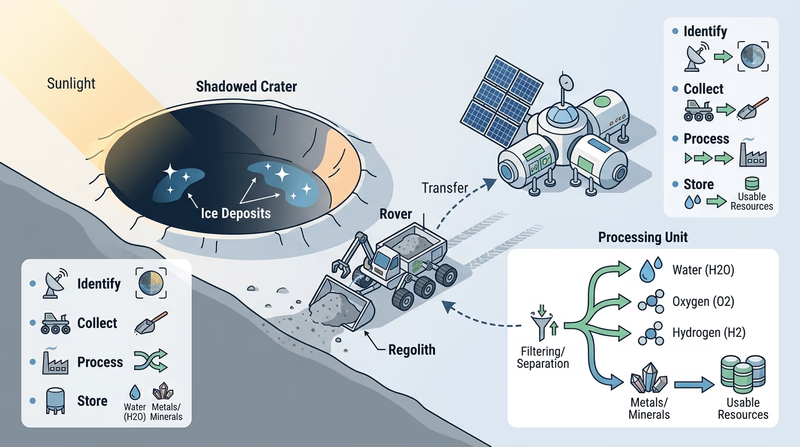
The biggest reason is not treasure. It is logistics. Water ice can be turned into drinking water, breathable oxygen, and hydrogen-based rocket fuel. Regolith, the loose material covering the Moon and other worlds, may be useful for radiation shielding or construction. Metals and other materials could eventually support tools, parts, or habitats.
How people might search and extract
NASA and other organizations study remote sensing, robotic prospecting, drilling, sampling, and in-situ resource utilization, often shortened to ISRU. That means using local material where you find it instead of hauling everything from Earth. Prospecting in space could involve orbiters mapping mineral clues, rovers examining surface chemistry, and robotic systems testing how easy it is to collect and process material.
How space mining differs from Earth mining
The geology is different, but the biggest differences are the conditions.
Why space mining is harder than Earth mining
These are great discussion points for your counselor- Extreme distance: Rescue, repair, and resupply are much harder.
- Vacuum or near-vacuum conditions: Equipment must work without normal air pressure.
- Low gravity: Digging, anchoring, and moving material work differently.
- Harsh temperature swings: Machines must survive severe heat and cold.
- Communication delays: Some missions cannot be controlled instantly from Earth.
- Limited sample access: Scientists often work with very small amounts of returned material.
Collecting and analyzing samples
On Earth, geologists can often revisit a site, bring heavy tools, and send large loads to a lab. In space, every sample is expensive. Robotic probes may gather only tiny amounts. Dust behaves differently in low gravity and can interfere with seals and equipment. If a drill jams or a sampler misses its target, there may be no quick fix.
If you want a future topic with big engineering questions, this one is hard to beat. The next option stays much closer to home by looking at mineral resources in the oceans.
Req 7b — Mining the Oceans
Ocean mining includes more than one thing. Some minerals are recovered from seawater or from salty brines connected to the sea. Others are found on or beneath the ocean floor. This requirement asks you to identify examples, but it also asks you to wrestle with why people want these materials and why the environmental questions are so difficult.
Three mineral examples to know
You can choose many valid examples, but common ones include:
- Sodium and chlorine compounds from seawater: Salt production is one familiar example.
- Magnesium from seawater or brines: Useful in lightweight alloys and industry.
- Polymetallic nodules or seafloor deposits containing metals such as manganese, nickel, cobalt, or copper: These are the kinds of minerals often discussed in deep-sea mining debates.
Three places where the ocean is mined today
The requirement says to list three places, so think geographically. Good examples might include coastal salt-production areas, offshore sand and gravel areas, or regions where seabed mineral interest and activity are concentrated. Be specific enough that your counselor can tell you researched real places rather than making vague claims.
Why mine the oceans?
The main incentive is resource demand. Metals used in batteries, electronics, steelmaking, and industry are valuable, and ocean settings may contain large quantities. Some ocean-derived resources are also easier to access in certain coastal settings than similar materials on land.
Why this is controversial
Ocean environments are harder to study and monitor than many land environments. Scientists are still learning how deep-sea ecosystems work and how quickly they recover. Disturbance on the seafloor can affect habitats, sediment movement, and species that people know relatively little about. That uncertainty is one reason sustainability concerns are so prominent.
Special concerns in ocean mining
Use these ideas to organize your discussion- Limited scientific knowledge: Some deep-sea ecosystems are not well understood.
- Sediment disturbance: Mining can stir up material and spread it beyond the immediate work area.
- Habitat damage: Recovery may be slow in deep or sensitive environments.
- Monitoring difficulty: Offshore operations are harder to observe than land sites.
- Reclamation challenges: You cannot simply grade and replant the seafloor the way you might on land.
The reclamation question is especially important here. On land, reclamation may involve slope shaping, topsoil replacement, and vegetation. In ocean settings, restoration is much less straightforward. That makes prevention, careful planning, and strong environmental review even more important.
🎬 Video: Damian Palin: Mining minerals from seawater — TED — https://www.youtube.com/watch?v=9Q2hew8759w
If you want the strongest sustainability connection in this choose-one set, the recycling option on the next page is an excellent follow-up.
Req 7c — Recycling and Resource Recovery
Recycling does not replace mining, but it changes the resource picture in an important way. When materials are recovered after use, society can meet part of its demand without starting from untouched ore every time. That can reduce waste, lower energy use for some materials, and stretch natural resources further.
Build your list with clear examples
The requirement asks for four metals and two nonmetals. Pick materials that are common enough that you can explain where they come from and how recycling works.
Good metal examples
- Aluminum: Often recycled from beverage cans and other products by melting and re-forming the metal.
- Steel: Recycled from appliances, vehicles, structural steel, and scrap.
- Copper: Recovered from wiring, motors, and electronics.
- Lead: Commonly recycled from batteries in controlled recovery systems.
Good nonmetal examples
- Glass: Collected, crushed, and remelted into new containers or other products.
- Gypsum or some industrial mineral products: In some cases, recovered from construction waste streams for reuse.
Your exact list can vary, but your counselor will want to hear how each one is recycled, not only that it can be recycled.
For each recycled material
Use the same short structure for all six- What product was it used in first?
- How is it collected or separated?
- What process turns it into usable material again?
- What is the recycled material used for next?
How recycling relates to mining
Recycling and mining are connected, not opposed. Mining provides the original material that enters the economy. Recycling recovers some of that material later, reducing the amount of new mining needed for the same level of use. But recycled supply depends on what people throw away, how well materials are sorted, and whether the material still has enough value and purity to recover.
That means recycling helps sustainability, but it does not make mining unnecessary. Growing populations, new technologies, and long-lived products often mean society still needs newly mined material too.
Why recycling matters for sustainability
Recycling can:
- conserve natural deposits by reducing demand for virgin material,
- keep useful materials out of landfills,
- lower energy use for some metals compared with making them from ore,
- reduce part of the environmental footprint associated with extraction and processing.
You have followed minerals into a second life through recycling. The final option in this choose-one set looks instead at the economics of minerals and how prices change over time.
Req 7d — Commodity Prices and Trends
This option shows that mining is not only a geology and engineering field. It is also shaped by markets. Commodity prices rise and fall because of supply, demand, transportation costs, energy prices, world events, industrial growth, and investor expectations. Those price changes can influence whether a mine expands, slows down, or becomes too expensive to operate.
Choose a price source you trust
The easiest way to keep your work clean is to use one dependable source for current prices and another dependable source for longer-term data if needed. Then compare two commodities over the last five years and look for the overall direction of change.
You do not need to become an economist. You do need to notice trends. Did the price rise overall, fall overall, or swing sharply up and down? A graph or simple table makes this much easier to discuss.
What to include in your report
A strong commodity-price report
Keep it simple and readable- Name the commodity and the date you checked the current price.
- Record the current price clearly.
- Show the five-year trend for two commodities.
- Describe the trend in words: rising, falling, volatile, or mixed.
- Offer one or two possible reasons for the change.
Why prices matter in mining
A mine can have the same ore body for years, but the economics around it may change constantly. If prices rise, lower-grade material may become worth processing. If prices fall, some operations may slow down or delay new projects. That is one reason commodity cycles affect jobs, investment, and local communities.
Watch out for unit confusion
Different commodities may be priced in different units: per pound, per ton, per ounce, or another measure. Always write the unit with the price. Otherwise your numbers can become misleading very quickly.
USGS Commodity Statistics and Information A strong starting point for finding commodity information, statistics, and linked reports that support price-trend research. Link: USGS Commodity Statistics and Information — https://www.usgs.gov/centers/nmic/commodity-statistics-and-informationThe choose-one future topics end here. One last major part of the badge remains: exploring careers connected to mining, minerals, geology, safety, and environmental work.
Req 8 — Careers in Mining and Minerals
Mining in Society opens the door to far more careers than “miner.” The field includes geology, surveying, engineering, safety, environmental science, metallurgy, equipment maintenance, reclamation, mapping, laboratory work, and public policy. Some jobs happen at mine sites. Others happen in offices, labs, schools, consulting firms, museums, or government agencies.
Start by scanning the field
Here are a few career directions that fit this badge:
- Mining engineer — designs mine systems, production methods, and safety plans.
- Geologist or geoscientist — studies rock, minerals, and deposits.
- Environmental engineer or scientist — focuses on water, land, permits, and reclamation.
- Surveyor or GIS specialist — maps sites and tracks land or underground positions.
- Mine safety professional — helps prevent injuries and improve safety systems.
- Metallurgist or mineral-processing specialist — works on recovering and refining useful materials.
- Heavy-equipment technician — keeps critical machines operating.
What to research about one career
The requirement gives you a clear list. Make sure your notes cover each part.
Career research checklist
Bring these details to your counselor discussion- Training and education: High school courses, certificates, apprenticeships, two-year programs, or four-year degrees.
- Costs: Tuition, tools, certifications, travel, or other preparation expenses.
- Job prospects: Is the field growing, stable, or competitive?
- Salary: What do people in this field typically earn?
- Job duties: What does a normal day or week look like?
- Advancement: What higher-responsibility roles can come later?
What makes a career a good fit?
This is the most personal part of the requirement. Ask yourself what kind of work you enjoy. Do you like being outdoors? Do you enjoy math and design? Are you interested in environmental problem-solving? Do you want hands-on mechanical work or more analysis and planning? The “interesting career” part is about matching the profession to your strengths and interests, not just the salary.
If you can interview a real professional, do it. Firsthand answers often reveal details that websites miss, such as what the work schedule feels like, how much travel is involved, or which skills matter most on the job.
Minerals Education Coalition — Careers in Mining An overview of mining-related professions with education and career-path ideas for students. Link: Minerals Education Coalition — Careers in Mining — https://mineralseducationcoalition.org/mining-minerals-information/careers/ BLS Occupational Outlook Handbook Use this federal career resource to look up job duties, pay, education, and outlook for many professions related to mining, geology, engineering, and environmental work. Link: BLS Occupational Outlook Handbook — https://www.bls.gov/ooh/You have completed the core badge journey. The next page goes beyond the official requirements and points you toward deeper exploration, real-world experiences, and organizations connected to mining and minerals.
Extended Learning
A. Congratulations
You have finished a badge that connects rocks under your feet to homes, roads, farms, electronics, energy systems, jobs, and entire communities. That is a big way to look at the world. Once you begin noticing where materials come from, it becomes hard to stop asking better questions about how society uses resources and what responsibilities come with that.
Mining in Society is also a badge about balance. People need minerals, but they also need safe workers, healthy communities, clean water, reclaimed land, and smart long-term planning. If that balance interests you, there is a lot more to explore.
B. Deep Dive: Critical minerals and modern technology
Not all minerals draw the same level of attention. Some become “critical” because they are important to technology, infrastructure, or defense and because their supply may be concentrated or vulnerable to disruption. A mineral can be geologically common and still become strategically important if refining capacity, processing, or transportation is concentrated in only a few places.
Think about electric vehicles, transmission lines, battery storage, wind turbines, smartphones, and advanced electronics. These systems rely on combinations of copper, nickel, lithium, graphite, rare earth elements, aluminum, and other materials. That means future energy and technology plans are also mining and materials plans.
This topic becomes even more interesting when you ask second-order questions. Where is the mineral mined? Where is it refined? Where is it manufactured into a final product? Which parts of that chain could become bottlenecks? A Scout who understands those questions is already thinking beyond the rock itself and into the systems that shape the modern world.
C. Deep Dive: Water, waste, and long-term stewardship
Some of the hardest mining questions are not about getting the resource out. They are about what happens to water, waste rock, tailings, disturbed land, and nearby ecosystems over time. Water can move through old workings, pick up dissolved material, and affect streams long after mining slows or stops. Waste-storage systems must be designed for stability, not just convenience. Reclaimed slopes need drainage that will still work years later, not only right after construction.
This is one reason mining careers increasingly involve hydrology, environmental monitoring, geochemistry, and long-range planning. Good stewardship asks what a site will look like years from now, who will maintain it, and how the surrounding landscape will respond. If you like science that combines chemistry, engineering, landforms, and real public consequences, this is a fascinating direction to study.
D. Deep Dive: Automation, remote operation, and the future of mining work
Mining technology keeps changing. In some operations, equipment can now be monitored remotely, guided with GPS-like systems, or supported by sensors that constantly report machine status, ground conditions, or air quality. Drones can inspect stockpiles or hard-to-reach areas. Computer models can help engineers design pits, tunnels, and blasting plans more precisely.
That does not mean mining no longer needs people. It means the work keeps mixing hands-on skill with digital systems. A modern operation may need mechanics who understand advanced diagnostics, engineers who use data modeling, safety professionals who evaluate sensor systems, and environmental teams who manage digital monitoring networks. If you enjoy both problem-solving and technology, this is one of the most exciting parts of the field.
E. Real-world experiences
Ways to keep learning in the real world
Try one or more of these after earning the badge- Visit a rock, mineral, or mining museum: Take your time with maps, ore samples, and old equipment displays.
- Attend a gem and mineral show: Dealers and clubs often know a lot about mineral properties, sources, and identification.
- Explore a reclamation story: Find a local or regional site that changed from extraction to recreation, habitat, or another new use.
- Tour a quarry, gravel operation, or cement-related site if public programs are available: Construction materials are often the most visible mining in everyday life.
- Interview a professional: A geologist, engineer, equipment technician, environmental scientist, or museum curator can open up the field in a personal way.