Req 5e — Ore Processing Basics
This requirement is about what happens after ore comes out of the ground. Most mined rock is not pure mineral. Valuable material is mixed with waste rock, so the operation has to break the material down and separate what it wants from what it does not. That can happen with physical size reduction, chemical extraction, or both.
Method one: Mechanical size reduction
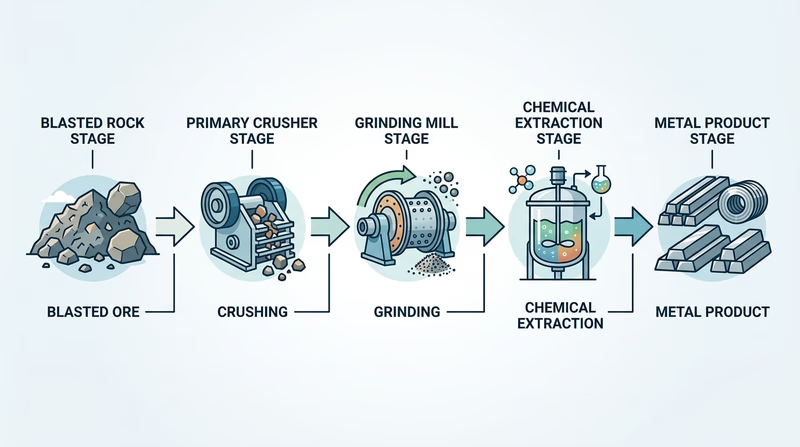
The simplest way to reduce rock in size is mechanical crushing and grinding. Crushers squeeze or break large rock into smaller pieces. Mills grind that material further so the useful minerals can be separated more easily. The point is not just to make the rock smaller. It is to expose more mineral surfaces so later steps work better.
A quarry making aggregate may rely mostly on physical crushing and screening because the final product is the rock itself, sorted by size. A metal mine may crush and grind ore so the valuable minerals can later be concentrated or chemically treated.
Method two: Chemical extraction
Chemical extraction uses a solution or reaction to separate the valuable mineral from the ore. One common example is leaching, where a chemical solution moves through crushed ore and dissolves the target mineral. The dissolved mineral can then be recovered from the solution.
The key idea is that chemical extraction does not just break rock into smaller pieces. It changes where the valuable mineral is located by moving it into a solution or another form that can be collected.
How the two methods differ
This comparison is useful in your counselor discussion
- Mechanical size reduction breaks rock physically.
- Chemical extraction separates the desired mineral using a chemical process.
- Crushing and grinding prepare material for later steps.
- Leaching or similar methods help recover minerals that are not easy to separate by size alone.
Smelting versus refining
These two words are related, but they are not the same.
Smelting
Smelting uses heat, and often chemical reactions, to separate a metal from its ore or concentrate. In smelting, the goal is usually to free the metal from oxygen, sulfur, or other compounds and produce a more metal-rich material.
Refining
Refining is the step that improves purity after the metal has already been recovered in rougher form. A refinery removes remaining impurities so the final product meets the quality needed for manufacturing, wiring, structural uses, or other applications.
A simple way to remember it is this: smelting gets the metal out; refining cleans it up.
Minerals Education Coalition — Mining and Mineral Processing A readable introduction to mining, processing, and the steps between ore and finished mineral products. Link: Minerals Education Coalition — Mining and Mineral Processing — https://mineralseducationcoalition.org/mining-minerals-information/You have looked at processing from a technical angle. The next option turns back toward people and place by asking how a mine shaped a local community.