Req 6 — Mining, Reclamation, and Sustainability
This requirement connects three ideas that belong together: controlling impacts during mining, reclaiming the land afterward, and deciding what the land should become for wildlife and people. Mining is not only about extracting a resource. It is also about what the operator does while mining is active and what remains when the work is over.
- 6a focuses on a modern site and the controls used right now.
- 6b explains reclamation and connects it to Scouting values.
- 6c asks what society gains when mined land is restored and reused well.
Requirement 6a
A modern mine has to manage much more than ore production. It may need to control dust, noise, stormwater, runoff, erosion, waste rock placement, tailings handling, habitat disturbance, fuel storage, and traffic. Sustainability in mining does not mean “no impact.” It means reducing harm where possible, planning carefully, monitoring conditions, and thinking ahead to land use after mining.
Look for concrete controls when you research your chosen site. Examples include watering roads to reduce dust, lined storage areas, water-treatment systems, sediment ponds, progressive reclamation on completed sections, wildlife monitoring, and limits on where waste material can go.
Environmental controls to look for
Choose a site and see which of these are mentioned
- Dust control: Water sprays, covered conveyors, or speed limits on haul roads.
- Water management: Diversion ditches, settling ponds, treatment systems, or monitoring wells.
- Slope and erosion control: Benching, grading, drainage planning, and revegetation.
- Waste management: Planned storage of waste rock or tailings.
- Habitat protection: Buffer zones, seasonal limits, or restoration work.
What sustainability means here
For this discussion, sustainability means meeting today’s need for materials while reducing unnecessary damage and planning for the future. A counselor will likely appreciate hearing that sustainability in mining involves tradeoffs. Society needs minerals for homes, transportation, energy systems, and agriculture, but responsible mining tries to lower impacts and leave the site in a condition that is safer and more useful after mining ends.
Requirement 6b
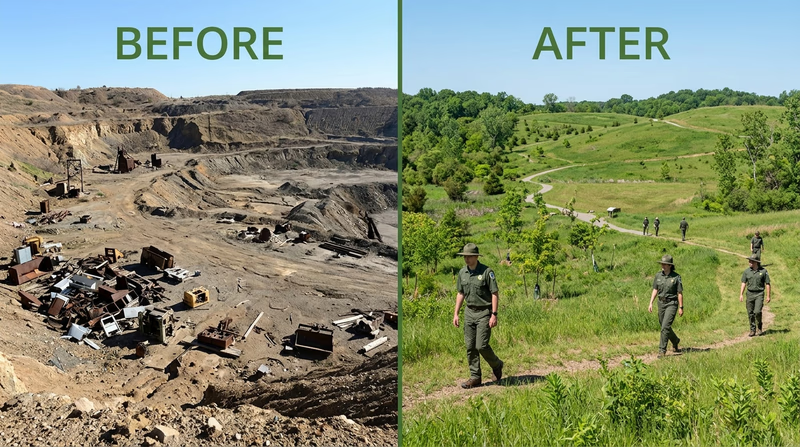
Reclamation is the work of stabilizing, reshaping, revegetating, and otherwise improving land disturbed by mining after active extraction ends, and sometimes while mining is still continuing in another part of the site. It can include grading slopes, replacing topsoil, planting vegetation, managing water, removing hazards, and preparing the land for a new use.
Reclamation does not mean turning every site back into exactly what it was before. In some places that is impossible. Instead, it means making the land safer, more stable, and more beneficial than if it were simply abandoned.
How reclamation connects to Leave No Trace and the Outdoor Code
The connection is not perfect, because Leave No Trace is usually about minimizing impact while visiting the outdoors, not running an industrial site. Still, the values overlap in important ways.
- Dispose of waste properly connects to safe handling of waste rock, tailings, fuel, and contaminated water.
- Leave what you find reminds us that landscapes have value, and disturbance should be planned carefully rather than done carelessly.
- Protect wildlife and natural features connects to habitat restoration and long-term land stewardship.
- The Outdoor Code calls Scouts to be conservation-minded, clean in outdoor manners, and careful with natural resources. Reclamation is one way society tries to live up to those responsibilities after resource extraction.
Requirement 6c
This part asks a values question. Why should society care what happens after mining ends? One answer is safety. Unstable slopes, pits, polluted water, or abandoned facilities can remain hazardous. Another answer is long-term usefulness. Restored land can support wildlife habitat, recreation, forestry, grazing, renewable energy, or public space.
There is also a fairness question. Communities that lived with the impacts of mining often expect something better than permanent damage after the resource is gone. Reclaimed land can become a visible sign that extraction was followed by responsibility.
The Summit Bechtel Family National Scout Reserve is a strong example because it shows how land with a mining past can be transformed into a place for outdoor adventure, conservation, and Scouting programs. That transformation is not magic. It depends on planning, land shaping, cleanup, access design, and a new vision for how people and nature can use the landscape.
🎬 Video: This Is What Happens When We Mine for Metals — Lumina Learning — https://www.youtube.com/watch?v=K6FasptWdeU
You have now examined mining’s responsibilities after extraction. Next, you will choose one future-focused topic and see how mining connects to space, the oceans, recycling, or commodity markets.