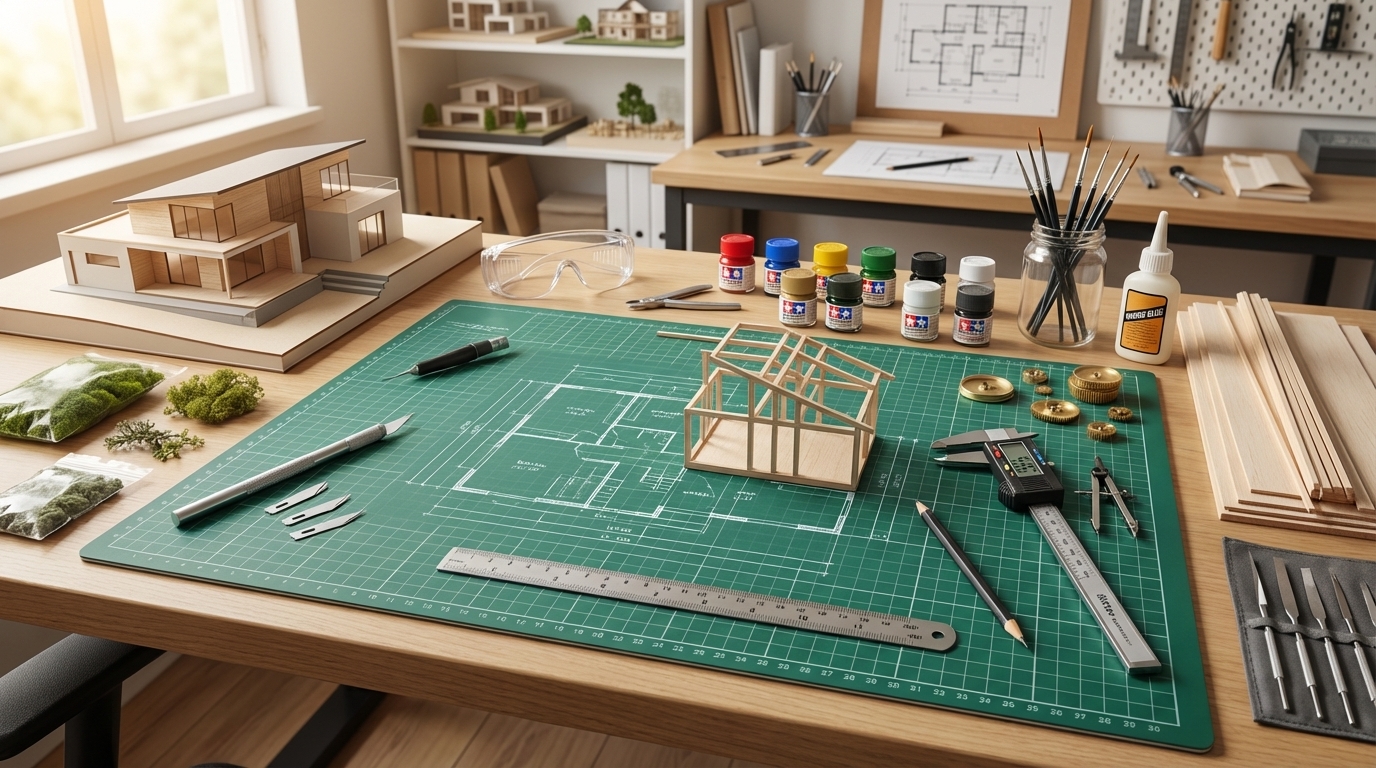
 Getting Started
Introduction & Overview
Overview
A model is more than a small version of something big. It is a way to test ideas, explain how parts fit together, and show other people what you are imagining before full-size work begins. In this badge, you will think like a designer, plan like a builder, and solve problems the way engineers, architects, and movie effects artists do.
Model Design and Building is also one of the most creative badges in Scouting. You can sketch by hand, design on a computer, cut parts from cardboard or wood, print pieces in plastic, and turn a rough idea into something you can hold, present, and improve. The skills you practice here matter in real jobs, but they are also useful any time you want to turn an idea into a working plan.
Then and Now
Then
People have used models for thousands of years. Builders in the ancient world made small layouts to test temple designs and city plans. Shipbuilders created scale hulls to study how a vessel might move through water before spending huge amounts of money on a full-size build. Military leaders used terrain models to explain battle plans, and inventors built prototypes to prove a machine could work before asking anyone to invest in it.
As architecture and engineering became more precise, models became more exact too. Drafting tables, rulers, triangles, and careful scale drawings let builders move from rough sketches to detailed plans. A strong model could show not just how something looked, but how it stood up, how water moved through it, or how gears might transfer motion.
Now
Today, models still do all of those jobs, but modern tools make them faster and more flexible. Architects use digital models to test room layouts, sunlight, and materials. Engineers simulate forces before they cut the first piece of material. Product designers build rapid prototypes with 3D printers and laser cutters. Special-effects artists combine real miniatures with computer-generated imagery to create worlds that feel believable on screen.
Even with all that technology, the same core questions still matter: Is the scale right? Do the parts fit? Is the structure strong enough? Does the design solve the problem it was meant to solve? This badge helps you answer those questions with both traditional hands-on skills and computer-assisted design.
Get Ready!
Bring curiosity, patience, and a willingness to revise. Good models rarely come out perfect on the first try. The fun of this badge is learning how to improve an idea step by step until it works better and looks better too.
Kinds of Model Design and Building
Display Models
Some models are built mainly to help people see an idea. An architectural house model lets a viewer understand shape, size, and layout at a glance. A fantasy spacecraft model helps a movie designer pitch a believable vehicle before cameras ever roll.
Working Models
Other models show how something functions. A plumbing model can show where water enters, where waste leaves, and how vents keep the system working properly. A mechanical model can prove that levers, pulleys, or gears really move the way the designer expects.
Structural Models
A structural model focuses on what holds everything up. Instead of pretty details, it highlights framing members, supports, joints, and load paths. These are especially useful when you want to explain why a structure is strong.
Digital Models
A digital model lives on a screen first. You can rotate it, change dimensions, test different parts, and sometimes send it directly to a printer, laser cutter, or CNC tool. Digital work is powerful, but it still depends on the same design habits as physical modelmaking: careful planning, clear measurements, and safe use of tools.
Cooper Hewitt Smithsonian Design Museum Collection Explore design drawings, objects, and models to see how professionals communicate ideas visually. Link: Cooper Hewitt Smithsonian Design Museum Collection — https://collection.cooperhewitt.org/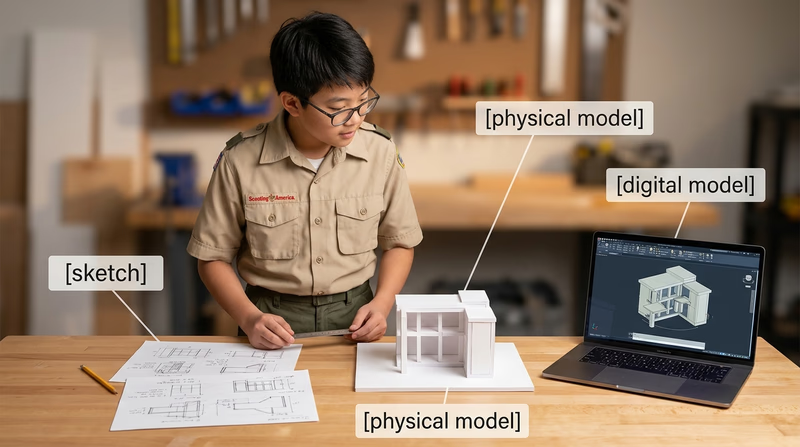
You have seen what models are for. Next, start with the rule that matters before every cut, print, and assembly step: work safely.