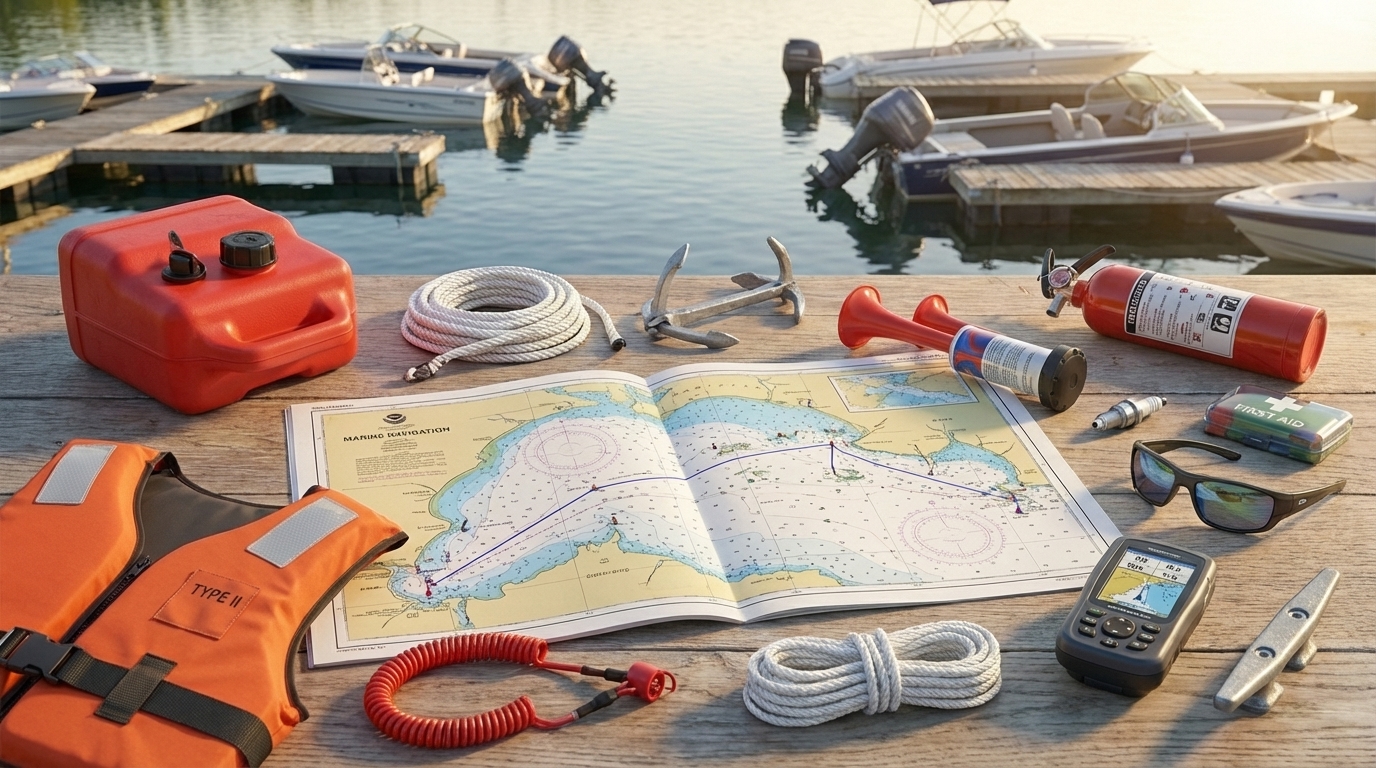
Motorboating Merit Badge — Complete Digital Resource Guide
https://merit-badge.university/merit-badges/motorboating/guide/
Introduction & Overview
A dock line slips loose, the wind pushes the bow sideways, and suddenly a simple departure takes real skill. That is what makes motorboating exciting: you are not just riding on the water, you are managing speed, weight, weather, people, and machinery all at once.
Motorboating teaches judgment as much as throttle control. In this badge, you will learn how to spot hazards early, wear and use safety gear correctly, understand how boats and engines work, and handle a boat with steady, predictable skill. Those are the habits that separate a fun day on the water from a bad story people tell later.
Then and Now
Then — Simple Engines, Close Shorelines
The first small motorboats were loud, smoky, and mechanically simple. Early boaters relied on basic inboard engines, hand signals, paper charts, and experience passed from one person to the next. Boats stayed close to shore more often because fuel systems were less reliable, weather information was harder to get, and rescue help took longer to arrive.
That older world still shaped many of today’s safety habits. Keeping a float plan, checking fuel carefully, carrying the right gear, and respecting changing weather all came from hard lessons learned by boaters who discovered that water gives very little room for careless mistakes.
Now — Better Gear, Same Need for Good Judgment
Modern motorboats are cleaner, quieter, and more specialized. Outboard motors are lighter and more efficient. Electronics can show depth, speed, and position in real time. Weather forecasts are available on a phone before you ever leave the dock.
But better gear does not remove risk. A propeller is still dangerous. Carbon monoxide is still invisible. A shifting passenger can still upset balance in a small craft. The best motorboaters use modern tools without depending on them blindly.
Get Ready!
Come to this badge ready to think ahead. Your counselor is looking for safe habits, clear explanations, and calm boat handling — not flashy driving. If you can stay alert, communicate well, and do the simple things right every time, you will already be acting like a skilled operator.
Kinds of Motorboating
Motorboating is not one single activity. The same safety principles apply across many boat types, but each kind of boating feels different on the water.
Fishing Boats and Utility Boats
These boats are built for steady work. They usually have open layouts, room for gear, and practical seating. On a small lake or calm river, they are great platforms for learning the basics of launching, docking, lookout, and low-speed control.
Runabouts and Ski Boats
Runabouts are common family recreation boats. They are used for cruising, towing skiers or tubers, and general fun on lakes. Because they may carry several passengers and change speed often, the operator needs strong awareness of weight distribution, wakes, and the position of swimmers in the water.
Pontoon Boats
Pontoon boats feel stable because of their wide platform and roomy deck. They are popular for groups, but that comfort can fool people into forgetting that they are still aboard a vessel with propellers, changing balance, and weather exposure. Crowded decks, standing passengers, and loose gear all need careful management.
Personal-Watercraft-Style Handling vs. Traditional Helm Handling
Some motorized craft turn sharply and respond quickly. Others, especially larger or heavier boats, keep moving after you reduce throttle and need more time to stop or turn. Learning motorboating means learning how your specific craft responds, not assuming every boat behaves the same way.
Inland Lakes, Rivers, and Coastal Waters
A small protected lake is very different from a river with current or a coastal bay with tide and chop. Inland boating often emphasizes traffic patterns, shallow water, and weather changes. Rivers add current and obstacles. Coastal waters may add tides, larger wakes, and more complex navigation.
Next Steps
You now have the big picture: motorboating is about machinery, seamanship, and decision-making working together. The first requirement starts where every safe trip starts — with the hazards that can hurt people before the fun part of the day even begins.
Req 1 — Hazards, First Aid & Safety Afloat
This opening requirement covers the safety foundation for the whole badge. You need to understand three connected ideas:
- What can go wrong around a motorboat
- How to handle common injuries and illnesses on the water
- How Safety Afloat turns good intentions into a real plan
If you learn these three pieces together, the rest of the badge makes much more sense.
Requirement 1a
A gas can, a spinning propeller, and an open stretch of water do not look equally dangerous, but all three can injure people fast. The key word in this requirement is not just respond. It is also anticipate. Good motorboaters notice danger early enough that the emergency never fully develops.
Flammable fuel
Gasoline vapors ignite easily. They can collect in low spaces where you cannot see them, especially in enclosed areas. That is why fueling is a calm, checklist-driven job.
- Anticipate: Know where fuel is stored, where vapors may collect, and whether passengers are carrying flame sources.
- Prevent: Shut off the engine, keep everyone still, avoid smoking, and wipe spills immediately.
- Mitigate: Ventilate after fueling and check for fuel odors before starting.
- Respond: If fire starts, stop fuel flow if possible, use the proper extinguisher if trained and safe to do so, and get people clear.
Carbon monoxide
Carbon monoxide, often called CO, is especially dangerous because you cannot see or smell it. Engine exhaust can build up near the stern, under covers, or in poorly ventilated spaces.
- Anticipate: Know where exhaust collects, especially when the engine is idling.
- Prevent: Keep people away from exhaust areas and maintain ventilation.
- Mitigate: Watch for headache, dizziness, confusion, nausea, or unusual fatigue.
- Respond: Move everyone to fresh air at once, stop the source if possible, and get medical help.
Propellers
A propeller does not need high speed to cause severe injury. Even at low throttle, a rotating prop can cut deeply.
- Anticipate: Know exactly where every swimmer, skier, and passenger is before shifting into gear.
- Prevent: Shut off the engine when people are boarding, swimming near the boat, or in the water at the stern.
- Mitigate: Use the engine cut-off switch when appropriate and enforce a no-horseplay rule.
- Respond: Stop the engine immediately, protect the injured person from further harm, control bleeding, and call for emergency help.
Collisions
Most collisions are not caused by one giant mistake. They grow out of poor lookout, excessive speed, blind turns, distraction, and bad spacing.
- Anticipate: Keep scanning 360 degrees, not just straight ahead.
- Prevent: Slow down near docks, traffic, and narrow water; know right-of-way rules; never assume another operator sees you.
- Mitigate: Leave space for evasive action and communicate early.
- Respond: Check passengers first, account for everyone, control immediate hazards, and follow local reporting rules if damage or injury occurred.
Falls overboard, capsize, and running aground
People fall because boats shift, wake hits unexpectedly, or someone stands or moves at the wrong time. Capsize and grounding often begin with poor balance, bad loading, shallow water, or taking conditions too lightly.
Hazard Response Habits
What smart boaters do before trouble grows- Count people often: You should know who is aboard and where they are.
- Keep passengers briefed: Tell them when to stay seated, hold on, or avoid moving.
- Know the water depth: Shallow water and hidden obstacles change everything.
- Reduce speed early: Most close calls get easier when throttle comes down.
- Carry the right gear where you can reach it: Life jackets, sound signal, anchor, lines, and first-aid items matter only if accessible.
Requirement 1b
Motorboating may feel cooler than hiking because of wind across the water, but that can fool you. Sun, glare, spray, and constant motion create their own medical problems. You do not need to become a doctor for this requirement. You do need to recognize trouble early and know the right first steps.
Hypothermia
Hypothermia happens when the body loses heat faster than it can replace it. Cold water makes this risk much worse, even on days that do not feel freezing.
- Move the person out of wind and wet conditions.
- Replace wet clothing with dry layers if available.
- Warm the person gradually with blankets or dry clothing.
- Give warm drinks only if the person is awake and able to swallow.
- Seek medical help for confusion, intense shivering, slurred speech, or clumsiness.
Heat reactions and dehydration
Heat exhaustion and dehydration often build slowly. A Scout may seem irritable, tired, headachy, or dizzy before anyone realizes there is a problem.
- Get the person into shade.
- Loosen extra clothing or gear.
- Give water or an appropriate sports drink in small amounts if the person is alert.
- Cool with damp cloths or airflow.
- Escalate quickly if there is vomiting, confusion, fainting, or hot dry skin.
Motion sickness
Motion sickness is miserable, but it can also distract someone from safety instructions.
- Move the person where they can look at the horizon.
- Keep them in fresh air if possible.
- Reduce strong smells and unnecessary motion.
- Give small sips of water.
- If the person becomes weak or dehydrated, head in.
Bug bites and blisters
Motorboating often means docks, shorelines, waiting areas, and wet footwear. That is where bites and blisters appear.
- Wash the area if possible.
- Use simple first-aid treatment for itching, swelling, or skin protection.
- Watch for allergic reaction: trouble breathing, swelling of face or throat, or widespread hives needs urgent help.
- Cover blisters before they tear open. A small hot spot becomes a painful problem quickly when feet stay wet.
Requirement 1c
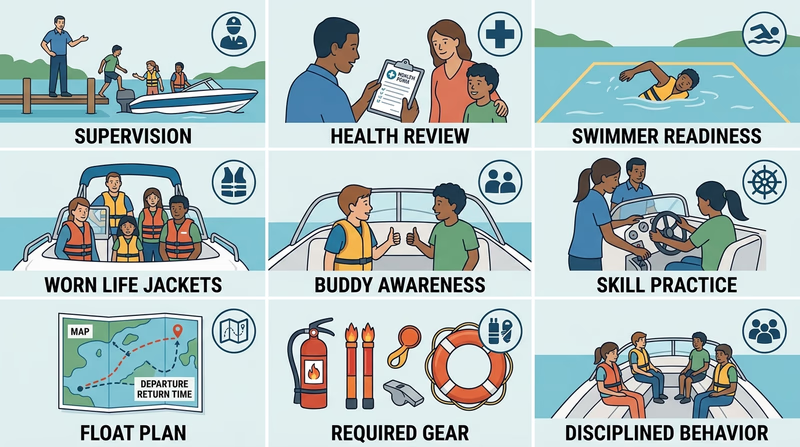
Safety Afloat is the operating system behind safe Scout boating. It is not just a list to memorize for your counselor. It is a way to think before the dock line ever leaves shore.
The policy includes qualified supervision, personal health review, swimming ability, life jackets, buddy system, skill proficiency, planning, equipment, and discipline. In motorboating, those points affect everything from who is allowed to run the boat to whether the trip should happen at all.
How Safety Afloat looks in motorboating
- Qualified supervision: An adult leader with proper training oversees the activity and makes the final safety decisions.
- Personal health review: Leaders know about medical conditions, medications, or limits that matter on the water.
- Swimming ability: People around boats need honest assessment of water skills, especially before open-water work.
- Life jackets: Correctly fitted, worn, and fastened whenever required.
- Buddy system: No one disappears unnoticed.
- Skill proficiency: The operator and crew practice skills before harder conditions.
- Planning: The route, weather, float plan, and emergency contacts are thought through in advance.
- Equipment: Required gear is aboard, working, and reachable.
- Discipline: Everyone follows instructions immediately, especially when conditions change.
What Your Counselor Wants to Hear
How to explain Safety Afloat well- Name the point clearly. Do not just say “safety.” Say which part of the policy you mean.
- Connect it to motorboating. Explain what it changes on a real trip.
- Give a practical example. Weather checks, engine cut-off switch use, or life jacket wear are good examples.
- Show that points work together. Planning, equipment, and discipline support each other.
You now know what can hurt people around a motorboat and how Scouting expects you to prevent it. Next, build the water-readiness skills that every motorboater needs before handling a boat underway.
Req 2 — Swim Readiness & Life Jackets
This requirement covers two simple truths that every boater needs to respect: if you end up in the water, you must be able to handle yourself, and if you wear the wrong life jacket, your safety plan gets weaker fast.
Requirement 2a
The swimmer test is not a formality. It proves that you can stay calm, move with control, and recover in the water without panicking. Those are essential boating skills, even if you never plan to swim for fun during a motorboating trip.
If you fall overboard, help someone else, or need to move away from a damaged boat, you want real water confidence, not wishful thinking. That is why this requirement comes before the on-water demonstration in Requirement 5.
Why the swimmer test matters for motorboating
A motorboat creates distance quickly. Water may be cold, choppy, or deeper than you expected. Clothing and shoes can feel heavy. Spray, fuel smell, or sudden noise can increase stress. Passing the swimmer test shows that you can keep functioning when the water is the problem, not the playground.
How to prepare
- Practice relaxed, efficient strokes instead of thrashing.
- Get comfortable floating and changing direction.
- Swim in conditions similar to where you normally do aquatics training.
- Focus on steady breathing. Panic wastes energy faster than almost anything else.
Swimmer-Test Readiness
Good habits before you test- Know the standard: Ask your counselor or aquatics staff to explain the test exactly.
- Practice continuous effort: Smooth, nonstop swimming matters more than speed.
- Stay calm after entry: Strong boating swimmers recover quickly after getting wet unexpectedly.
- Treat it honestly: This is about safety, not pride.
When this requirement mentions the Swimming merit badge, use our own Swimming merit badge page as a starting point for broader swim-skill preparation.
Scouting America Safety Afloat See how swimming ability fits into Scouting's required planning and safety framework for boating activities. Link: Scouting America Safety Afloat — https://www.scouting.org/health-and-safety/safety-afloat/Requirement 2b
A personal flotation device, usually called a PFD or life jacket, is one of the most important pieces of boating gear you will ever wear. The best PFD is not just approved. It is appropriate for the activity, fits the person wearing it, and stays fastened the whole time.
Common PFD types
You do not need to memorize every label format your state might use, but you should understand the main categories and how they are used.
- Offshore-style, high-buoyancy jackets: Built for rougher conditions and situations where rescue may take longer.
- Near-shore buoyant vests: Common, wearable life jackets for general recreational boating.
- Flotation aids: Designed for activities where mobility matters and the user is expected to help themselves in the water.
- Throwable devices: Ring buoys or cushions meant to be thrown to someone, not worn as the primary jacket.
- Special-use or inflatable models: Built for specific activities or users and only appropriate when their instructions and legal requirements are met.
For a Scout learning motorboating, the most common choice is a properly fitted, wearable U.S. Coast Guard-approved life jacket suited to recreational boating. Your counselor will want you to know when a throwable device helps and why it does not replace a worn jacket.
How to choose the right PFD
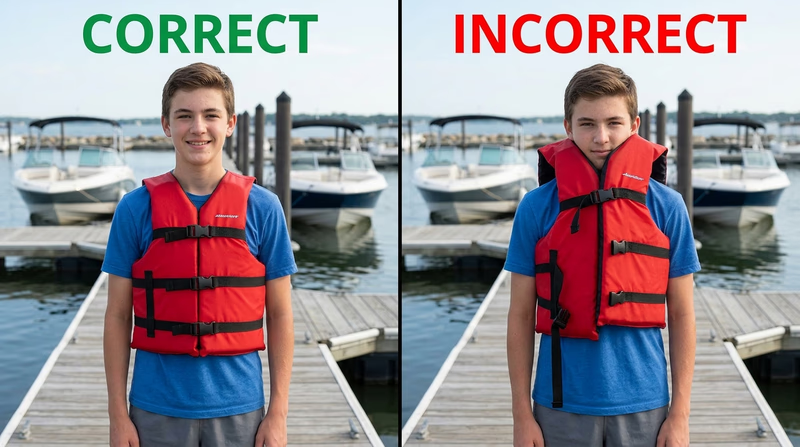
Choose based on body size, water activity, conditions, and the boat’s plan for the day. Read the label. If the PFD is too large, it can ride up. If too small, it will not work as designed. If it is the wrong style for the activity, people are more likely to loosen it, remove it, or wear it incorrectly.
How to fit it correctly
- Pick the size recommended for the wearer.
- Fasten every buckle, zipper, or closure.
- Tighten the straps so the jacket feels snug.
- Raise your arms, twist, and sit if possible.
- Have a partner tug upward at the shoulders.
- If it rides up badly or shifts too much, adjust again or change size.
Quick PFD Fit Check
What to confirm before leaving the dock- Correct label and size: Matches the wearer and intended use.
- Snug fit: Tight enough that it will not slide over the chin or ears.
- Full closure: Every buckle and zipper secured.
- Comfort for real movement: The wearer can sit, turn, and help with the boat.
- Condition: No broken straps, damaged fabric, or missing hardware.
With swim readiness and life jackets covered, the next step is understanding the machine itself. Before you run a boat well, you need to know what powers it, how to fuel it safely, and how engine choices affect the way people use boats.
Req 3 — Engines, Fuel & On-Water Awareness
This requirement is about understanding the boat as a machine and as a shared space. You will compare motor types, learn fueling and storage precautions, review winterizing, and think about how your decisions affect swimmers, skiers, and passengers nearby.
Requirement 3a
The three main motor layouts each solve a different problem. When you explain them to your counselor, focus on where the motor sits, how power gets to the propeller, and what kind of boating each setup suits best.
Inboard motors
An inboard motor sits inside the boat hull. Power goes through a driveshaft to a propeller under the boat.
Advantages:
- Strong, steady power
- Good weight distribution in many boats
- Common in larger boats or boats built for towing
Uses:
- Cruising boats
- Some ski or wake boats
- Boats where the motor is meant to stay protected inside the hull
Outboard motors
An outboard motor mounts outside the transom at the stern. The engine, gearbox, and propeller are one unit.
Advantages:
- Common and easy to identify
- Easier to service or replace as a unit
- Leaves more interior room in many small boats
- Can tilt up in shallow water or for trailering
Uses:
- Fishing boats
- Small runabouts
- Utility boats and many training boats
Inboard/outboard motors
Often called stern drives, these combine an engine inside the boat with a drive unit outside the transom.
Advantages:
- Blends interior engine placement with a steerable outside drive
- Common in recreational family boats
- Often offers strong performance with a familiar helm feel
Uses:
- Recreational runabouts
- Family cruising and tow-sports boats
Requirement 3b
Fueling and servicing are low-speed jobs, but they deserve high attention. Many accidents happen while people are relaxed at the dock and rushing to get underway.
Fuel handling
Turn off the engine. Keep flames and sparks away. Ask passengers to stay still and out of the way. Use the correct fuel. Avoid spills. Cap the tank securely. Ventilate before restart if the boat design requires it.
Engine servicing
Basic servicing means checking things before they fail: fuel lines, battery connections, oil level where appropriate, steering response, and the general condition of the motor. The goal is not to impress people with mechanical knowledge. The goal is to catch small problems while you are still at the dock.
Equipment storage and placement
Loose gear becomes a hazard when the boat turns, hits chop, or stops suddenly. Heavy gear placed poorly can affect trim and balance. Emergency gear buried under coolers is almost useless.
Before-Start Engine Area Check
Simple things that prevent bigger problems- No fuel smell that seems unusual
- Battery and cables secure
- Lines and gear clear of moving parts
- Required safety gear reachable
- Passengers seated or briefed before departure
Requirement 3c
Winterizing means preparing a boat motor and related systems for long storage, especially freezing temperatures. Water left where it should not be can freeze, expand, and crack engine parts. Fuel left untreated can break down. Batteries can weaken. Corrosion can get a head start before next season even begins.
What winterizing usually includes
The exact steps depend on the engine type and manufacturer, but the general idea is consistent:
- Drain or protect water-containing systems as required.
- Stabilize or manage fuel for storage.
- Inspect lubricants and fluids.
- Protect the battery.
- Clean the boat and motor before storage.
- Cover and store the boat so moisture does less damage.
Why it matters
Winterizing protects reliability, saves money, and prevents spring surprises. A boat that was put away carelessly may not just refuse to start. It may hide damage that becomes dangerous later.
Requirement 3d
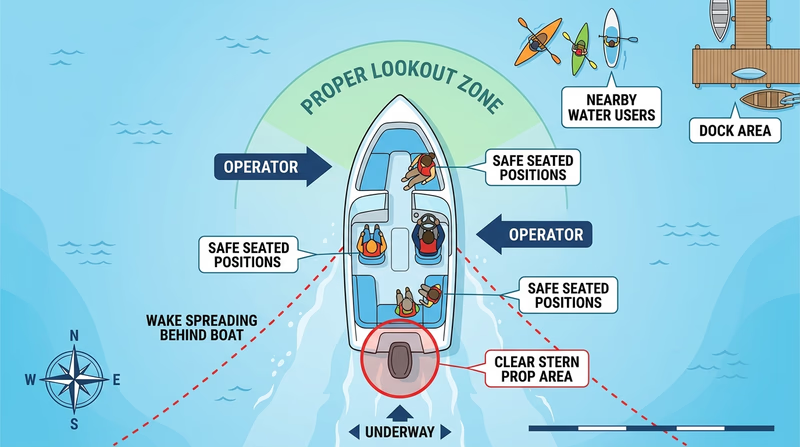
This part of the requirement is really about awareness. A motorboat operator is responsible not only for the boat, but also for the moving zone around it.
Swimmers and skiers in the water
People in the water are hard to see, especially in glare or chop. The stern and prop area are especially dangerous. Keep the engine off or in safe condition when appropriate near people in the water, maintain clear communication, and never assume someone can move out of your way quickly enough.
Passenger positions underway
Passengers should stay where the operator expects them to be. Sudden movement changes balance and can block visibility. On small boats, a person standing at the wrong moment can change how the boat handles.
Boat wakes
Your wake affects other people. It can rock smaller boats, shove someone off balance at a dock, swamp low craft, or endanger paddlers near shore. Wake awareness is part courtesy and part safety law.
You now understand the boat as both machinery and moving platform. Next comes the legal and seamanship side of the badge: weather, regulations, required gear, signals, and anchoring.
Req 4 — Rules, Weather & Required Gear
This is the most seamanship-heavy requirement in the badge. It pulls together policy, law, equipment, weather, signals, and anchoring. In other words, it teaches you how a responsible operator prepares for a trip before anyone starts talking about fun.
Requirement 4a
Requirement 1c introduced Safety Afloat. Here, you are applying it like an operator. That means connecting the policy to actions you actually take before leaving the dock.
Applying Safety Afloat before launching
Start with the people. Is supervision in place? Are health concerns known? Does everyone have the right swimming ability and life jacket? Then shift to the plan. What is the route, the return time, the weather window, and the backup plan?
Applying Safety Afloat during the trip
Once underway, the policy is still active. Weather can change. Equipment can fail. Passengers can become tired or careless. The operator keeps reassessing instead of assuming that a safe start guarantees a safe finish.
Applying weather checks, equipment checks, and float plans
- Weather: Check before launch and keep watching during the outing.
- Equipment: Verify that required items are aboard and working.
- Float plan: Leave your route, timeline, and contact plan with someone on shore.
Pre-Departure Safety Afloat Review
A practical application of the policy- People ready: Supervisor, swimmers, buddies, and passengers are prepared.
- Boat ready: Fuel, engine, lines, anchor, and required gear checked.
- Weather reviewed: Forecast, wind, storms, and local conditions considered.
- Plan shared: Someone not on the boat knows where you are going and when you should return.
Requirement 4b
Boating law is local in some details and national in others. Your state may set age limits, boater-education requirements, or permit rules. Federal rules affect navigation, required equipment, lighting, sound signals, and many safety standards.
Your counselor does not expect you to memorize every state’s boating code. The skill is knowing where to look and understanding that laws can change when you cross state lines.
What to know in your own state
Find out whether your state requires:
- a boater education card or permit
- a minimum operator age
- specific life-jacket rules for youth
- registration and numbering rules
- extra local equipment or operating rules
How to find laws in other states
Start with that state’s official boating or natural-resources agency. Then compare with authoritative national boating-law summaries. If you will actually boat there, always confirm with the official state source.
NASBLA — State Boating Laws A national starting point for finding boating-law information and education requirements by state. Link: NASBLA — State Boating Laws — https://www.nasbla.org/education/boating-lawsRequirement 4c
Weather changes how your boat behaves, how your passengers feel, and how much time you have to fix problems. Wind builds waves. Waves reduce visibility and increase fatigue. Rain hides hazards and makes surfaces slippery. Lightning changes the whole situation from inconvenient to dangerous.
Heavy water means rough, confused, fast-moving, or otherwise challenging conditions. In heavy water, the operator must work harder to control speed, angle, and balance. Passengers tire faster. Loose gear shifts. Simple turns become more serious decisions.
Weather hazards to discuss
- Thunderstorms and lightning
- Strong wind
- Fog or low visibility
- Cold fronts and fast changes in temperature
- Large chop, heavy wake, or current-driven rough water
🎬 Video: How to drive a boat in rough water | Big sea throttle techniques explained | Motor Boat & Yachting — Motor Boat & Yachting — https://www.youtube.com/watch?v=dAxC2xAi12c
Requirement 4d
This requirement asks for more than repeating the words. “Promise” matters because boating safety depends on habits you follow even when no one is checking.
Meaning of qualified supervision and health review
Scouting activities do not run on guesswork. A qualified adult leads, and the group knows about health issues that could matter on the water.
Meaning of swimming ability, life jackets, and buddy system
These three points assume that people end up in the water when they did not plan to. That is why they are non-negotiable.
Meaning of skill proficiency, planning, equipment, and discipline
Skill proficiency means you practice before conditions get harder. Planning means you think ahead. Equipment means you bring what the trip actually needs. Discipline means everyone obeys the safety plan when it counts.
Requirement 4e
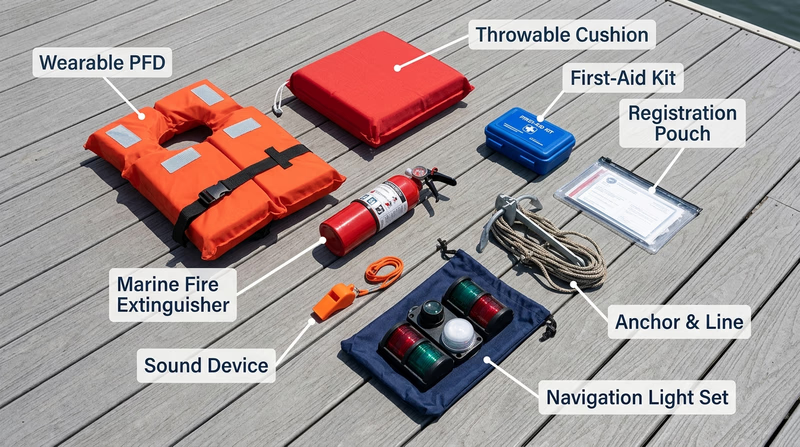
Required equipment varies by boat size, location, and state rules, but some categories are common. You should be ready to identify the equipment, explain what it is for, and show where it belongs on the boat.
Common required items include wearable life jackets, a sound-producing device, fire extinguisher, navigation lights, registration materials, and sometimes throwable flotation or visual distress signals depending on boat type and waters used.
“Explain and show” means more than naming
If your counselor asks about a fire extinguisher, do not just point. Explain where it should be stored, why it must be reachable, and what type of emergency it addresses. If asked about the sound signal, show how it is used to attract attention quickly.
Required Gear Mindset
Questions to ask about every item aboard- Is it required here?
- Is it in working condition?
- Can I reach it quickly?
- Do I know how to use it without guessing?
Requirement 4f
Ventilation is about preventing explosive fuel-vapor buildup and reducing dangerous fumes. Some boats, especially those with enclosed fuel or engine spaces, need powered or natural ventilation systems by law or design standard.
The reason is simple: gasoline vapors can collect in low spaces and ignite violently. A proper ventilation system helps remove those vapors before engine start or while systems are operating.
When you explain this to your counselor, connect the rule to the hazard. Ventilation is not about comfort. It is about reducing fire and explosion risk.
Requirement 4g
Lights help other boaters know where you are, what direction you are facing, and whether you are visible in low light. Sound signals help communicate presence or intention when distance, traffic, or visibility makes voice communication impossible.
You do not need to become a professional navigator for this requirement, but you should understand that signals exist to prevent confusion. If two operators interpret a situation differently, risk rises fast.
Why they matter
- Navigation lights: Help others identify orientation and avoid collision.
- Sound signals: Help attract attention or communicate when visual clarity is limited.
- Consistency: Rules matter because all operators rely on the same shared system.
Requirement 4h
Anchoring sounds simple until wind, bottom type, and swinging room start working against you. A good anchor setup depends on matching the anchor style to the conditions and using patient technique.
Common anchor ideas
Different anchors hold differently in mud, sand, rock, or mixed bottoms. Some common recreational categories include lightweight fluke-style anchors, plow-style anchors, and utility-style anchors for small boats. Your counselor may have local preferences based on the waters where you boat.
Proper anchoring techniques
A good explanation should include these ideas:
- choose a suitable spot with enough depth and swinging room
- lower, do not throw, the anchor
- let out enough line for a solid hold
- back down gently to set it
- check landmarks or references to confirm you are not dragging
- raise and stow the anchor carefully before getting underway
Anchoring Sequence
A simple way to describe the process- Pick the spot: Bottom, depth, wind, and traffic all matter.
- Lower the anchor carefully: Avoid tangles and sudden drops.
- Pay out line: Enough scope helps the anchor hold.
- Set and confirm: Check that the boat stays put.
- Recover safely: Bring the anchor up cleanly and stow it so it cannot shift.
You now know the policies, laws, and seamanship rules that support safe operation. Next comes the hands-on proof: boarding, launching, running a course, anchoring, docking, and tying the knots that make a boater dependable.
Req 5 — Boat Handling Underway
This final requirement is where knowledge turns into visible skill. The common thread through all eight parts is control. You are showing that you can handle the boat smoothly, keep people safe, and avoid creating extra problems while completing routine tasks.
Requirement 5a
Boarding safely
Boarding is one of the easiest times for a person to slip, grab the wrong part of the boat, or shift weight suddenly. Bring the boat alongside calmly, stabilize it as needed, and give clear instructions.
Assisting others in boarding
Have one person board at a time unless the situation clearly allows otherwise. Tell passengers where to step, what to hold, and where to sit once aboard.
Confirming life-jacket fit
Do not treat this as a quick glance. Check that each life jacket is the right size, fastened, and snug enough to do its job. This is where Requirement 2b becomes real.
Requirement 5b
Fueling the boat
Fueling should be orderly and distraction-free. Engine off, flames away, passengers managed, spills cleaned, and vapors respected.
Completing a safety check
Before launch, confirm fuel level, lines, gear, drain plug where applicable, life jackets, sound signal, anchor, and general readiness of the boat.
Quick Launch Safety Check
Items worth saying out loud before departure- Fuel secure and caps closed
- No unusual odor or visible leak
- Life jackets on and fitted
- Required gear aboard and reachable
- Passengers briefed on seating and movement
Requirement 5c
Using the engine cut-off switch link
If the boat has one, attach it correctly before operating. This simple device can stop the engine if the operator is thrown away from the helm.
Starting the motor safely
Make sure the area is clear, passengers are in stable positions, and the boat is ready to move before starting. Listen for anything unusual.
Getting underway from dockside or beach launch
Move off gently. Control matters more than speed. Think about wind, nearby boats, shallow water, and the direction the bow will want to swing.
🎬 Video: Driving a boat: The basics — boatsales — https://www.youtube.com/watch?v=FjkVFTHBizI
Requirement 5d
Running the course
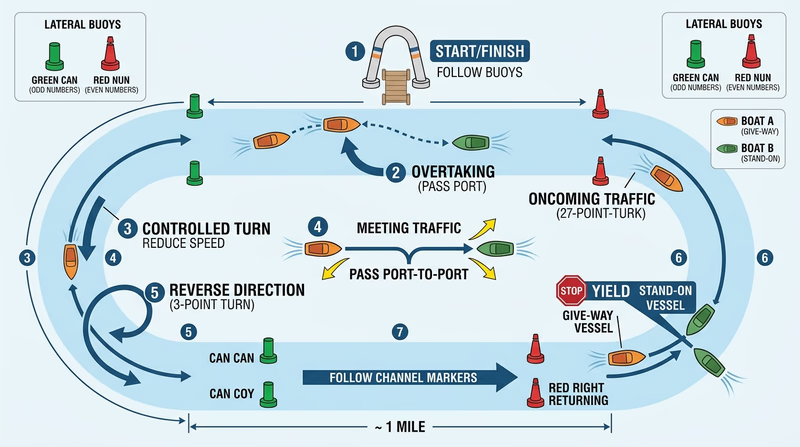
A good course run looks smooth and predictable. Your counselor is watching for lookout, spacing, speed choice, and whether you make other operators guess.
Overtaking, yielding, and passing oncoming traffic
Keep enough separation to avoid crowding other vessels. Yield when required. Pass in a way that is obvious, not surprising. Oncoming situations are easier when both operators can predict each other.
Making turns, reversing direction, and using navigation aids
Turns should match conditions and passenger stability. Reversing direction takes awareness of traffic, wind, and wake. Navigation aids help you understand channels, hazards, or route guidance, but they only help if you notice them in time.
Requirement 5e
Stopping and securing with anchors
Bring the boat under control first. Choose your anchoring location with wind, depth, bottom type, and nearby traffic in mind. A rushed anchor job often drags or tangles.
Raising and stowing the anchor
Bring the line in carefully, avoid sudden jerks, and stow the anchor so it cannot shift or snag people when the boat moves again.
Getting underway again
Before applying power, make sure the anchor is fully clear, line is secure, and passengers are ready.
Requirement 5f
Landing or docking
Docking is about patience, not bravery. Reduce speed early, approach under control, and plan for wind and current.
Disembarking and assisting others
Once secure, help passengers leave one at a time. Just like boarding, clear instructions prevent slips and sudden weight shifts.
Requirement 5g
Securing the boat
However the boat is left — moored, docked, or beached — it should stay where you put it without damaging itself or other property.
Securing all gear
Lines, anchor, paddles, first-aid kit, throwable flotation, and personal gear should be stowed so nothing blows away, trips someone, or shifts when the boat is moved next.
Requirement 5h
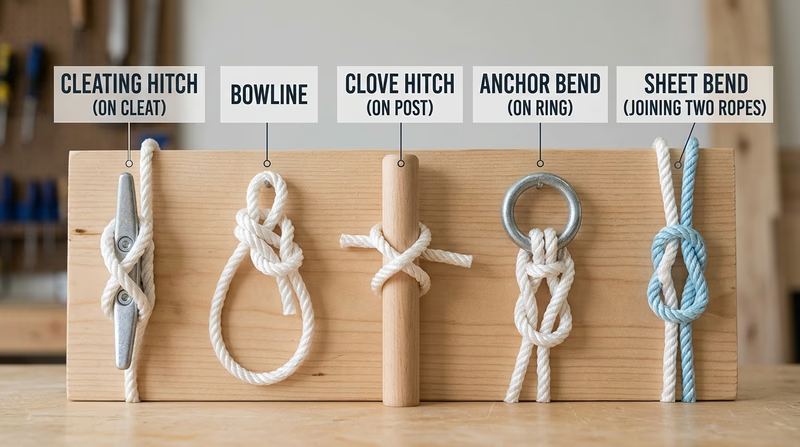
Boating knots are small skills with big consequences. A knot that slips at the wrong time can damage the boat, injure someone, or turn a simple landing into a mess.
What each knot does
- Cleating hitch: Fast, secure way to tie off on a cleat.
- Bowline: Creates a fixed loop that is easy to untie later.
- Clove hitch: Useful for temporary fastening.
- Anchor bend: Reliable way to attach line to an anchor or ring.
- Sheet bend: Joins two lines, especially when they differ in size.
Knot Practice Goals
What your counselor is really looking for- You know the purpose of each knot
- You can tie it without panicking or guessing
- You dress the knot neatly
- You can explain when to use it on a boat
You have reached the part of the badge where safe habits, seamanship, and boat handling all meet. Extended Learning will show you where these skills can lead next — from advanced training to marine careers and real boating communities.
Extended Learning
Congratulations
You have earned a badge built on real responsibility. Motorboating is fun, but it is also a serious leadership skill. When you operate a boat, people trust you with their safety, their comfort, and their chance to get back to shore without drama.
That trust is worth building further. If you liked the mix of mechanics, weather judgment, and on-water skill in this badge, there are many ways to keep growing.
Reading Water Like a Skilled Operator
Beginners often focus on the boat itself. Skilled operators focus on the whole environment. They notice wind lines on the water, shallow-color changes, traffic patterns near a marina entrance, and the way a point of land creates calmer water on one side and rougher chop on the other.
Reading water is partly observation and partly prediction. A good operator asks, “What will this patch of water do to my speed, steering, and passengers if I enter it at this angle?” That question matters on small lakes as much as on larger waterways. Boat handling becomes easier when you understand the water before it acts on the hull.
You can train this skill even when someone else is driving. Watch how the bow reacts to wake. Notice how the boat drifts when speed comes off. Pay attention to where floating debris collects, where channels narrow, and where wind is stronger because the shoreline opens up. These clues help you make smoother decisions.
The best part is that reading water improves every other boating skill. Docking gets easier because you understand drift. Anchoring gets easier because you think about wind and swing before dropping the anchor. Passenger safety improves because you can warn people before the boat hits rough water.
The Next Level of Seamanship
Seamanship is the collection of habits that make a person trustworthy around boats. It includes knot work, line handling, docking judgment, communication, lookout, courtesy, and the discipline to do routine things correctly every time.
Many new boaters think seamanship is old-fashioned vocabulary. It is not. It is what prevents chaos when the plan gets messy. A boater with good seamanship knows how to organize lines before docking, assign simple jobs to passengers, approach a pier without rushing, and back away calmly when the first attempt is not right.
You can improve seamanship without needing a bigger or faster boat. Practice cleating neatly. Learn to coil lines so they do not tangle. Observe how experienced operators set up for docking long before they actually arrive. Pay attention to how they speak: short, clear instructions instead of frantic shouting.
Seamanship also includes respect for other people on the water. A courteous operator slows near paddle craft, protects swimmers from wake, keeps music and behavior under control around crowded docks, and understands that skill is shown by calm control, not by speed.
Marine Careers and Lifelong Boating Paths
Motorboating can lead in many directions. Some people stay recreational boaters for life. Others find careers connected to marinas, marine engines, conservation patrol, outdoor education, fisheries work, charter operations, or the Coast Guard and Coast Guard Auxiliary.
If the mechanical side of this badge interested you, marine service technicians diagnose engines, electrical systems, controls, and fuel systems. If the navigation and safety side interested you more, look at boating education, patrol, and rescue organizations. If you liked being on the water itself, guiding, marina work, and waterfront instruction may be a better fit.
This badge also combines well with other water-focused badges. Canoeing, Kayaking, Rowing, Small-Boat Sailing, Lifesaving, Swimming, and even Weather all deepen skills that make you better around boats. The more angles you learn from, the better your judgment becomes.
Real-World Experiences
Take a State Boater Education Course
Visit a Marina or Boat Yard
Observe a Coast Guard Auxiliary or Safe-Boating Event
Practice Docking and Anchoring on a Quiet Morning
Shadow a Marine Technician
Organizations
Publishes official recreational boating safety guidance on life jackets, required equipment, cold-water safety, and accident prevention.
Organization: U.S. Coast Guard Boating Safety Division — https://www.uscgboating.org/
Leads national boating-safety education efforts, including the Safe Boating Campaign and public-awareness resources for boaters.
Organization: National Safe Boating Council — https://www.safeboatingcampaign.com/
Helps coordinate boating education and state boating-law information across the United States.
Organization: National Association of State Boating Law Administrators (NASBLA) — https://www.nasbla.org/
Provides practical education on knots, navigation, trailering, and environmentally responsible boating.
Organization: BoatUS Foundation for Boating Safety and Clean Water — https://www.boatus.org/foundation/
A volunteer uniformed service that supports recreational boating safety, public education, and vessel safety checks.
Organization: U.S. Coast Guard Auxiliary — https://www.cgaux.org/