Req 3 — Engines, Fuel & On-Water Awareness
This requirement is about understanding the boat as a machine and as a shared space. You will compare motor types, learn fueling and storage precautions, review winterizing, and think about how your decisions affect swimmers, skiers, and passengers nearby.
Requirement 3a
The three main motor layouts each solve a different problem. When you explain them to your counselor, focus on where the motor sits, how power gets to the propeller, and what kind of boating each setup suits best.
Inboard motors
An inboard motor sits inside the boat hull. Power goes through a driveshaft to a propeller under the boat.
Advantages:
- Strong, steady power
- Good weight distribution in many boats
- Common in larger boats or boats built for towing
Uses:
- Cruising boats
- Some ski or wake boats
- Boats where the motor is meant to stay protected inside the hull
Outboard motors
An outboard motor mounts outside the transom at the stern. The engine, gearbox, and propeller are one unit.
Advantages:
- Common and easy to identify
- Easier to service or replace as a unit
- Leaves more interior room in many small boats
- Can tilt up in shallow water or for trailering
Uses:
- Fishing boats
- Small runabouts
- Utility boats and many training boats
Inboard/outboard motors
Often called stern drives, these combine an engine inside the boat with a drive unit outside the transom.
Advantages:
- Blends interior engine placement with a steerable outside drive
- Common in recreational family boats
- Often offers strong performance with a familiar helm feel
Uses:
- Recreational runabouts
- Family cruising and tow-sports boats
Requirement 3b
Fueling and servicing are low-speed jobs, but they deserve high attention. Many accidents happen while people are relaxed at the dock and rushing to get underway.
Fuel handling
Turn off the engine. Keep flames and sparks away. Ask passengers to stay still and out of the way. Use the correct fuel. Avoid spills. Cap the tank securely. Ventilate before restart if the boat design requires it.
Engine servicing
Basic servicing means checking things before they fail: fuel lines, battery connections, oil level where appropriate, steering response, and the general condition of the motor. The goal is not to impress people with mechanical knowledge. The goal is to catch small problems while you are still at the dock.
Equipment storage and placement
Loose gear becomes a hazard when the boat turns, hits chop, or stops suddenly. Heavy gear placed poorly can affect trim and balance. Emergency gear buried under coolers is almost useless.
Before-Start Engine Area Check
Simple things that prevent bigger problems
- No fuel smell that seems unusual
- Battery and cables secure
- Lines and gear clear of moving parts
- Required safety gear reachable
- Passengers seated or briefed before departure
Requirement 3c
Winterizing means preparing a boat motor and related systems for long storage, especially freezing temperatures. Water left where it should not be can freeze, expand, and crack engine parts. Fuel left untreated can break down. Batteries can weaken. Corrosion can get a head start before next season even begins.
What winterizing usually includes
The exact steps depend on the engine type and manufacturer, but the general idea is consistent:
- Drain or protect water-containing systems as required.
- Stabilize or manage fuel for storage.
- Inspect lubricants and fluids.
- Protect the battery.
- Clean the boat and motor before storage.
- Cover and store the boat so moisture does less damage.
Why it matters
Winterizing protects reliability, saves money, and prevents spring surprises. A boat that was put away carelessly may not just refuse to start. It may hide damage that becomes dangerous later.
Requirement 3d
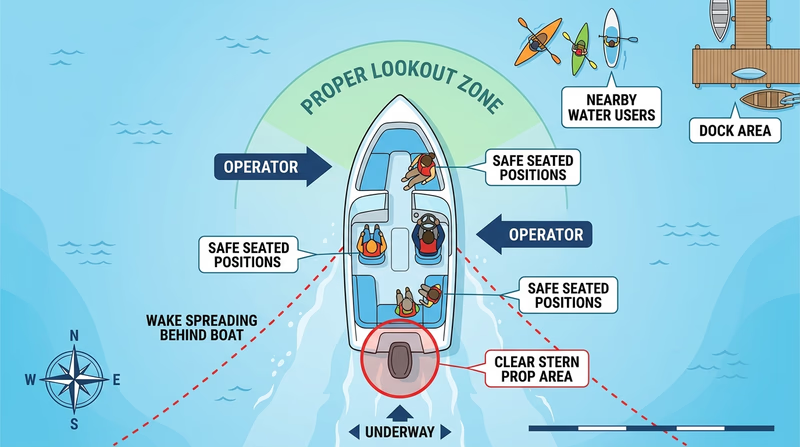
This part of the requirement is really about awareness. A motorboat operator is responsible not only for the boat, but also for the moving zone around it.
Swimmers and skiers in the water
People in the water are hard to see, especially in glare or chop. The stern and prop area are especially dangerous. Keep the engine off or in safe condition when appropriate near people in the water, maintain clear communication, and never assume someone can move out of your way quickly enough.
Passenger positions underway
Passengers should stay where the operator expects them to be. Sudden movement changes balance and can block visibility. On small boats, a person standing at the wrong moment can change how the boat handles.
Boat wakes
Your wake affects other people. It can rock smaller boats, shove someone off balance at a dock, swamp low craft, or endanger paddlers near shore. Wake awareness is part courtesy and part safety law.
You now understand the boat as both machinery and moving platform. Next comes the legal and seamanship side of the badge: weather, regulations, required gear, signals, and anchoring.