 Getting Started
Introduction & Overview
A movie can make you laugh, hold your breath, or suddenly understand someone else’s world. Moviemaking is the craft of telling that story on purpose. In this badge, you will learn how filmmakers plan shots, guide an audience’s attention, and turn an idea into something other people can watch.
Moviemaking is not only about fancy cameras or huge budgets. It is about choices: where to put the camera, when to cut, what to show, and what to leave out. Those same choices matter whether you are filming a troop event, a short training video, or a creative story of your own.
Moviemaking Merit Badge Pamphlet The official merit badge pamphlet gives background, vocabulary, and examples you can use alongside this guide. Link: Moviemaking Merit Badge Pamphlet — https://filestore.scouting.org/filestore/Merit_Badge_ReqandRes/Pamphlets/Moviemaking.pdfThen and Now
Then
The first motion pictures were little more than moving photographs. In the late 1800s and early 1900s, cameras were bulky, film reels were short, and many scenes were captured from one fixed spot as if the audience were sitting in a theater seat. Early filmmakers quickly discovered that where they placed the camera changed how viewers felt. A close-up could show fear. A wide shot could make a character seem alone. Editing two shots together could create a whole new meaning.
As moviemaking grew, directors, camera operators, editors, and sound crews each developed specialized jobs. Silent films gave way to sound, black-and-white to color, and fragile film stock to more reliable cameras. The language of cinema grew one tool at a time.
Now
Today, professional movies may still use giant crews and expensive gear, but the core skills have not changed. A phone, tablet, or simple digital camera can now capture footage that would have amazed early filmmakers. What still separates a random clip from a real movie is visual storytelling: composition, rhythm, light, sound, and clear planning before you hit record.
Modern moviemaking also reaches far beyond theaters. Scouts make short documentaries, teachers create how-to videos, sports teams review game footage, and families record milestone events. If you can tell a clear story with moving images, you can use that skill in school, work, hobbies, and service.
Get Ready!
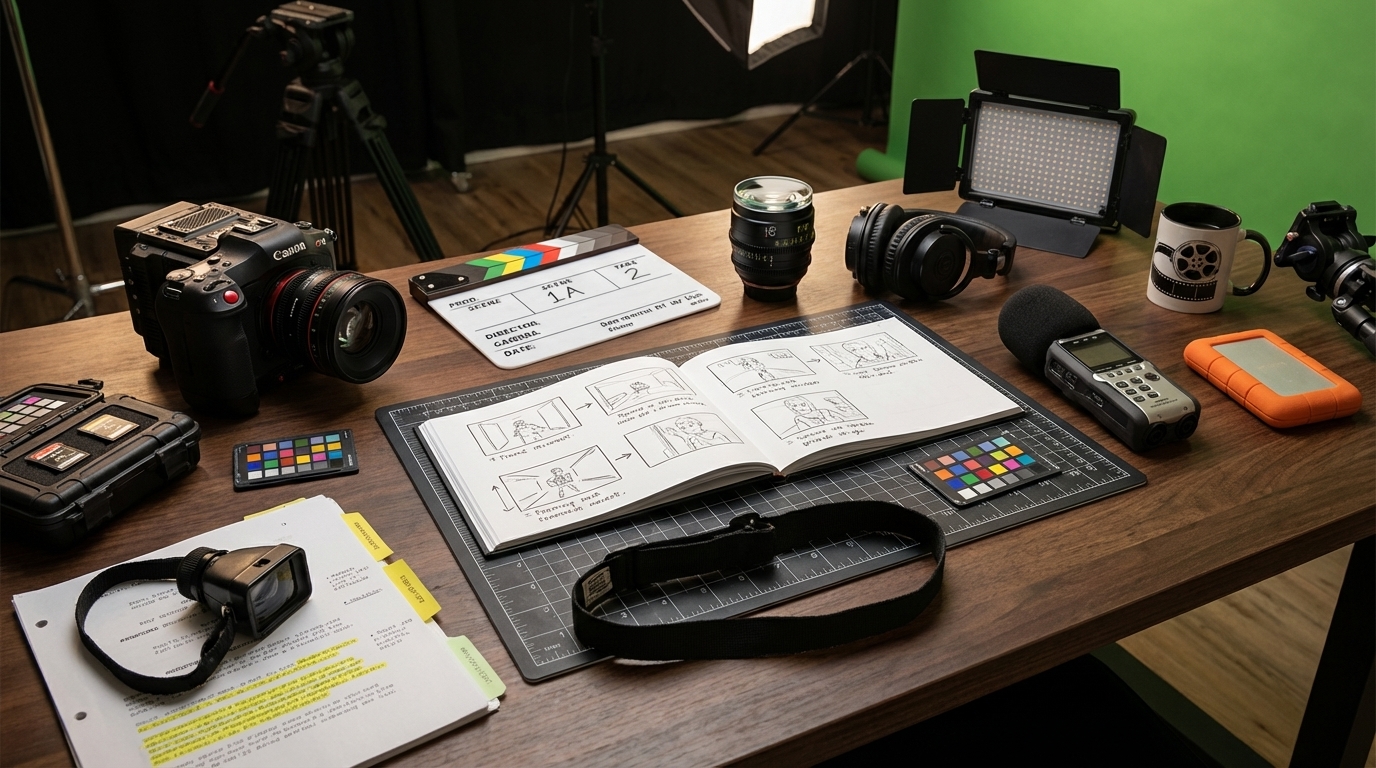
This badge rewards planning. You will think like a writer, sketch like a director, and observe like a camera operator. You do not need to be a great artist to storyboard or own expensive gear to film something strong — but you do need to notice details and practice on purpose.
Kinds of Moviemaking
Narrative Films
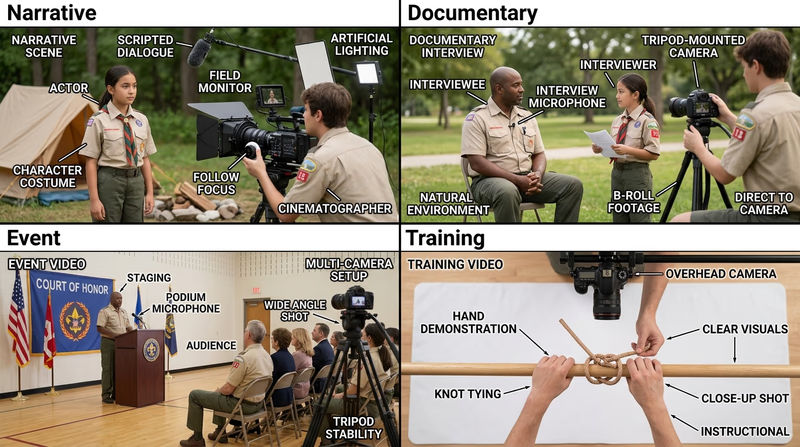
Narrative moviemaking tells a story with characters, conflict, and change. That could mean a mystery, a comedy, or a short drama about a Scout trying to solve a problem. Narrative films depend on clear scene order and shot choices that help the audience follow emotions and action.
Documentary Films
Documentaries show real people, events, or ideas. A documentary might cover conservation work, a community project, or the story behind a troop tradition. Documentary filmmakers still shape a story, but they do it by choosing interviews, facts, and footage from real life.
Live Event Coverage
Some films are not scripted at all. Recording a court of honor, campfire, or ceremony means you must be ready before the important moment happens. This kind of moviemaking depends on preparation, smart camera placement, and an understanding of what must not be missed.
Instructional and Training Videos
A training video has one job: help the audience learn to do something correctly. That means clear steps, strong close-ups, and no confusing extra footage. In this badge, that style appears when you plan a video to teach a Scouting skill.
Experimental and Personal Films
Some moviemakers use film to explore mood, memory, or a creative idea. These projects may rely less on dialogue and more on image, sound, or editing. Even unusual projects still benefit from the same basics you will learn in Req 1 and Req 2.
Next Steps
You are about to learn the basic language every filmmaker uses. Once you understand how shots, movement, rhythm, and lens choice shape a scene, the rest of the badge makes much more sense.