Req 2b — Build the Storyboard
A storyboard is your movie broken into pictures before you film it. It lets you test the order of shots, camera angles, and important actions while changes are still easy. Your drawings do not have to look impressive. They only need to communicate what the camera sees.
Why Storyboards Matter
A storyboard saves time because it answers problems before production starts. You may realize that a key close-up is missing, that a transition will feel abrupt, or that two shots are showing the same thing. It also helps anyone working with you understand the plan.
In other words, your treatment from Req 2a tells the story in paragraphs. The storyboard tells it in frames.
What to Put in Each Panel
A simple storyboard panel can include:
- a rough sketch of the shot
- the shot size, such as wide, medium, or close-up
- a note about camera movement
- a short description of the action
- optional dialogue or sound notes if they matter
Stick figures are fine because the important part is the decision, not the drawing style.
Storyboard essentials
These details make a panel useful on shoot day
- Who or what is in the frame
- Where the camera is placed
- What the subject is doing
- How the shot connects to the one before and after it
- Any special note about movement, angle, or timing
Think Like an Editor While You Draw
A storyboard should flow. If you draw six panels in a row that all show the same medium shot, ask whether the audience will get bored. If you jump from a very wide shot to another wide shot with no reason, the sequence may feel flat.
Try mixing:
- an establishing shot to show location
- a medium shot for action
- a close-up for a reaction or important detail
- a cutaway to support rhythm or cover edits
That does not mean every sequence needs every type. It means your board should show intent.
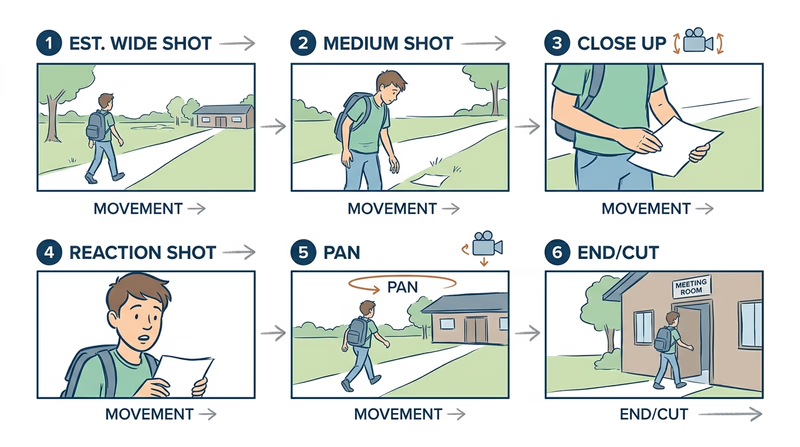
Storyboard for Real-Life Events
If you are planning to film a court of honor or a training vignette, some shots may be predictable and some may not. Your storyboard can still help. Plan the shots you know you need: opening wide shot, close-up of awards, audience reaction, speaker at podium, Scout demonstrating a skill, and closing shot.
For events, think in terms of coverage rather than perfect control. Your storyboard becomes a checklist of must-have footage.
Production Planning Worksheet Print this worksheet to draft your treatment, list shot details, and rough out storyboard panels before filming. Resource: Production Planning Worksheet — /merit-badges/moviemaking/guide/production-planning-worksheet/🎬 Video: What Is a Storyboard and Why Is It Important? Pre-Production Filmmaking (video) — https://youtu.be/yPtqHdQcOOw?si=24Rdiz36nJTayneu
What Your Counselor Wants to See
Your counselor is looking for a plan you can actually film. They do not need polished artwork. They need evidence that you know where the camera will go, what the audience will see, and how the sequence supports the story.
If a Scout who has never heard your idea can look at your storyboard and roughly follow the action, you are on the right track.