Req 2d2 — Create a Short Feature
This option gives you the most creative freedom. You decide what kind of story to tell, what tone it should have, and how the audience should feel at the end. That freedom is exciting, but it also means you must make more decisions before filming starts.
Keep the idea filmable
A short feature works best when the concept is simple and specific. One clear problem is usually enough. Maybe a Scout races to recover a forgotten item before departure. Maybe a patrol misunderstands a plan and has to fix it before a campfire. Maybe a small mystery unfolds through visual clues.
The strongest short features for this badge usually have:
- one main goal
- one or two locations
- a small number of performers
- a running time that stays focused
If your idea needs costumes, stunts, large crowds, or hard-to-control locations, simplify it.
Design shots around the story beat
This is where Req 1 really pays off. Your lens choice, framing, movement, and rhythm should support the emotional beat of each moment. A wide establishing shot helps the audience understand where they are. A close-up can capture reaction. A slower rhythm may fit a thoughtful scene, while faster cutting may fit a problem-solving sequence.
Short feature planning questions
Answer these before you shoot
- What changes from beginning to end?
- What is the most important visual moment?
- Which shots are absolutely required to tell the story clearly?
- How will the ending feel different from the opening?
Directing people on camera
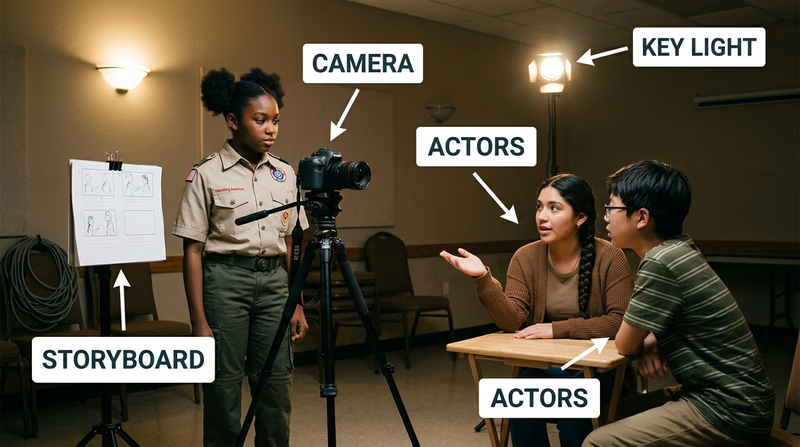
Even if your cast is made up of friends or family, people perform better when they know what the scene needs. Give simple direction. Instead of saying, “Be more cinematic,” say, “Look toward the door, pause, then pick up the note.” Specific actions are easier to film well.
You also do not need lots of dialogue. Short features often become stronger when they rely on action, expression, and objects.
Edit for shape, not just order
During editing, ask whether every shot earns its place. If a scene takes too long to communicate one idea, tighten it. If the audience needs a reaction shot or cutaway to understand the moment, add it. Rhythm is part of the storytelling, not a finishing touch.
🎬 Video: 10 Tips for Beginner Videographers (video) — https://youtu.be/kZWH6OBDdR0?si=e1VBvG2lGwQHKqEY
When this is the right choice
Choose this option if you enjoy making up stories and want the most control over your final product. It is a great fit for Scouts who liked writing the treatment and storyboard because it lets them see that planning turn into a finished piece.
If you prefer a real event, see Req 2d1. If you want your movie to teach a skill clearly, Req 2d3 may be a better fit.