Req 3b — Understand the Zoom Lens
A zoom lens lets a filmmaker change focal length without swapping lenses. That means one lens can move from a wider view to a tighter view, which is useful when you need flexibility during events, documentaries, or fast-moving shoots. Understanding a zoom lens also helps you explain why a shot looks the way it does.
What a zoom lens does
When you zoom wider, the lens shows more of the scene. When you zoom longer, the lens narrows the field of view and brings distant subjects closer in the frame. That change affects composition, background appearance, and how the audience experiences the shot.
A zoom lens does not replace moving the camera. Zooming changes the optics. Physically moving the camera changes perspective. Good filmmakers know the difference.
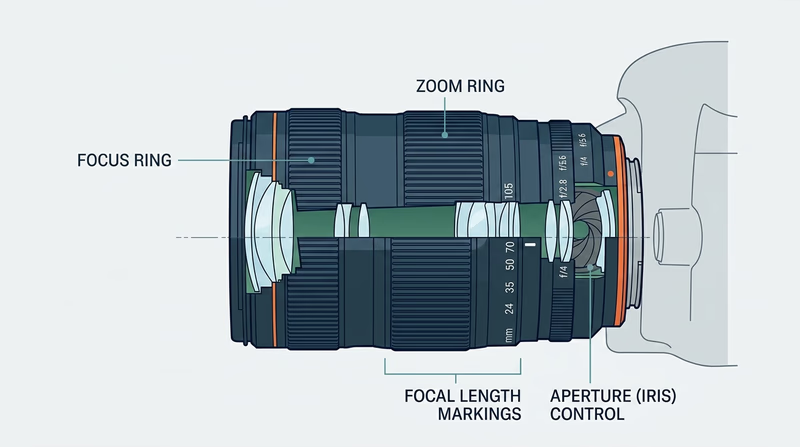
Three important parts to understand
1. Zoom ring
The zoom ring changes focal length. Turning it makes the frame go wider or tighter. On some cameras this may be controlled electronically, but the idea is the same. A smooth zoom ring helps the operator make precise framing choices.
2. Focus ring
The focus ring controls what looks sharp. If focus is wrong, even a well-composed shot can become unusable. As focal length changes, focus may need attention too, especially on more advanced lenses.
3. Aperture or iris control
The aperture affects how much light enters the lens. It also affects depth of field, which is how much of the image appears in focus from front to back. A wider aperture can blur the background more, while a narrower one can keep more of the scene sharp.
Other zoom-lens ideas worth mentioning
These can strengthen your counselor discussion
- Focal length numbers such as 24mm–70mm or 70mm–200mm
- Field of view and how wide or tight the image appears
- Image stabilization on some lenses or cameras
- Lens speed and how well a lens performs in low light
When zoom lenses are especially useful
Zoom lenses shine when the subject changes distance quickly or when you cannot easily move your camera position. That is one reason they are popular for event coverage like the court-of-honor option in Req 2d1. They are also practical on documentaries and school productions.
Prime lenses, by contrast, stay at one focal length and often offer different creative advantages. You do not need to master that whole comparison for this requirement, but it helps to know why zoom lenses are valued: flexibility.
A strong explanation for your counselor
If you are discussing this requirement out loud, try this structure:
- Explain what changing focal length does to the frame.
- Name three important parts and what each one controls.
- Give an example of when a zoom lens is helpful in real filming.
- Compare zooming with physically moving the camera.
🎬 Video: How Lens Work in Camera (video) — https://youtu.be/fRKsKR9wvqE
🎬 Video: The Parts of a Camera Lens - Anatomy of a DSLR Lens (video) — https://youtu.be/15h9iG-Rdwk?si=TUp4-HL00H50ZX79
Why this matters beyond one requirement
Lens choice is part of visual storytelling. Once you understand how a zoom lens changes your image, you stop treating the camera as a simple recording device and start using it as a storytelling tool.
That shift matters as you look beyond the badge into careers or hobbies in the final requirement.