Extended Learning
Congratulations
You have worked through the safety, training, transitions, and race-day thinking that make multisport unique. That is a real accomplishment. Multisport has a way of teaching more than fitness alone: it teaches planning, adaptability, patience, and the ability to stay calm while switching from one challenge to the next.
Training Beyond One Event
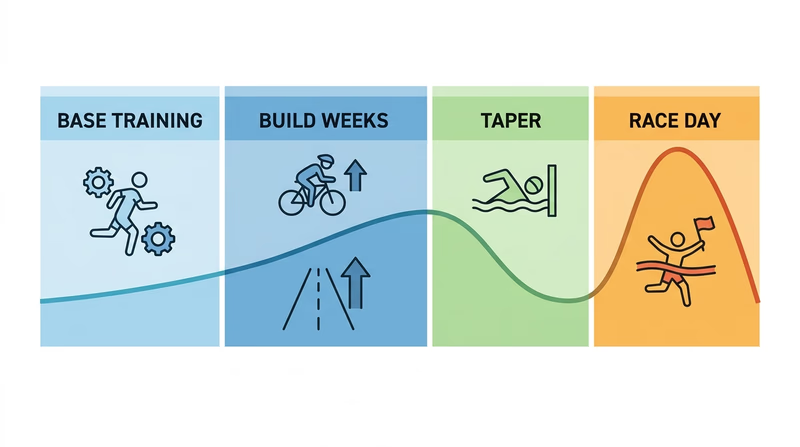
Many beginners train only for the next session or the next badge requirement. Stronger athletes learn to think in seasons. A season includes easier weeks, harder weeks, skill-focused periods, and recovery periods. That structure matters because the body improves between hard efforts, not only during them.
If you stay in multisport, you will hear athletes talk about base, build, and taper phases. Base work builds consistent endurance at manageable effort. Build phases add more challenge or more event-specific practice. A taper reduces training load before an event so you can arrive rested instead of worn out.
The Skill of Pacing
Pacing is one of the most important multisport skills because the event punishes early mistakes. Go too hard in the swim and your bike suffers. Push the bike recklessly and your run falls apart. Start the first run in a duathlon too fast and the final run feels much longer than the numbers suggest.
Good pacing means learning the difference between hard, steady, and unsustainable. That awareness takes practice. It is one reason multisport can be so satisfying: it rewards self-knowledge as much as strength.
Transitions as a Learnable Skill
Beginners often think transitions are just about speed. They are really about clarity. A good transition comes from a repeated routine: where your gear sits, what order you touch it, and what you do first every time.
Elite athletes practice transitions because they know small mistakes multiply under pressure. That is true for Scouts too. The more automatic your setup becomes, the more energy you save for the parts of the event that matter most.
Adaptive and Inclusive Multisport
One of the most encouraging things about modern multisport is how many paths into the sport now exist. Para-triathlon, unified events, and adaptive sports programs help more athletes participate using equipment, coaching, and event structures that meet real needs.
That matters because the best version of sport is not only about who finishes first. It is also about making challenge, movement, and community available to more people.
Real-World Experiences
Volunteer at a Local Triathlon or Youth Race
Attend a Beginner-Friendly Triathlon Clinic
Visit an Open-Water Swim Venue or Safe Community Pool Program
Watch a Collegiate, Elite, or Para-Triathlon Event
Join a Group Ride, Run Club, or Youth Endurance Program
Organizations
The national governing body for triathlon in the United States. Offers event information, youth resources, safety guidance, and pathways into the sport.
Organization: USA Triathlon — https://www.usatriathlon.org/
The international governing body for triathlon, para-triathlon, and related multisport disciplines. A strong place to explore athlete stories, results, and global competition formats.
Organization: World Triathlon — https://www.triathlon.org/
Supports athletes with physical disabilities through grants, programs, and adaptive sports opportunities. Useful for learning how inclusive multisport grows.
Organization: Challenged Athletes Foundation — https://www.challengedathletes.org/
Connects athletes, coaches, and volunteers through sports programs around the world. A valuable organization for seeing how participation and community grow together.
Organization: Special Olympics — https://www.specialolympics.org/